
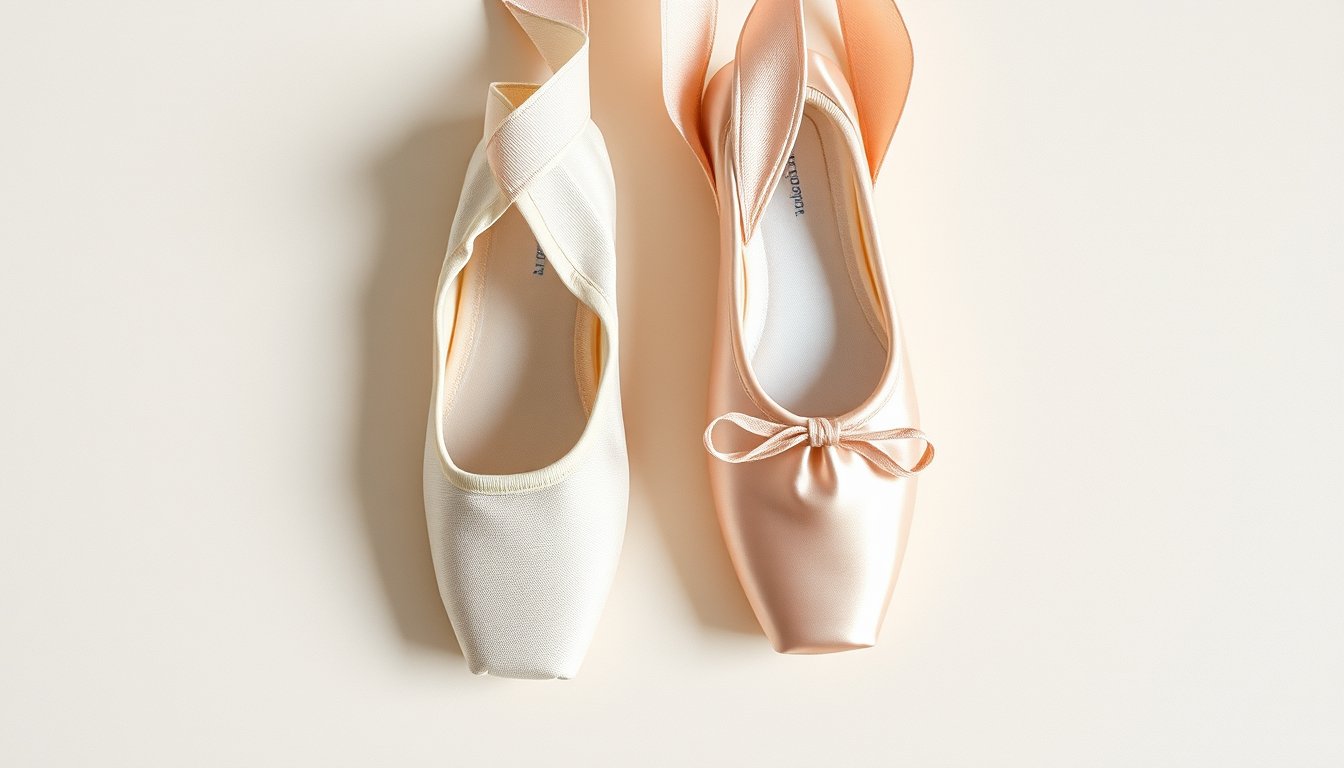
Pre-pointe shoes are soft, supportive shoes designed to prepare a dancer’s feet and ankles for the demands of full pointe work — without the rigid box of a traditional pointe shoe. They are used during the transition phase between flat ballet shoes and full pointe, typically from around Grade 4-5 upwards, and only when a teacher has determined that a student is physically and technically ready.
What Are Pre-Pointe Shoes?
Pre-pointe shoes look similar to soft ballet shoes but have a more structured sole and sometimes a small amount of stiffening in the toe area. They allow a student to work through the full range of foot motion — including rising to demi-pointe — while providing more support than a soft shoe. They do not, however, allow a dancer to go en pointe (fully on the tips of the toes).
How Are They Different from Pointe Shoes?
| Pre-Pointe Shoes | Pointe Shoes | |
|---|---|---|
| Toe box | Soft or lightly reinforced | Hard, rigid box |
| Going en pointe | Not possible / not intended | Designed for this |
| Fitting | Similar to soft ballet shoe | Must be professionally fitted |
| When used | Transition phase, Grades 4-5+ | After teacher clearance |
| Risk of injury | Low when used correctly | Higher, requires supervision |
When Is a Student Ready for Pre-Pointe Shoes?
The decision to introduce pre-pointe work — and the shoes that go with it — is always made by the dancer’s teacher, not the parent or the student. A teacher will assess:
- Age and bone development: Most teachers will not begin pre-pointe work before age 11-12 due to the risk of growth plate damage in younger feet
- Technical ability: The student must have strong, consistent turnout, stable ankles and proper alignment at demi-pointe
- Strength: The feet and ankles must be strong enough to support the body’s weight on the demi-pointe position
- Flexibility: Sufficient ankle flexibility to achieve a full demi-pointe without sickling
Should I Buy Pre-Pointe Shoes Without Asking the Teacher First?
No. Pre-pointe shoes should only be introduced when a teacher recommends them. Buying them speculatively or because a student wants to try them is not advisable — even pre-pointe shoes place additional demands on the feet, and using them without proper technique guidance can reinforce bad habits or risk injury.
What About Full Pointe Shoes?
Full pointe shoes must always be professionally fitted by a specialist fitter who can assess the shape of the foot and the student’s technical ability. They should never be bought online without fitting, and certainly never as a gift or a surprise. A teacher’s written clearance is standard practice before a student is fitted for their first pair of pointe shoes.
For more on the overall ballet uniform journey, see our ballet grades guide or our dress code by level.