
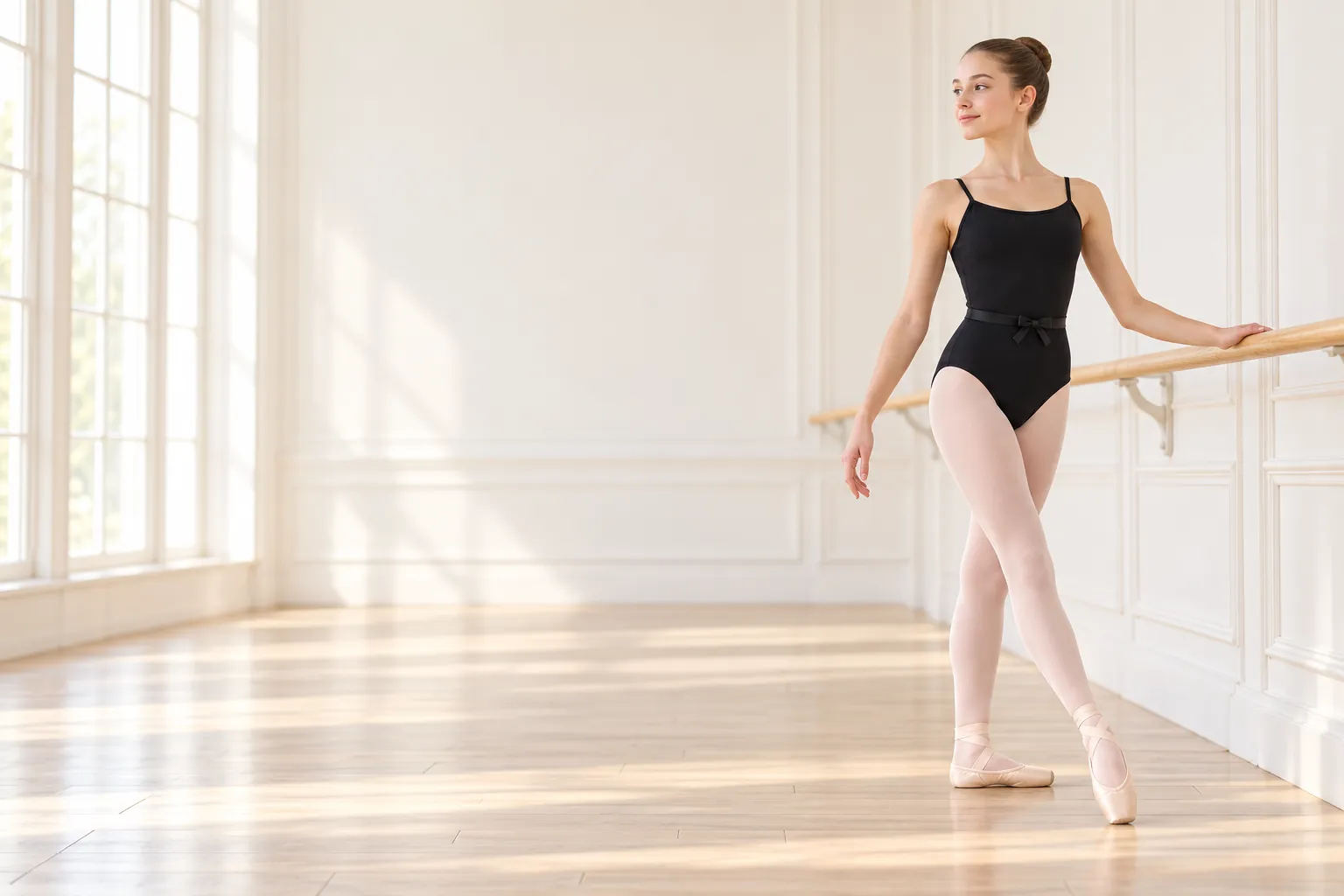
Short answer: a black leotard is a classic choice for ballet, especially for older students and adults, and it is allowed in many schools. But young dancers and graded exam levels often have a set color, so check your school’s uniform list before you buy.
Why do dancers choose black?
- It looks smart. Black gives a clean, strong line.
- It hides marks. Chalk, dust and small stains are less visible.
- It goes with everything. Pink tights, skirts, warm-ups and shoes all work with black.
- It is flattering. Many older dancers find black comfortable and confidence-building.
When might black not be allowed?
Many schools choose a color for each level so that the class looks uniform. Young children often wear pastel colors, and some exam levels require a specific shade. Black is more often the choice for older and vocational levels and for adult classes. If the uniform list says “any color,” black is fine.
How does black compare with other colors?
| Color | Pros | Cons |
|---|---|---|
| Black | Classic, hides marks, flattering | Shows lint and may fade to gray over time |
| Navy | Softer than black, smart | Can look nearly black in dim light |
| Ballet pink | Traditional for young dancers | Shows stains more easily |
| Pastels | Cheerful for children | Often limited by school choice |
How do I look after a black leotard?
- Wash inside out, in cool water, with a gentle detergent for dark colors.
- Do not use bleach or fabric softener.
- Dry in the shade. Sunlight can fade black to a gray tone.
- Wash it separately for the first few washes, as new dye can run.
What about pairing black with other items?
Pink tights and pink ballet shoes look classic with black. A chiffon wrap skirt in black or a soft color adds a feminine touch. A wrap top in black or pink keeps a warm layer neat. For exams, follow your school’s instructions on whether a skirt is worn.
How do I choose the right size?
Choose by height and torso length. Black can look more fitted, so make sure the leotard is not too tight. See our size guide for height and weight ranges.
How do I style a black leotard?
Black is easy to dress up or down. For a classic class look, pair it with pink tights, pink ballet shoes and a simple bun. For a softer look, add a chiffon wrap skirt in a pastel color. For colder weather, a wrap top or cardigan in black, pink or lilac keeps the outfit tidy. Adults often choose black with skin-tone tights for a long, continuous leg line.
Black leotards for different ages
| Age | Typical choice |
|---|---|
| Early Years | Rarely. Pastels are more common. |
| Graded levels | Only if the school’s list allows it. |
| Teens and vocational | Common and often expected. |
| Adults | The most popular choice in many classes. |
What if my school has no rule?
If the school lists “any color,” black is a safe, smart choice. Choose a fabric that is opaque in all light, because very thin black fabric can look gray when stretched. A lined front adds comfort and keeps the color deep.
When should I replace it?
Black leotards fade with time, especially if washed hot or dried in the sun. Replace it when the color looks gray, the fabric is thin at the seat, or the elastic has loosened. A fresh leotard for an exam looks sharp and gives the dancer confidence.
Frequently asked questions
Can you wear a black leotard to ballet class?
Yes, in many schools, especially for older students and adults. Young children may have a set color, so check the uniform list.
Is a black leotard allowed for ballet exams?
It depends on the school and the level. Some levels require a specific color, so confirm with your teacher.
What color tights go with a black leotard?
Ballet pink tights are the classic pairing. Some schools use skin-tone or black tights, so check the dress code.
How do I stop a black leotard from fading?
Wash it inside out in cool water, avoid bleach and softener, and dry it in the shade.
What is better, black or navy?
Black is classic and the most common. Navy is softer and equally smart. Both depend on what your school allows.