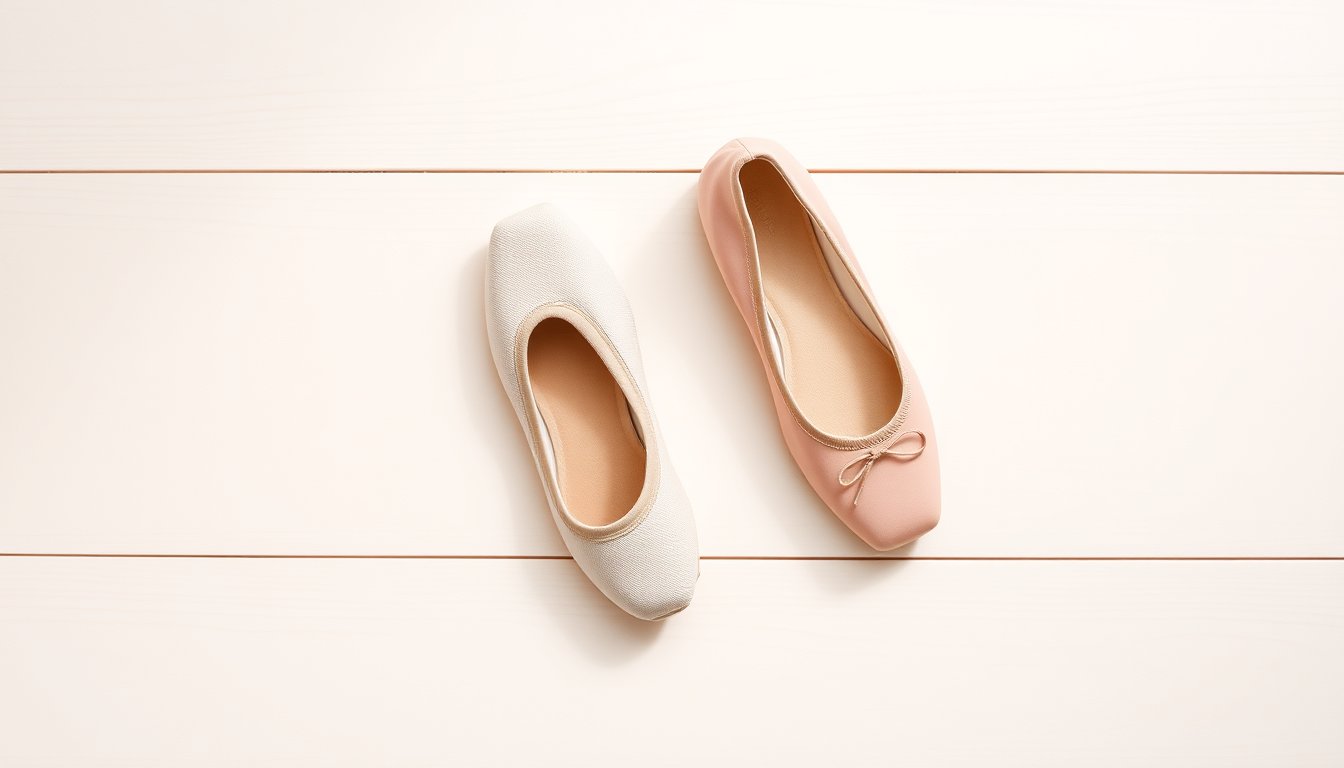
Canvas ballet shoes are lighter, more flexible and easier to machine-wash. Leather ballet shoes are more durable, mould to the foot over time and give a cleaner line through the arch. For most RAD grade students, canvas is the more practical choice — but the right answer depends on the dancer’s level and school requirements.
Short answer: Canvas ballet shoes are lighter, more flexible and easier to machine-wash. Leather ballet shoes are more durable, mould to the foot over time and give a cleaner line through the arch.
Canvas Ballet Shoes
Advantages
- Lightweight — less resistance, easier to point the foot fully
- Flexible from day one — no breaking-in period
- Machine washable — practical for young students who wear shoes every week
- Lower cost — usually cheaper than leather equivalents
Disadvantages
- Wear out faster than leather, especially through the sole
- Stretch with use — a snug fit when new may become loose within a term
- Not as durable for daily use at higher training levels
Leather Ballet Shoes
Advantages
- Durable — last significantly longer than canvas for frequent users
- Mould to the foot — become more comfortable with wear as the leather softens
- Good arch definition — leather holds a shape that shows the foot line clearly
- More stable — less stretching over time
Disadvantages
- Stiffer when new — need a breaking-in period
- Heavier than canvas
- Cannot be machine washed — hand wash or wipe clean only
- Usually more expensive
Full Sole vs Split Sole
Both canvas and leather come in full-sole and split-sole versions. Full-sole shoes have a single piece of suede across the whole sole and are generally recommended for beginners — they provide more resistance, which helps build the foot muscles needed for proper pointing. Split-sole shoes have two suede pads with a flexible arch section between. They show the arch line more clearly and are typically used at Grade 4 and above.
What Do RAD Schools Typically Require?
Most RAD schools use pink canvas full-sole shoes for Grades 1-3 and allow split-sole from Grade 4 onwards. Some schools specify leather for older students. Always confirm with your teacher before buying — the wrong sole or color can be an issue in an exam.
Buying Guide Summary
| Canvas | Leather | |
|---|---|---|
| Best for | Beginners, young students, frequent washers | Advanced students, daily training |
| Lifespan | One to two terms of weekly class | One to two years with care |
| Flexibility | Immediate | Improves with breaking-in |
| Washing | Machine washable | Hand wash only |
| Price | Lower | Higher |
Our size guide includes a conversion chart if you are ordering online. For other questions about RAD uniform, see our FAQ or contact us.
Shop from Zoe Dancewear
Frequently Asked Questions
Which type of ballet shoe lasts longer — canvas or leather?
Leather is more durable than canvas and usually outlasts it, especially for students who dance several times a week. However, leather takes longer to break in and does not mold to the foot as quickly as canvas.
Are canvas ballet shoes machine washable?
Canvas shoes can be washed in a mesh laundry bag on a cold, gentle cycle and air dried. Leather shoes must not be machine washed — clean them by wiping with a damp cloth and allow to air dry away from direct heat.
Which ballet shoe does RAD recommend for exams?
The RAD does not specify canvas or leather — either material is acceptable. Most RAD teachers recommend canvas for its flexibility and ease of care. Always confirm with your teacher what they prefer before buying.
nn
Shop at ZoeDancewear
Stretch-Canvas Ballet Shoes u2014 canvas split-sole — machine-washable and easy to break in. Free shipping over $99 to the US.