
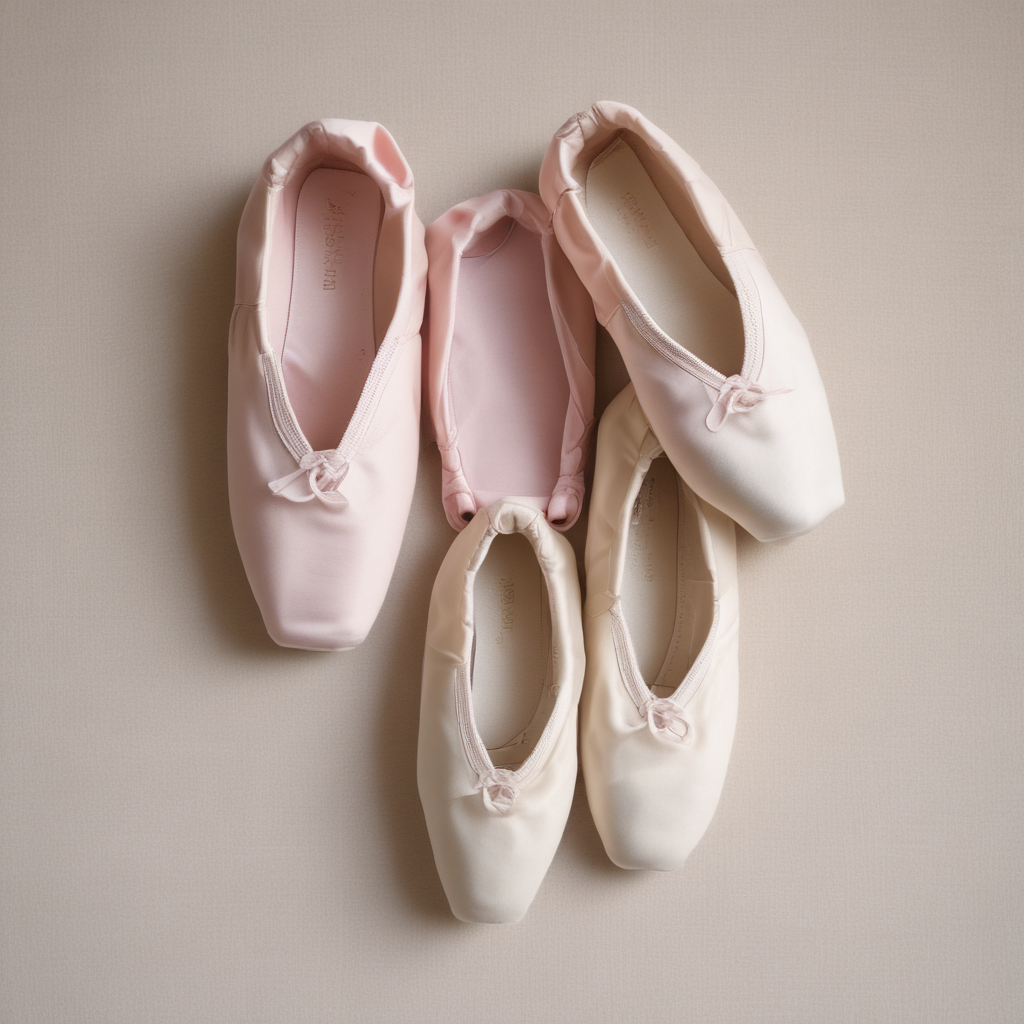
Walk into any dancewear store and you’ll find ballet shoes in three distinct materials: satin, canvas, and leather. Each has a specific purpose, and wearing the right material in the right context can make a real difference to how your child’s footwork looks and feels. This guide breaks down the differences, pros and cons, and when to use each type.
Canvas Ballet Shoes
Canvas is the most popular choice for regular class and RAD graded examinations. It’s lightweight, breathable, and molds to the foot quickly. Canvas shoes have a brushed cotton or nylon upper that stretches to follow the natural shape of the foot, making them comfortable from the first wear.
Best for: Everyday class, RAD graded examinations, beginners
Pros: Lightweight, machine washable, affordable, molds to foot quickly
Cons: Less durable than leather, can wear through faster in older or more active students
Leather Ballet Shoes
Leather shoes are more structured and durable than canvas. They take longer to break in but last considerably longer and hold their shape well over time. Full-sole leather shoes are often preferred for younger students whose feet are still developing, as the firmer sole encourages correct foot placement.
Best for: Younger beginners (full-sole), students whose canvas shoes wear out quickly
Pros: Very durable, good structure, excellent for full-sole development work
Cons: Heavier than canvas, takes longer to break in, cannot be machine washed
Leather ballet shoes come in pink (standard) and sometimes white. The most common colors at RAD schools are pink for girls and black or white for boys.
Satin Ballet Shoes
Satin ballet shoes look stunning and are associated with the romantic image of the ballerina — but they’re designed for performance, not everyday class. The delicate satin upper scuffs, tears, and marks easily and has no practical advantage in a normal class environment.
Best for: Stage performances, shows, photograph shoots
Pros: Beautiful appearance under stage lighting, available in many colors
Cons: Delicate and easily damaged, not suitable for regular use, often slip-prone on studio floors
For most RAD schools, satin shoes are not permitted for class or examination use. Check your school’s policy before purchasing.
Side-by-Side Comparison
| Feature | Canvas | Leather | Satin |
|---|---|---|---|
| Durability | Medium | High | Low |
| Break-in time | Minimal | Moderate | Minimal |
| Best use | Class & exams | Class & exams | Performance |
| Machine washable | Yes | No | No |
| Price range | $ | $$ | $$ |
Which Should You Buy?
For most children in RAD classes, canvas is the right choice for everyday class and examinations. It’s comfortable, practical, and appropriate. Consider leather if your child goes through canvas shoes very quickly or if the school specifically recommends it for beginners.
Satin shoes are a separate purchase for special occasions. If your child’s school has an end-of-year show or performance, you may need a pair specifically for the event — but these shouldn’t replace their regular class shoes.
Frequently Asked Questions
Can my child wear satin shoes to RAD class?
Most RAD schools do not permit satin shoes for class or examinations. Satin is a performance material and doesn’t provide the grip needed on studio floors. Always check your school’s policy, but if in doubt, go with canvas.
Are leather shoes better for beginners than canvas?
Full-sole leather shoes offer more support for very young feet, but canvas is also suitable. Many teachers prefer canvas for its flexibility. Ask your teacher what they recommend for your child’s age and level.
My daughter’s canvas shoes have worn through at the toe. How long should they last?
Canvas shoes typically last 3–6 months for a child in regular class, depending on class frequency and how active the child is. If they’re wearing through faster, consider leather as a more durable alternative.
Shop Ballet Shoes at ZoeDancewear
- Stretch Canvas Ballet Shoes — lightweight and flexible for class and exams
- Canvas vs Leather Ballet Shoes — detailed comparison guide
- How to Clean Ballet Shoes — care guide for all materials