
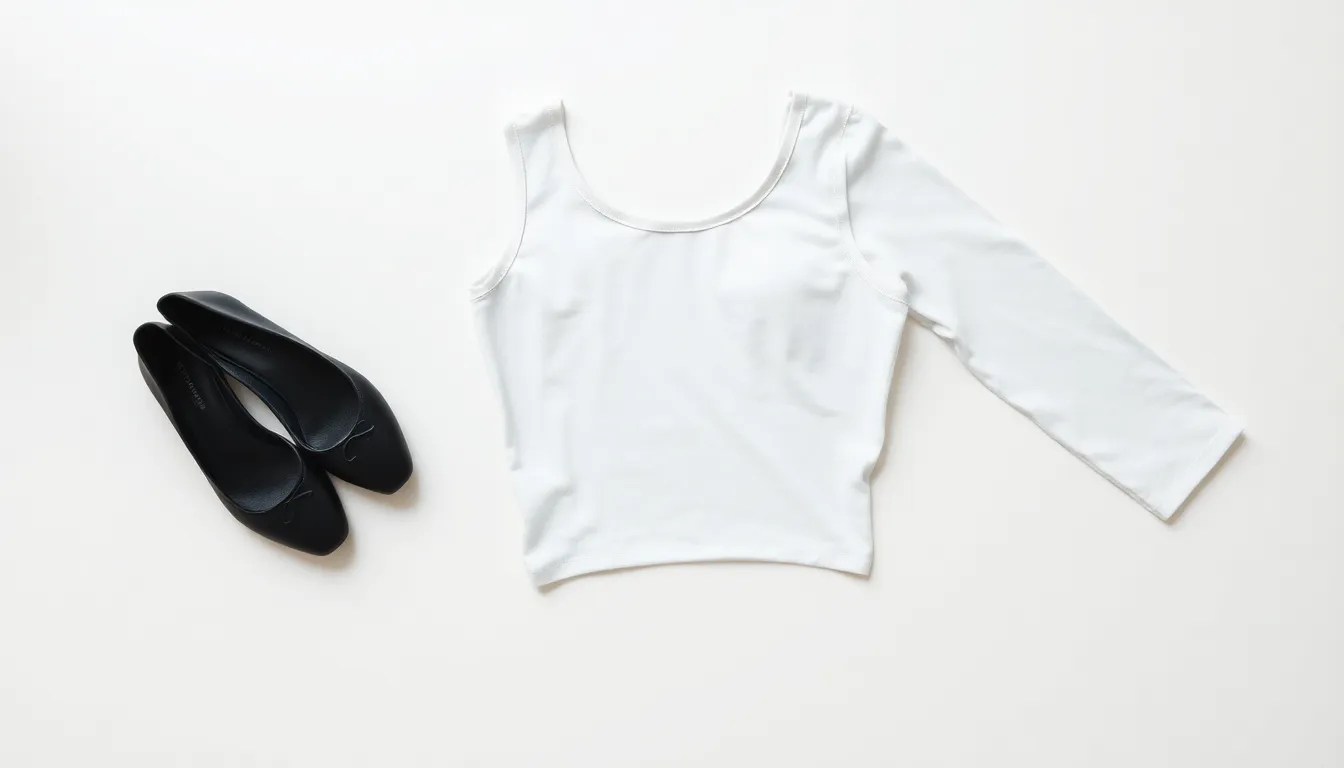
Male ballet attire is often overlooked in dancewear guides, which tend to focus on girls and women. Yet male students have specific uniform requirements that matter both for technique assessment and for professional appearance in class and examinations. This guide covers the full male ballet uniform from beginner through to advanced level.
The Standard Male Ballet Uniform
For most RAD ballet classes, the standard male uniform is: a white fitted ballet top or T-shirt, black or white ballet trousers or tights, white or black canvas or leather ballet shoes, a dance belt worn as the innermost layer under tights or trousers, and white ankle socks for younger students. Some schools also specify a plain white or black leotard under the trousers for junior grades — confirm with your school.
Ballet Tops for Male Students
Male ballet tops should be close-fitting in jersey, cotton-lycra or a stretch performance fabric. The teacher needs to see the spine, shoulders and chest alignment clearly. A well-fitted white T-shirt is acceptable in many schools; a fitted sleeveless dance vest or white ballet unitard top gives a cleaner look for examinations. Avoid loose shirts, hoodies or sportswear that obscures posture.
Trousers vs Tights for Male Ballet
Younger male students (pre-primary to Grade 3) typically wear white or black fitted ballet trousers. These look like slim-fit jogging bottoms in a dance fabric — not loose gym joggers. Older students and those in senior grades (Grade 4 and above) often switch to full-coverage ballet tights in white or black, which give a cleaner leg line for technique assessment and are standard in professional training. The dance belt always goes on first, directly against the skin, before tights or trousers.
Ballet Shoes for Male Students
White canvas or leather ballet shoes are standard for junior grades. Black leather shoes are more common in senior grades and professional training. Have shoes fitted properly — male foot widths vary significantly and an incorrectly fitted shoe affects technique. Canvas split-sole shoes are the most common choice; some teachers prefer full-sole leather shoes for younger boys to develop foot strength.
The Dance Belt: Essential, Not Optional
A dance belt is not optional for male ballet students above beginner age. It provides the support needed for jumps and partner work, and keeps everything invisible under costume tights. The dance belt is worn directly against the skin, before tights, trousers or any other layer. Nude or skin-tone is standard under light-coloured tights; black under dark trousers. Replace when the elastic loses its stretch — a dance belt that does not stay in place defeats its purpose.
Hair for Male Ballet Students
Short hair requires no specific styling for ballet class. Boys and men with longer hair must tie it back and away from the face and neck. A simple ponytail or bun is acceptable — the goal is to keep hair completely clear of the collar and out of the eyes during turns. For examinations and performances, neat hair that does not move during vigorous exercise is required.
Frequently Asked Questions
At what age does a boy need a dance belt for ballet?
Most teachers introduce dance belts when boys begin more demanding technique classes — around RAD Grade 3–4, typically age 10–13. For recreational classes with younger boys, standard underwear under ballet trousers is usually acceptable. Ask your teacher directly.
Do male ballet students wear pink tights?
No. Male ballet students wear white or black tights. Pink tights are specific to female RAD students. The colour of male tights is generally white for junior grades and black or white for senior grades, depending on the school.
Can male students wear the same leotard colours as female students?
Male students are generally not required to wear grade-specific colours in the same way as female students. Most schools use white tops across all grades for boys, with shoes changing from white to black as grades increase. Confirm with your specific school.