
Giselle: Ballet’s Most Celebrated Romantic Work
Giselle has been performed continuously since its premiere in Paris in 1841, making it one of the longest-running works in the classical ballet repertoire. Deeply romantic, emotionally complex, and technically demanding, Giselle is the role that generations of ballerinas have used to prove their artistry. If your child studies ballet, they will almost certainly encounter Giselle in their training.
The Story of Giselle
Act I: The Village
Giselle is a young peasant girl in a medieval German village. She loves dancing more than anything — perhaps too much, as she has a weak heart. Into the village comes Albrecht, a nobleman who has disguised himself as a peasant named Loys. Giselle and Albrecht fall in love.
Hilarion, a gamekeeper who also loves Giselle, is suspicious of the stranger. He discovers Albrecht’s sword and cape, revealing his noble identity — and, crucially, that Albrecht is already engaged to Bathilde, a princess. When the hunting party arrives and Giselle sees Albrecht with Bathilde, the truth destroys her. Overwhelmed by grief and betrayal, Giselle loses her mind, relives moments from their courtship in a mad scene of devastating delicacy, and dies — some productions imply she dies of a broken heart, others that her weak heart simply gives out under the emotional shock.
Act II: The Midnight Forest
Giselle has become one of the Wilis — spirits of young women who died before their wedding day, condemned to dance for eternity and to lure men into dancing until they die from exhaustion. The Queen of the Wilis is Myrtha, a cold and merciless figure who commands absolute obedience from her subjects.
Hilarion comes to Giselle’s grave and is danced to his death by the Wilis. Then Albrecht arrives, overcome with grief and guilt. The Wilis demand he dance until he dies. But Giselle, even in death, still loves Albrecht. She shields him, dances with him to keep him moving without exhausting him, and protects him until dawn breaks. At dawn, the Wilis lose their power. Albrecht survives. Giselle vanishes back into the spirit world, her love preserved beyond death.
The Key Characters
- Giselle — the heroine; requires extraordinary range from Act I’s innocent joy to Act I’s mad scene to Act II’s ethereal forgiveness. This is one of ballet’s most demanding dramatic roles.
- Albrecht — the nobleman who deceives Giselle. He is not simply a villain — his grief and guilt in Act II are genuine, and the role requires real emotional depth from the male dancer.
- Hilarion — the gamekeeper; a tragic figure who loves Giselle faithfully but whose honesty causes her death. He is not a villain either — his is a heartbreaking situation.
- Myrtha, Queen of the Wilis — the cold supernatural antagonist of Act II. A major solo role requiring technical power and imperious stage presence.
- Bathilde — Albrecht’s fiancée; a minor but important plot role.
Why Giselle Is Considered Ballet’s Greatest Challenge
Act I demands a dancer who can be warm, girlish, and light-footed — then shatter into one of the most dramatic mad scenes in performing arts — then die on stage convincingly. Act II requires an entirely different technique: the sustained, floating quality of a spirit, with slow adagio passages that expose every weakness in line and control, and a series of jumps and balances that must look effortless and supernatural.
The greatest ballerinas of every era — Carlotta Grisi (who created the role), Anna Pavlova, Galina Ulanova, Margot Fonteyn, Natalia Makarova, and Svetlana Zakharova — have all made Giselle their signature role.
What the “White Act” Means
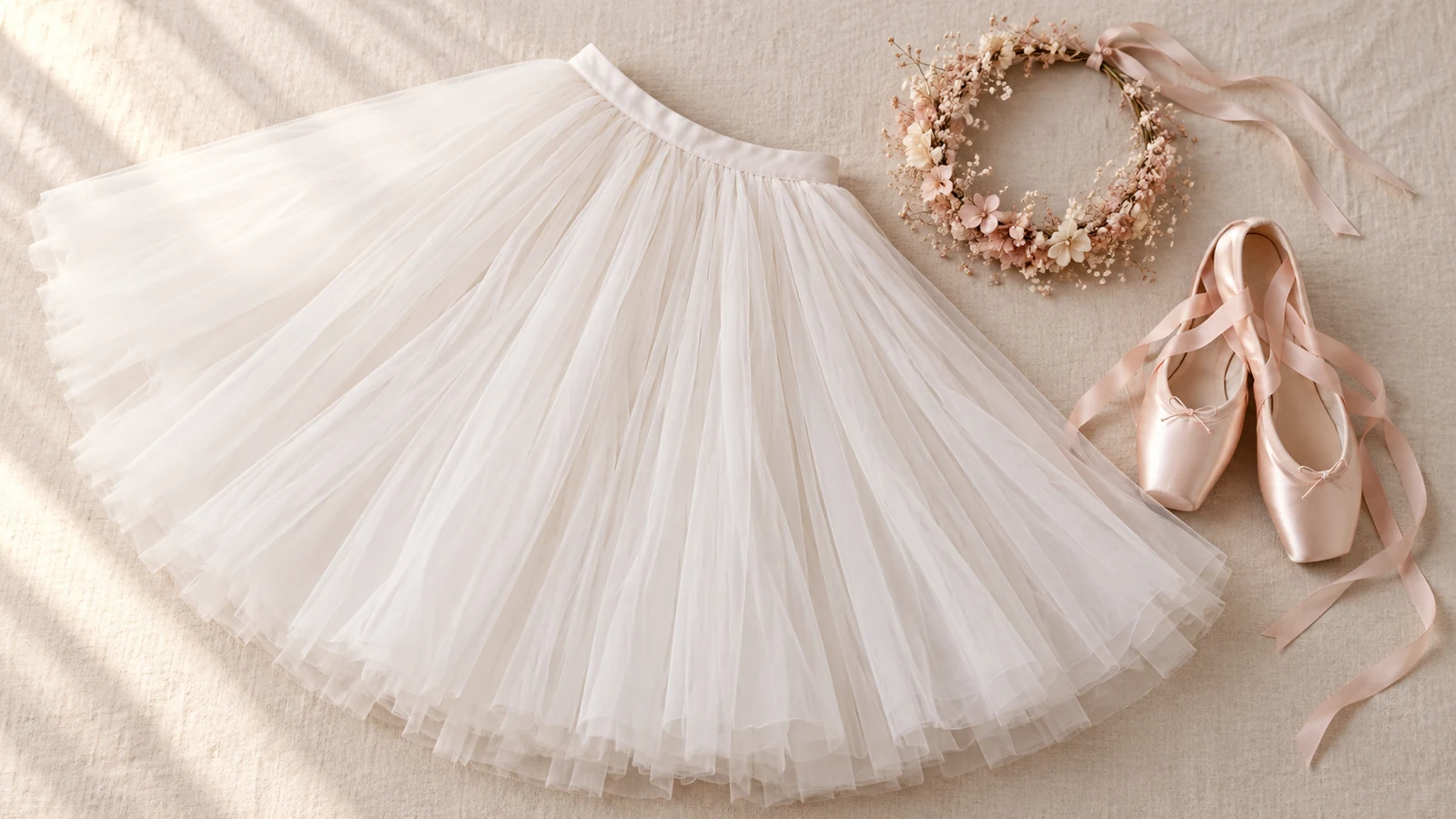
Act II of Giselle is known as the “white act” — a term also applied to Act II of Swan Lake. The corps de ballet appears in long white tutus or romantic-length skirts, moving in synchronised formations in dim, moonlit lighting. The visual effect is one of the most hauntingly beautiful images in classical ballet.
Frequently Asked Questions
Is Giselle suitable for children?
Giselle is more emotionally complex than The Nutcracker or Sleeping Beauty. The themes of deception, madness, and death are adult, though not graphic. Most children aged 8 and over can follow and be moved by the story. Younger children may find Act II’s ghost-world setting slightly eerie.
How long is Giselle?
Most productions run approximately 1 hour 45 minutes to 2 hours, typically with one interval. It is shorter than Swan Lake or Sleeping Beauty.
When was Giselle first performed?
Giselle had its world premiere at the Paris Opéra on 28 June 1841. The choreography by Jean Coralli and Jules Perrot, and the score by Adolphe Adam, have been revised many times, but the essential structure has remained unchanged for nearly two centuries.