
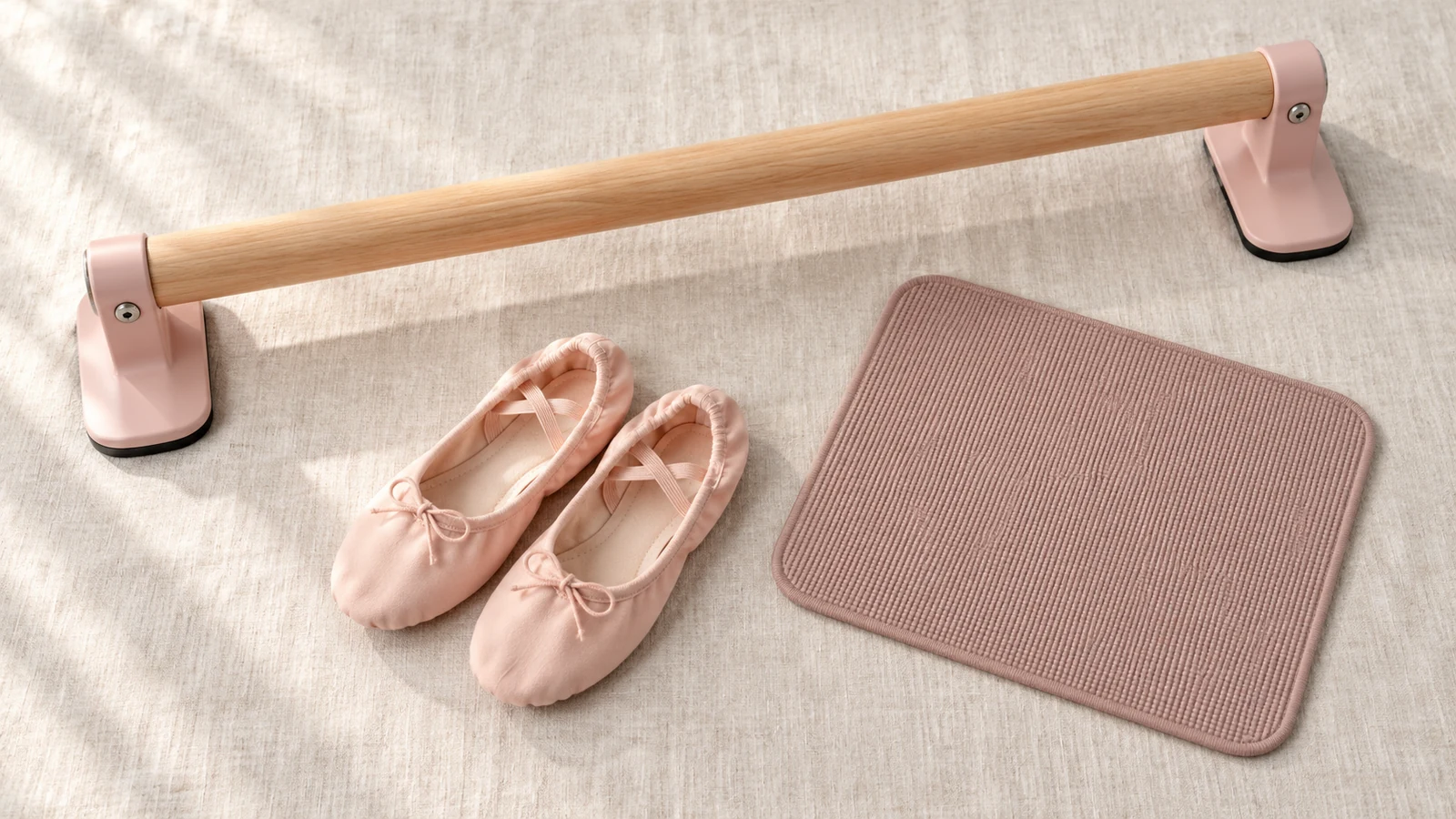
Do You Need a Ballet Barre at Home?
A home ballet barre is one of the most useful investments a serious dance student can make. It allows safe, supported practice between studio classes, reinforces the barre exercises taught by the teacher, and builds the muscle memory that accelerates technique. This guide covers what to look for, the types available, and what to spend.
Types of Home Ballet Barre
Freestanding Portable Barre
The most popular option for home use. A freestanding barre sits on its own base — no wall fixings required — and can be moved from room to room or folded for storage. Most quality models are height-adjustable, which is essential for growing children and for families where multiple people may use the barre.
Pros: No installation required, moveable, adjustable height, suitable for renters
Cons: Can wobble slightly more than a wall-mounted barre at higher extensions; base bars can get in the way of footwork practice
Wall-Mounted Fixed Barre
Fixed directly into wall studs, a wall-mounted barre is the most stable option and closest to a professional studio environment. It does not take up floor space and has no base to trip over.
Pros: Maximum stability, professional feel, no floor footprint
Cons: Permanent installation (not suitable for renters), requires drilling into walls, not adjustable in most cases
Double vs Single Rail
Double-rail barres have two horizontal rails — a lower and an upper — which gives students the option to work at different heights as they grow. Single-rail barres are simpler and more affordable. For a growing child, a double rail or a single adjustable rail is preferable.
What Height Should a Home Barre Be?
The correct barre height is hip height — approximately level with the dancer’s hip bone (iliac crest) when standing upright. For children this changes as they grow, which is why adjustability matters. As a rough guide:
- Age 4–6: approximately 65–75 cm (25–30 inches)
- Age 7–10: approximately 75–85 cm (30–34 inches)
- Age 11–14: approximately 85–95 cm (33–37 inches)
- Adults: typically 90–105 cm (35–41 inches)
Look for barres with at least 6–8 height settings so the barre can grow with your child.
What Material Is Best?
Steel Frame
The most common and recommended option. A powder-coated steel frame provides the rigidity and stability that barre work requires. Avoid lightweight aluminum frames — they flex noticeably during use and reduce confidence in the support.
Wood Rail vs PVC Rail
Traditional ballet studio barres use hardwood rails — typically birch or maple — because wood provides a natural, comfortable grip and does not become slippery when hands are warm. PVC rails are more affordable and weather-resistant, but can feel slippery and are less durable for heavy use. If budget allows, choose a barre with a wooden or wooden-covered rail.
What to Look for When Buying
- Weight capacity — a minimum of 100 kg (220 lb) is recommended so the barre does not tip during supported stretches
- Base width — a wider base is more stable; look for at least 60 cm (24 inches) of base spread
- Rail length — 90–120 cm (36–48 inches) is adequate for a single student; longer rails (150 cm+) allow two students to use the barre simultaneously
- Non-slip feet — rubber feet prevent the barre from sliding on hard floors
- Weight — a portable barre should be light enough to move easily (under 10 kg / 22 lb) but heavy enough to be stable
What to Wear When Using a Home Barre
Always wear proper ballet shoes on a home barre — never socks on a hard floor. A fitted leotard and tights help you see your alignment clearly, and leg warmers keep muscles warm if your home practice space is cool.
Frequently Asked Questions
How much should I spend on a home ballet barre?
A reliable freestanding adjustable barre costs between $80 and $200 USD (£65–£160). Budget options below $60 tend to wobble and wear quickly. A wall-mounted barre from a dance supply company typically costs $40–$100 for the rail, plus installation. Avoid very cheap plastic-framed options — they are not safe for supported stretching.
What floor is safest under a home barre?
A smooth, clean hardwood or laminate floor is ideal. Place a non-slip mat under the barre base if you are using it on a polished surface. Avoid practicing on carpet — it catches the toe and limits footwork. See our full guide: How to Practice Ballet at Home.
Can a home barre replace studio classes?
No. A home barre supports studio training — it does not replace a teacher’s corrections and guidance. Only use a home barre to practice exercises that have already been taught by your teacher. Attempting new exercises without supervision risks developing incorrect technique.