
What Is the Bolshoi Ballet?
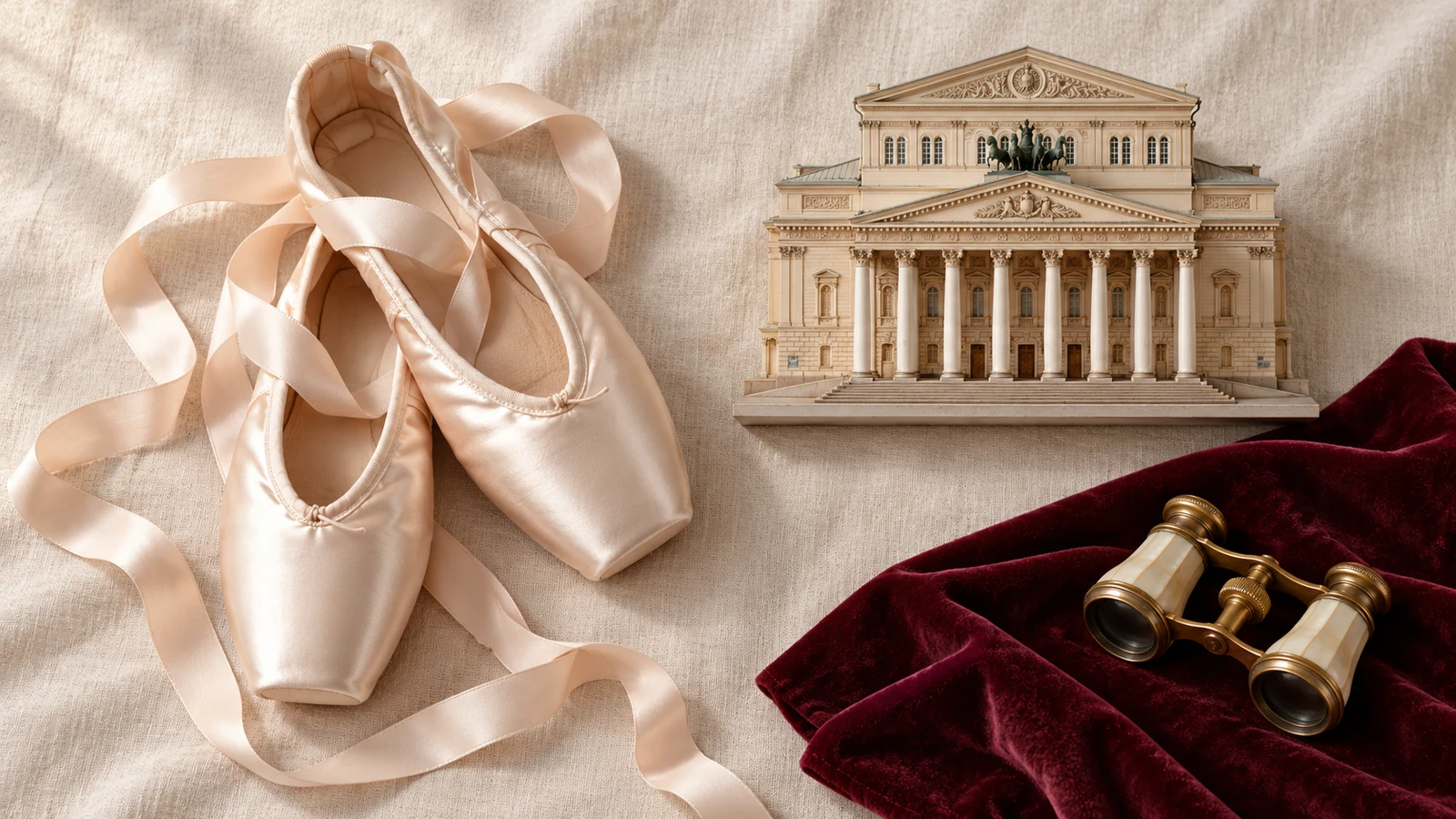
The Bolshoi Ballet is the resident ballet company of the Bolshoi Theatre in Moscow, Russia — one of the largest and most prestigious ballet companies in the world. “Bolshoi” (Большой) means “big” or “grand” in Russian, which accurately describes the company’s scale, its theatre, and its ambitions. Along with the Mariinsky Ballet in St Petersburg (formerly the Kirov), the Bolshoi is considered one of the twin pillars of Russian classical ballet and one of the defining institutions in the global history of the art form.
A Brief History
The Bolshoi Theatre traces its origins to 1776, when Prince Pyotr Urusov was granted a licence to manage theatrical performances in Moscow. The current building — the imposing neoclassical structure on Theatre Square that is one of Moscow’s most recognisable landmarks — opened in 1825 after the original building burned down. It has been rebuilt and restored several times since, with a major restoration completed in 2011.
Throughout the 19th century, the Bolshoi developed alongside the Mariinsky as Russia’s two leading ballet companies, though the Mariinsky (then the Imperial Ballet) was generally regarded as more prestigious during the Tsarist era. The Bolshoi became the leading Soviet state company after the 1917 Revolution, performing under the patronage and direction of the Soviet government.
The Soviet Era: Ballet as State Art
Under the Soviet Union, the Bolshoi received massive state funding and was used as a showcase for Soviet cultural achievement. Performances were attended by political leaders; the red velvet boxes of the Bolshoi were as much a political stage as an artistic one. The Soviet-era Bolshoi produced some of the most technically powerful dancers in history — and some of the most dramatic defections, as dancers sought artistic freedom in the West.
Major Soviet-era productions of Swan Lake, Sleeping Beauty, Romeo and Juliet, and Spartacus became the defining versions of these works internationally. The Bolshoi’s style was characterised by dramatic scale, powerful technique, and theatrical intensity.
Famous Bolshoi Dancers
The Bolshoi has trained and performed some of ballet’s greatest names:
- Galina Ulanova — the defining Bolshoi ballerina of the mid-20th century; her Giselle and Juliet are still considered benchmarks
- Maya Plisetskaya — a firebird-like performer whose career at the Bolshoi spanned decades; her Dying Swan is one of the most filmed and celebrated solos in ballet
- Vladimir Vasiliev — perhaps the greatest male dancer the Bolshoi produced; his power, musicality, and range in roles from Spartak to Albrecht were extraordinary
- Ekaterina Maximova — Vasiliev’s partner and one of the most beloved Bolshoi ballerinas of her era
- Svetlana Zakharova — current principal, widely regarded as one of the finest technical ballerinas alive today
The Bolshoi Today
The Bolshoi Ballet maintains a repertoire spanning 19th-century classics, Soviet-era productions, and new commissions. Its live performances in Moscow draw audiences from across the world; its tours — when geopolitical conditions allow — bring it to major opera houses internationally. The Bolshoi’s HD cinema broadcasts, distributed through cinemas worldwide, have brought the company’s productions to audiences who cannot travel to Moscow.
The Bolshoi Ballet Academy, attached to the company, is one of the most competitive and prestigious ballet schools in the world. Students enter at approximately age 10 and train for nine years. Admission is extraordinarily selective; the school accepts only a tiny number of foreign students.
The Bolshoi vs the Mariinsky
The eternal debate in Russian ballet centers on the stylistic differences between the Bolshoi (Moscow) and the Mariinsky (St Petersburg). Broadly characterised — and every such characterisation is a simplification — the Bolshoi style is seen as larger, more dramatic, more theatrical, and more athletic; the Mariinsky style as more refined, more lyrical, and more classically correct. Both traditions have produced extraordinary dancers and productions, and the two companies have historically competed for prestige and talent.
Frequently Asked Questions
Can I watch Bolshoi Ballet performances outside Russia?
Yes. The Bolshoi’s cinema broadcast program screens selected productions in cinemas worldwide. Check your local cinema listings for current seasons. DVDs and streaming releases of major productions are also available through classical music and arts streaming platforms.
Is the Bolshoi Theatre worth visiting?
For any ballet enthusiast, attending a performance at the Bolshoi Theatre in Moscow is a significant experience. The theatre itself is one of the most beautiful in the world, and the company performs at a level that justifies its international reputation. Tickets for the most popular productions sell out quickly and must be booked well in advance.
How does the Bolshoi compare to the Royal Ballet?
The Royal Ballet and the Bolshoi Ballet are both among the world’s top five ballet companies, but their styles are distinct. The Royal Ballet is known for its musicality, refinement, and narrative sensitivity; the Bolshoi for its power, scale, and theatrical intensity. Both maintain extraordinary rosters of principal dancers and each regularly tours internationally. See our guide to the world’s most famous ballet companies.