
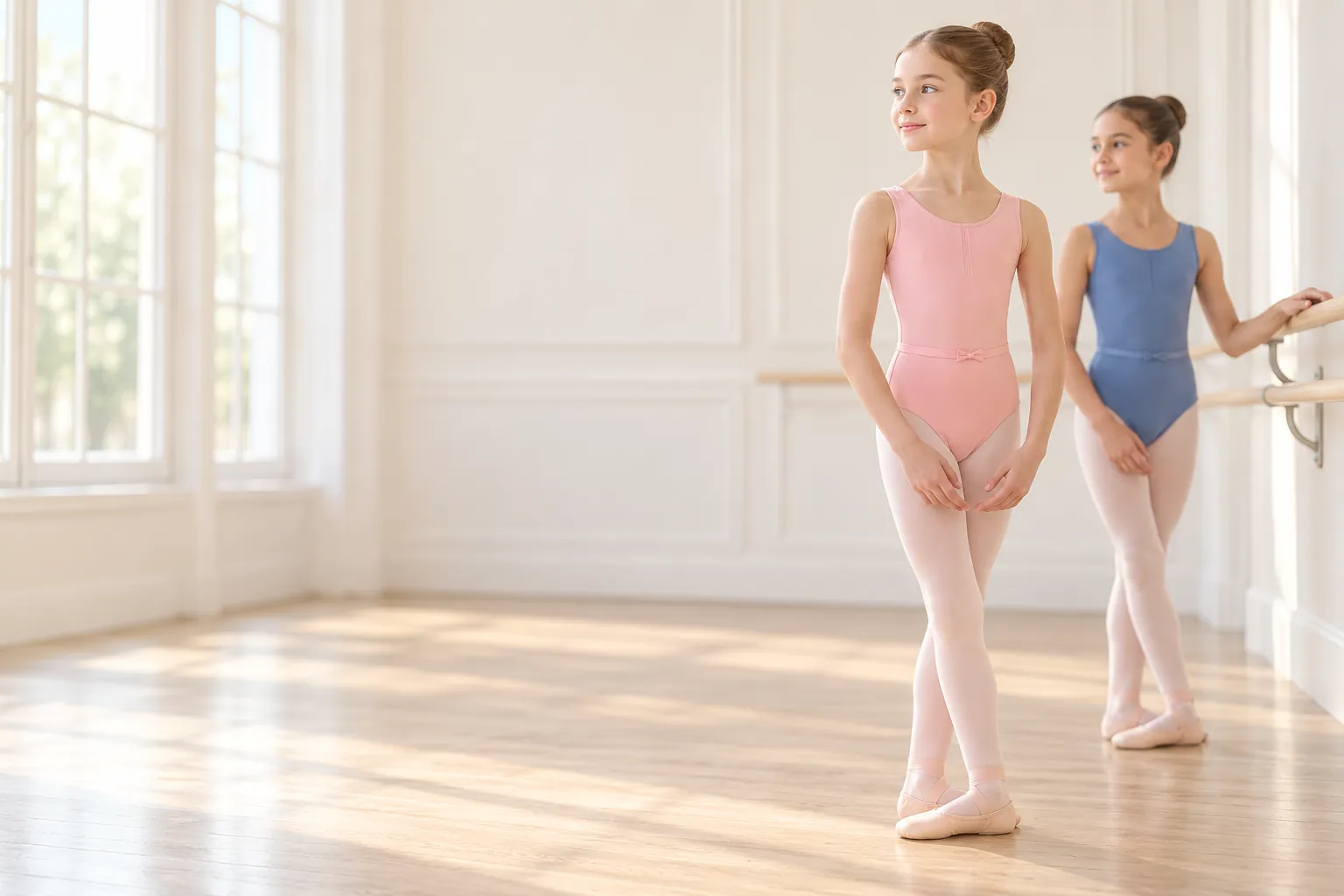
Short answer: choose a ballet leotard by height first, then check the chest and torso measurements on the size chart. If the dancer is between sizes, choose the larger one. A good leotard feels snug and smooth, with no pulling at the shoulders or digging in at the legs.
What should I measure?
You need three numbers. Measure them with a soft tape, over a thin layer of clothing or a leotard the dancer already owns.
| Measurement | How to take it |
|---|---|
| Height | Stand against a wall with bare feet and mark the top of the head. |
| Chest | Around the fullest part of the chest, under the arms, with the tape level. |
| Torso length | From the top of the shoulder, down the front through the legs, and up the back to the same shoulder point. This is the most important number for long-torso or short-torso dancers. |
Many children’s charts use height only. Adult charts usually add chest, waist and hip measurements.
How do I read a size chart?
- Find the height range that includes the dancer.
- Check the chest measurement against the same row.
- If the torso length is given, make sure it is at least the dancer’s measurement.
- Where the numbers fall in different sizes, follow the torso length and height first.
Age labels such as “6 to 8” are only a rough guide. Children of the same age can be very different heights.
What if the dancer is between sizes?
Choose the larger size. A leotard that is slightly large still looks neat, while one that is too small pulls on the shoulders and gets worn out faster. If a leotard is going to be worn for an exam, make sure it is not so loose that it wrinkles at the waist.
How should a leotard fit?
- Shoulders. Straps lie flat and do not slip or dig in.
- Torso. No wrinkles at the waist and no pulling at the seat when the dancer bends.
- Legs. The leg openings sit smoothly, without leaving red marks.
- Movement. The dancer can raise the arms, bend and sit without the leotard riding up.
What about growing children?
Children grow in spurts, so check the fit at the start of each term. Signs it is time for a bigger size are straps that pull up when the arms lift, a seat that creeps up and marks on the shoulders. Avoid buying two sizes ahead, because a very baggy leotard hides the line the teacher wants to see.
Where can I find our size information?
Our size guide lists height and weight ranges for each style. If you are unsure, send us the dancer’s height and weight and we will help you choose.
How do children’s and adult charts differ?
Children’s charts are usually based on height, with age shown as a rough label. This works because children of the same age can vary a lot in height. Adult charts add chest, waist and hip measurements because adult bodies vary more in proportion. If you are buying for a teenager, check which chart the shop uses, since some use children’s sizes and others use adult sizes.
Common sizing mistakes
- Choosing by age alone. A tall seven-year-old may need an older size.
- Ignoring torso length. A leotard that is short in the torso pulls up at the shoulders.
- Buying two sizes up. The fabric bags at the waist and the straps slip.
- Not allowing for stretch. Different fabrics stretch differently, so check the fabric type on the chart.
A simple fit test at home
- Put the leotard on over tights.
- Raise both arms above the head. The straps should not pull off the shoulders.
- Bend forward and sit down. The seat should stay in place.
- Do a few plié bends. The leg openings should not roll or dig in.
If the leotard passes all four steps, the size is right. If any step fails, try the next size and compare.
What if my size is not on the chart?
If the dancer is much taller or shorter than the chart for their age, use height first and check the torso length. Send us the dancer’s height and weight through our contact page, and we will help you choose.
Frequently asked questions
How do I know what size leotard to buy?
Measure the dancer's height, chest and torso length, then match them to the size chart. Height and torso length matter most. If between sizes, choose the larger one.
Should a ballet leotard be tight?
It should be snug and smooth, with no wrinkles, but not so tight that it pinches the shoulders or leaves marks on the legs.
How do I measure torso length for a leotard?
Measure from the top of one shoulder, down the front through the legs and up the back to the same shoulder point.
Do ballet leotards run small?
Sizing varies by maker, so always check the chart. If the dancer is between sizes, choose the larger one.
How often should I check my child's leotard size?
At the start of each term. Children grow in spurts, and straps that pull up or marks on the shoulders are signs it is time for a bigger size.