
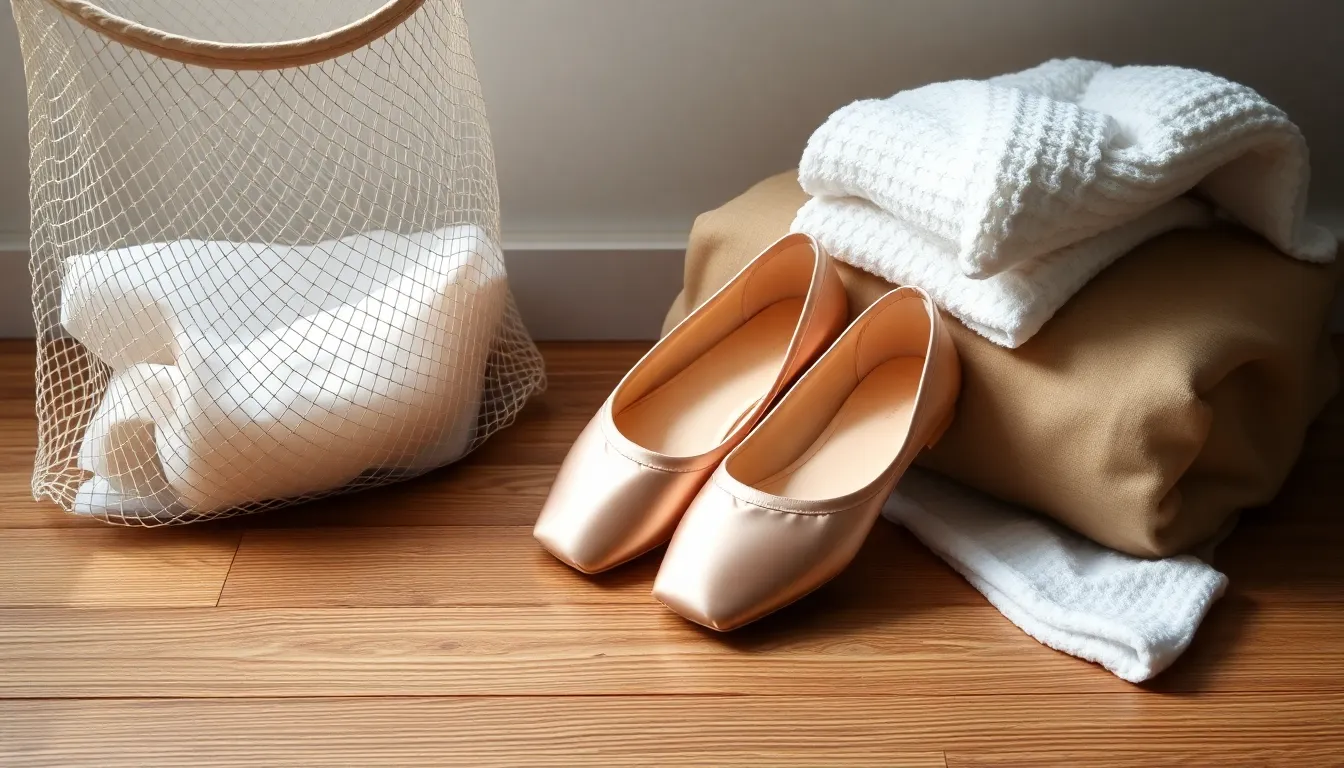
Pointe shoes typically last between 12 and 30 hours of dancing — for a student in regular classes, that can mean a new pair every 2–4 months. While pointe shoes will always wear out because the materials are designed to soften with use, a consistent care routine can add weeks to each pair and prevent premature breakdown.
How to Break In Pointe Shoes Correctly
Breaking in pointe shoes means softening the shank and box just enough for the shoe to conform to your foot, without destroying the support. Gentle methods include: pressing the shank over the edge of a table to introduce a curve at the ball of the foot; pressing the sides of the box firmly with your hands; and dancing in the shoes gradually over the first few classes rather than wearing them for a full session immediately. Never soak the shoes in water or use a hammer — this destroys the box materials and makes the shoes unsafe.
Drying Pointe Shoes After Class
The most damaging thing for pointe shoes is moisture. Sweat saturates the layers of fabric, paper and paste inside the box and shank, softening them permanently. After every class, take the shoes out of your bag, loosen the ribbons and open the heel, and leave the shoes to dry in a well-ventilated area — never in a sealed bag or damp dance bag. A breathable mesh shoe bag or a dry rack is ideal. Allow at least 24 hours of drying between classes.
Hardening the Box: Extending Shoe Life
Some dancers apply a small amount of clear nail varnish or specialist pointe shoe hardener to the inside of the box at the platform and sides to slow the softening process. This is most effective on a new shoe — applying it once the box has already softened will not restore the original structure. Ask your teacher before trying this as it changes how the shoe feels on the foot.
Rotating Between Two Pairs
If you dance more than twice per week, rotating between two pairs of pointe shoes significantly extends the life of both. Each pair gets at least 48 hours to dry fully between sessions. The overall cost is similar — you do not buy shoes more often — but each pair lasts longer because it is never saturated two days in a row.
How to Know When a Pointe Shoe Is Dead
A dead pointe shoe provides no support and is a safety risk. Signs: the shank bends easily along its full length when you press it; the box collapses when you press the sides; the platform fabric has worn through; or the shoe no longer holds its shape around the heel. If in doubt, bring the shoes to class and ask your teacher to assess them. Dancing in dead shoes risks ankle and foot injury.
Frequently Asked Questions
Can you wash pointe shoes?
No. Washing — or even soaking — a pointe shoe destroys the internal structure. The box is made from layers of fabric, paper and paste that dissolve or warp when wet. Spot-clean the outer satin with a damp cloth if needed. Allow to air dry naturally; never use a dryer or direct heat.
How should pointe shoes be stored?
Store pointe shoes in a breathable bag or open on a shelf — never in a sealed plastic bag or compressed in the bottom of a dance bag. Keep them away from direct heat (radiators, sunny windowsills) which can dry out and crack the satin. Do not store them with other shoes that could bend or crush the box.
Do ribbons and elastics affect how long pointe shoes last?
Ribbons and elastics do not affect the internal structure of the shoe, but poorly sewn ribbons that pull the shoe out of shape at the heel can accelerate heel breakdown. Sew ribbons and elastics as close to perpendicular as possible and avoid pulling the drawstring excessively tight, which puckers the vamp and distorts the box shape.