
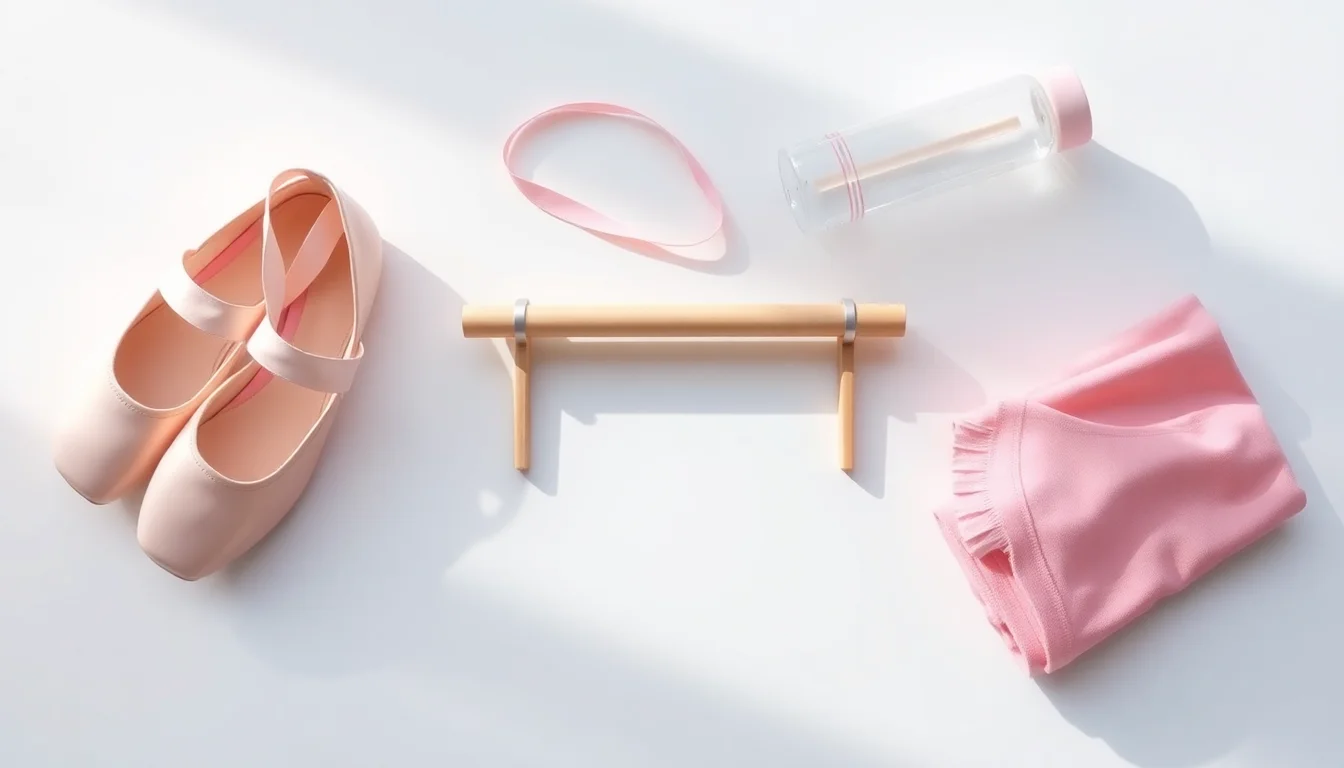
Short answer: Barre work opens every classical ballet class. Students hold the horizontal rail for balance and work through a sequence of exercises that warm the body, establish alignment, and build the…
What Is Barre Work?
Barre work opens every classical ballet class. Students hold the horizontal rail for balance and work through a sequence of exercises that warm the body, establish alignment, and build the technical foundation for centre work. The barre provides support so beginners can focus on technique before working without assistance.
Why Barre Exercises Matter
Barre work develops the essentials of ballet technique:
- Turnout from the hips
- Alignment of the spine, pelvis, and shoulders
- Foot articulation and strength
- Core stability and muscle memory
Every step performed in the centre or on stage is built on patterns learned at the barre.
The Essential Barre Exercises
1. Plié
A plié (plee-AY) is a bending of the knees with feet turned outward. The demi-plié is a half bend on flat feet; the grand plié is a full bend, rising onto the balls of the feet in first and second positions. Pliés warm the knees and hips and develop strength for jumps and landings.
2. Tendu
A tendu (tahn-DU) slides the foot along the floor until only the tip of the toe touches, then returns to first or fifth. Tendus develop foot articulation and strengthen the legs.
3. Dégagé
A dégagé (day-gah-ZHAY) is like a tendu but the foot brushes off the floor to a small height. It develops speed, coordination, and the brushing action needed for bigger jumps.
4. Rond de Jambe
A rond de jambe (rawnd de ZHAHM) — “circle of the leg” — traces a semicircle on the floor (à terre) or in the air (en l’air). Develops hip flexibility and turnout.
5. Battement Frappé
A frappé (frah-PAY) — “struck” — starts with toes at the ankle of the supporting leg and strikes sharply out to a pointed position. Develops the quick foot action needed for allegro work.
6. Développé
In a développé (day-vuh-loh-PAY) the working leg slowly unfolds from passé to a fully extended position in the air. Builds the strength, flexibility, and control for arabesque and attitude lines.
7. Grand Battement
A grand battement (grahn bat-MAH) is a full leg swing, kicking to 90° or beyond and returning to fifth. Develops strength, hip freedom, and the dynamic power for grand allegro jumps.
Practising at Home
Many barre exercises can be practised at home using a sturdy chair or kitchen worktop as a support. Wear your soft ballet shoes or bare feet on a non-slip surface, and use a mirror to check alignment.
Shop from Zoe Dancewear
Frequently Asked Questions
What exercises are done at the barre in ballet?
Standard exercises include pliés, tendus, dégagés, rond de jambes, battements frappés, développés, and grand battements — performed in a set order that warms the body systematically.
Can beginners do barre exercises at home?
Yes, using a chair for support. Learn correct technique from a qualified teacher first to avoid reinforcing bad habits at home.
How long should barre work take?
In an adult class, 20 to 30 minutes. In a children’s class, around 10 to 15 minutes before moving to centre exercises.
What should I wear for barre exercises?
For a ballet class: a fitted leotard, ballet tights, and soft ballet shoes. For a barre fitness class: workout wear and grip socks.