
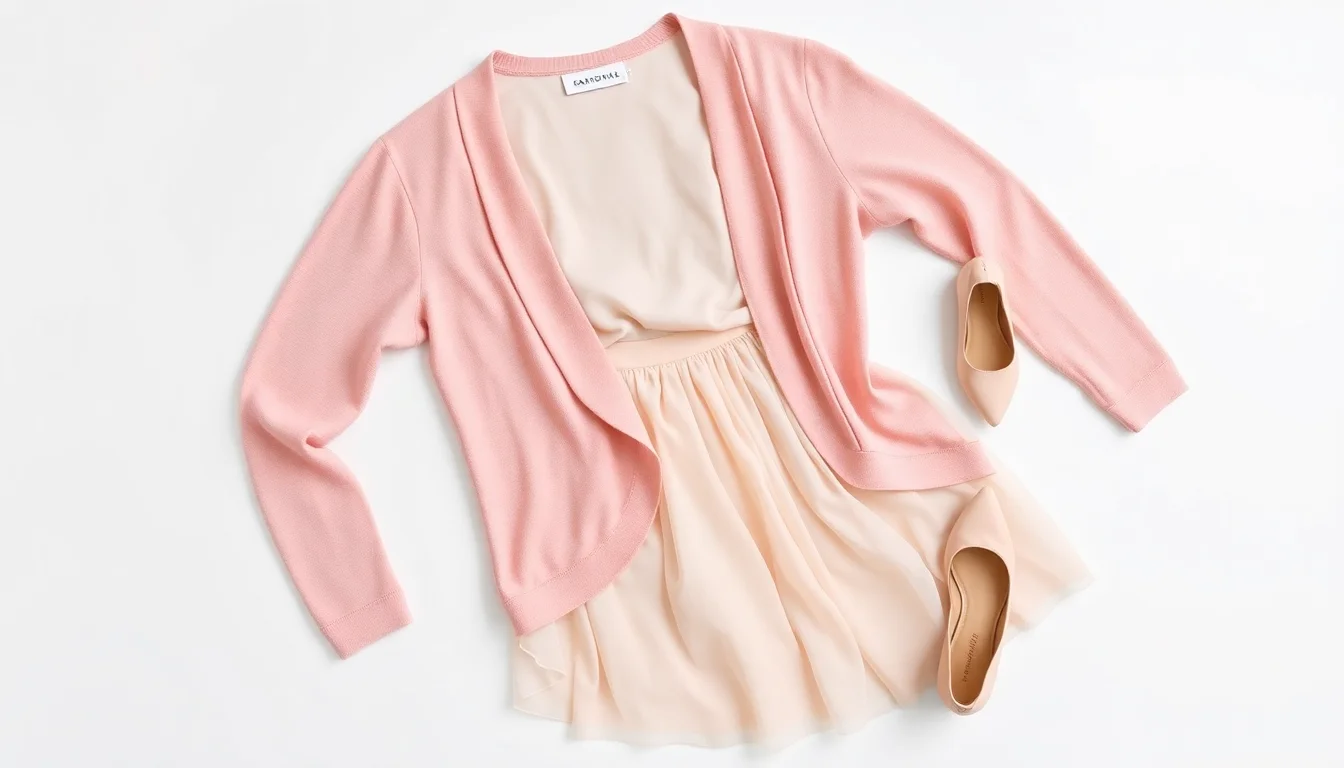
Balletcore is the fashion trend that takes classic ballet studio staples — leotards, wrap cardigans, chiffon skirts, ballet flats and pale hosiery — and wears them as everyday clothing. The aesthetic rose to wide popularity in 2023 and remains one of the leading style influences heading into 2026, seen on fashion weeks, in editorial campaigns and across social media. For ballet students and dance parents, many of these pieces are already in the dance wardrobe.
Short answer: Balletcore is the fashion trend that takes classic ballet studio staples — leotards, wrap cardigans, chiffon skirts, ballet flats and pale hosiery — and wears them as everyday clothing.
What are the key pieces of a balletcore outfit?
The balletcore wardrobe centres on a small number of signature pieces:
- Wrap cardigan or ballet wrap top — the most recognisable balletcore staple. Worn loosely tied at the waist, in soft neutral shades like blush, cream, taupe or pale grey.
- Leotard or body — worn as a top, tucked into trousers or skirts. Scooped neck or boat-neck styles work best for an everyday look.
- Chiffon midi skirt or wrap skirt — often layered over slim trousers or tights for a soft, fluid silhouette.
- Ballet tights or sheer hosiery — worn with skirts and dresses, often in a pale nude or soft pink shade.
- Ballet flats — pointed toe, low cut, in satin, leather or canvas. The ribbon-tied detail is popular in fashion versions of this shoe.
What colours work for balletcore?
The balletcore palette is deliberately soft and restrained. Blush pink, ivory, white, pale lavender, dusty rose, sage green and warm taupe are the core shades. Neutrals — camel, cream and pale grey — ground the look without competing with the soft accents. Black also works in a more contemporary balletcore interpretation, particularly in wrap tops and fitted skirts. The key is to avoid bold, saturated colours or heavy pattern — balletcore is about softness and restraint.
Can you wear studio dancewear as balletcore?
Yes — this is part of the appeal of the trend. A ballet wrap cardigan from the dance wardrobe, worn over jeans with pointed flats, is already a balletcore look. A chiffon skirt worn over fitted trousers or cycling shorts is another easy studio-to-street combination. The pieces do not need to be from fashion labels to work — genuine dancewear from a ballet specialist often looks better than high-street imitations because the fabric quality is higher.
How is balletcore different from wearing dancewear as fashion?
Balletcore is an aesthetic, not a category: it is the combination of pieces, the palette, and the overall mood. Wearing a leotard alone as a shirt is athleisure or gym wear. Wearing that same leotard with a chiffon wrap skirt, a loose cardigan and soft flats is balletcore. The layering, the softness of the colour palette, and the intentional mix of studio staples with regular clothing is what creates the distinctive look.
Shop from Zoe Dancewear
Frequently Asked Questions
Can real ballet dancewear be worn as everyday balletcore clothing?
Yes — many actual dancewear pieces work perfectly as everyday balletcore outfits. A ribbed wrap cardigan, a chiffon wrap skirt or ballet flats are designed for dance but translate naturally into fashion styling.
What are the key pieces for a balletcore wardrobe?
A wrap top or cardigan, a flowing midi skirt or chiffon wrap skirt, ballet flats, and pale hosiery are the core pieces. Muted tones — dusty pink, white, cream, warm grey — give the aesthetic a studio-inspired look.
Is the balletcore trend suitable for non-dancers?
Absolutely. Balletcore is a fashion aesthetic, not a dress code. You do not need to dance to wear it. Many of the pieces are comfortable, feminine and practical for everyday wear — especially the cardigans and wrap skirts.