
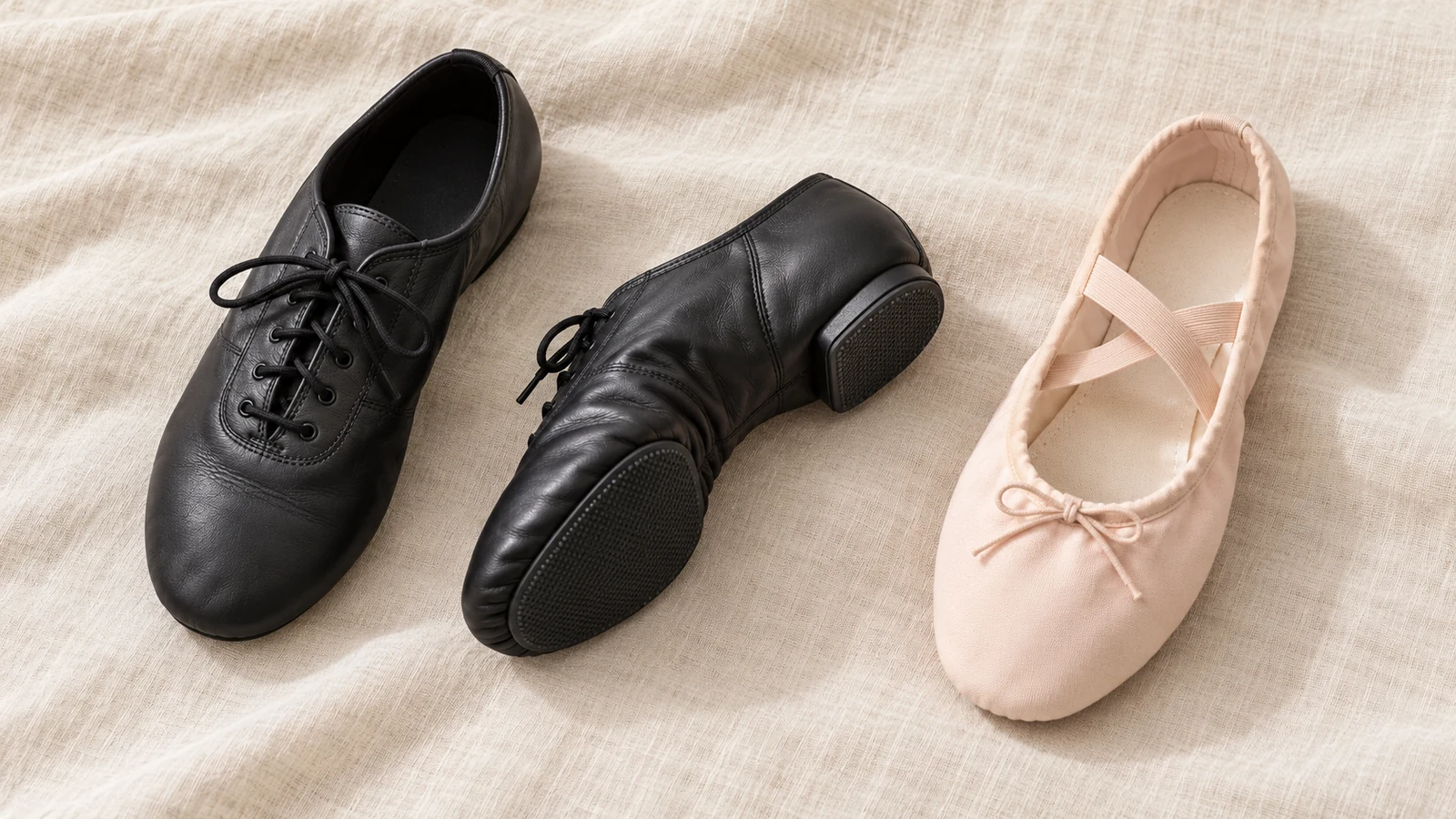
What Are Jazz Shoes?
Jazz shoes are a category of dance footwear designed specifically for jazz dance, musical theatre, and some contemporary styles. They are distinct from ballet shoes, character shoes, and street shoes in their construction, sole design, and the type of movement they support. Understanding what jazz shoes are — and how they differ from other dance shoes — helps parents and students make the right choice.
How Jazz Shoes Differ from Ballet Shoes
Ballet shoes and jazz shoes are both used in dance training but are designed for very different movement needs:
| Feature | Ballet Shoes | Jazz Shoes |
|---|---|---|
| Sole | Thin leather or canvas, full or split | Rubber, split or full, with more grip |
| Heel | Flat | Small raised heel (typically 1–1.5 inches) or flat jazz sneaker |
| Fit | Very close-fitting, minimal material | Close-fitting but with more structure |
| Toe | Square or tapered depending on style | Round or square, usually more padded |
| Movement supported | Turnout, pointing, relevé, pointe work | Parallel, turns, jumps, isolation work |
Types of Jazz Shoes
Lace-Up Jazz Oxfords
The traditional jazz shoe: a low-heeled leather shoe with laces, a split rubber sole, and a round toe. These are the most common jazz shoes used for ISTD modern theatre examinations and jazz classes. They provide support for the ankle and a clean look for theatrical performance.
Slip-On Jazz Shoes
A slip-on style without laces, typically made from leather or microfibre with an elasticated panel for a secure fit. Quicker to put on and remove, popular for recreational jazz classes.
Jazz Sneakers
A hybrid between a jazz shoe and a street sneaker: more cushioning, a flat or very low heel, and a design that suits street jazz, hip hop fusion, and commercial dance styles. Jazz sneakers are common in non-syllabus jazz classes and contemporary commercial dance training.
Split-Sole Jazz Shoes
Jazz shoes with a split sole (rubber pads at the ball and heel, with a gap in the middle) that allows the arch to flex fully during pointing and floor work. Preferred by dancers who need maximum foot articulation during jazz technique.
Who Needs Jazz Shoes?
Jazz shoes are required for:
- Students taking ISTD modern theatre or jazz examinations — the specific shoe style is part of the exam uniform
- Students in jazz dance classes at most dance schools
- Musical theatre students performing tap-free numbers
Students doing exclusively classical ballet, contemporary (usually bare feet), or tap dance (which uses tap shoes) do not need jazz shoes.
How to Choose Jazz Shoes
Check the syllabus requirement first. If your child is taking ISTD modern examinations, there may be a specified shoe style and color (usually black). Ask your teacher before buying.
Fit: Jazz shoes should fit snugly with no slipping at the heel and no bunching of material at the toes. Unlike street shoes, there should be no “growing room” — a shoe that is too big will slip during turns.
Material: Leather jazz shoes last longer and shape to the foot over time. Synthetic microfibre shoes are lighter and more affordable but may not be as durable for intensive use.
Jazz Shoes vs Character Shoes
Character shoes are a different type of dance shoe — typically a closed-toe, strapped shoe with a 1.5–2 inch heel, used for character dance in ballet (flamenco variations, Spanish, Hungarian etc.) and for RAD character examinations. Jazz shoes and character shoes are not interchangeable. See our guide: What Are Character Shoes?
Frequently Asked Questions
Can my child use ballet shoes for jazz class?
No — ballet shoes are not appropriate for jazz classes. They do not provide the grip, heel structure, or sole design that jazz technique requires, and their use in jazz class may be corrected by the teacher. The correct footwear for jazz is always jazz shoes or jazz sneakers as specified by the school.
What color jazz shoes do children usually wear?
Black is the most common color for jazz shoes in examined syllabi (ISTD, BATD). Tan/caramel jazz shoes are used for some performance contexts. Your teacher or school will specify the required color.
How long do jazz shoes last?
A quality leather jazz shoe worn for one to two classes per week should last 12–24 months in a child who is not growing rapidly. Intensive use or a fast-growing student will require more frequent replacement. Check the soles periodically — worn rubber soles reduce grip and should be replaced.