
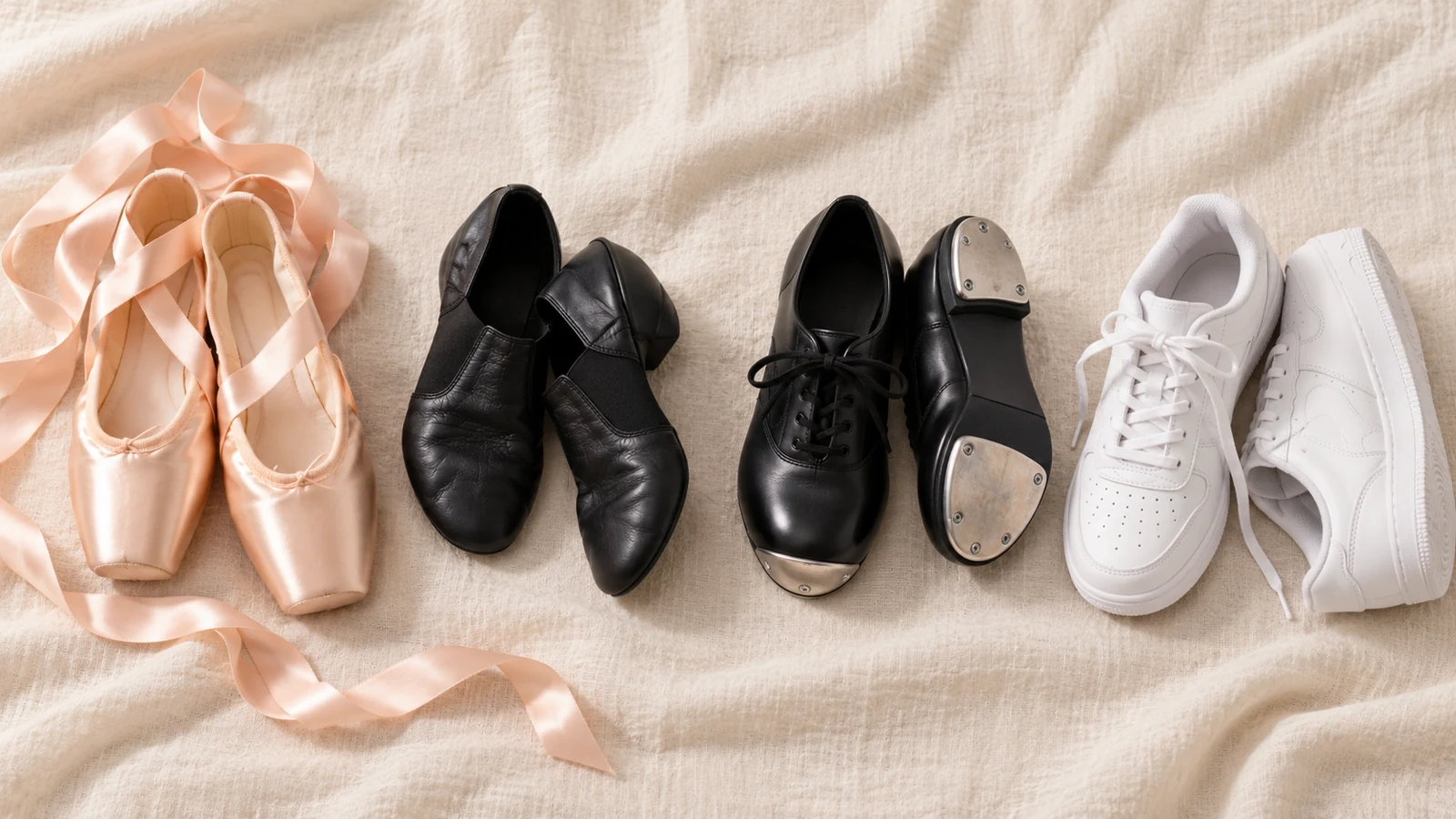
How Many Types of Dance Are There?
Dance is one of humanity’s oldest art forms, and across every culture and era, distinct styles have developed with their own histories, aesthetics, techniques, and music. For parents enrolling children in dance classes, or for adult beginners choosing a style, understanding the main genres helps you make an informed choice. This guide covers the major dance styles taught in studios and performed professionally today.
Classical Dance Forms
Classical Ballet
The most widely taught theatrical dance form in the Western world, classical ballet developed in the royal courts of France and Italy from the 15th century and was codified by the Russian Imperial Ballet in the 19th century. It is characterised by turned-out legs, pointe work, precise footwork, and a formal aesthetic. Examined worldwide through syllabi including the RAD (Royal Academy of Dance), ISTD, and Cecchetti. See our full guide: What Is RAD Ballet?
Contemporary Dance
A broad, ongoing practice drawing on ballet, modern dance, release technique, and improvisation. Contemporary dance emerged from the 20th-century modern dance movement and continues to evolve. See our detailed comparison: Contemporary Dance vs Modern Dance.
Modern Dance
A specific movement that arose in the late 19th and early 20th centuries as a rejection of classical ballet’s conventions. Modern dance developed codified techniques (Martha Graham, José Limón) that are still taught today. In UK dance schools, “modern” often refers to ISTD modern theatre — an examinable syllabus that includes jazz and theatre elements.
Social and Ballroom Dance Forms
Ballroom Dancing
A partnership dance tradition encompassing multiple styles. In competition, ballroom is divided into two main categories: Standard (Waltz, Tango, Viennese Waltz, Foxtrot, Quickstep) and Latin (Cha-Cha, Samba, Rumba, Paso Doble, Jive). Each has a highly codified technique and is examined and competed worldwide through organizations including the ISTD and WDSF.
Salsa
Originating in the Caribbean and New York, salsa is a lively partner dance with strong Afro-Cuban rhythmic roots. It encompasses several distinct regional styles including Cuban salsa (Casino), New York salsa (On2), and Los Angeles style.
Tango
Originating in the Río de la Plata region of Argentina and Uruguay, the Argentine tango is a deeply intimate improvisational partner dance. It is distinct from the ballroom tango, which is a stylised theatrical version of the same root.
Jazz, Tap and Theatre Dance
Jazz Dance
Jazz dance has African-American roots and developed alongside jazz music in the early 20th century. It encompasses a wide range of styles from theatrical jazz (as seen in musical theatre) to street jazz and lyrical jazz. Jazz technique includes isolation exercises, syncopated rhythms, and high-energy combinations. Jazz dance is examinable through ISTD and BATD syllabi.
Tap Dance
Tap uses metal plates (taps) on the soles of shoes to create percussive sounds, making the dancer a musical instrument as well as a visual performer. It has roots in African American, Irish, and English clog dancing traditions. Major tap styles include Broadway tap (theatrical, upright) and rhythm tap (lower, closer to the floor, more improvisational).
Musical Theatre Dance
The dance language of stage musicals, musical theatre dance blends ballet, jazz, tap, ballroom, and contemporary styles depending on the show. Training in musical theatre dance develops versatility across all these forms.
Cultural and World Dance Forms
Flamenco
Originating in Andalusia, Spain, flamenco is a passionate and complex art form combining specific footwork (zapateado), upper body movement, and song. Classical flamenco training is a distinct discipline requiring years of dedicated study.
Kathak
One of the major classical dance forms of India, Kathak is characterised by intricate footwork, spins, and expressive mime. It has roots in both Hindu temple traditions and the Mughal court.
Bharatanatyam
The oldest of the Indian classical dance forms, originating in Tamil Nadu. It involves precise footwork, hand gestures (mudras), and complex rhythmic patterns performed to Carnatic music.
Hip Hop
Born in New York in the 1970s, hip hop encompasses multiple street dance styles including breaking (breakdancing), popping, locking, and krump. It is taught in many dance studios and is increasingly incorporated into mainstream dance education.
Which Dance Style Is Right for My Child?
Most children benefit from starting with classical ballet, which develops body awareness, coordination, musicality, and discipline that transfers to every other dance form. Many students then add jazz, contemporary, or musical theatre as they grow older. The best dance education combines rigorous technical training with opportunities to explore different styles.
Frequently Asked Questions
What is the hardest type of dance to learn?
All dance styles are demanding when pursued seriously. Classical ballet and flamenco are often cited as among the most technically demanding, requiring many years of dedicated training to reach a high level. Argentine tango is considered one of the most complex improvisational partner dances. Ultimately, the “hardest” style is the one you are least suited to by training and temperament.
What dance style is best for fitness?
All dance styles provide excellent cardiovascular fitness, coordination, and strength. Ballet and contemporary specifically develop core strength, flexibility, and body awareness. Salsa and ballroom are excellent for cardio and coordination. The best style for fitness is the one you will enjoy enough to practice consistently.
Is ballet a good foundation for other dance styles?
Yes — overwhelmingly so. Classical ballet develops the physical foundations (turnout, alignment, core strength, musicality, body awareness) that support all other dance forms. Professional jazz, contemporary, and musical theatre dancers very commonly began with classical ballet training.