
What Are Ballerina Sneakers?
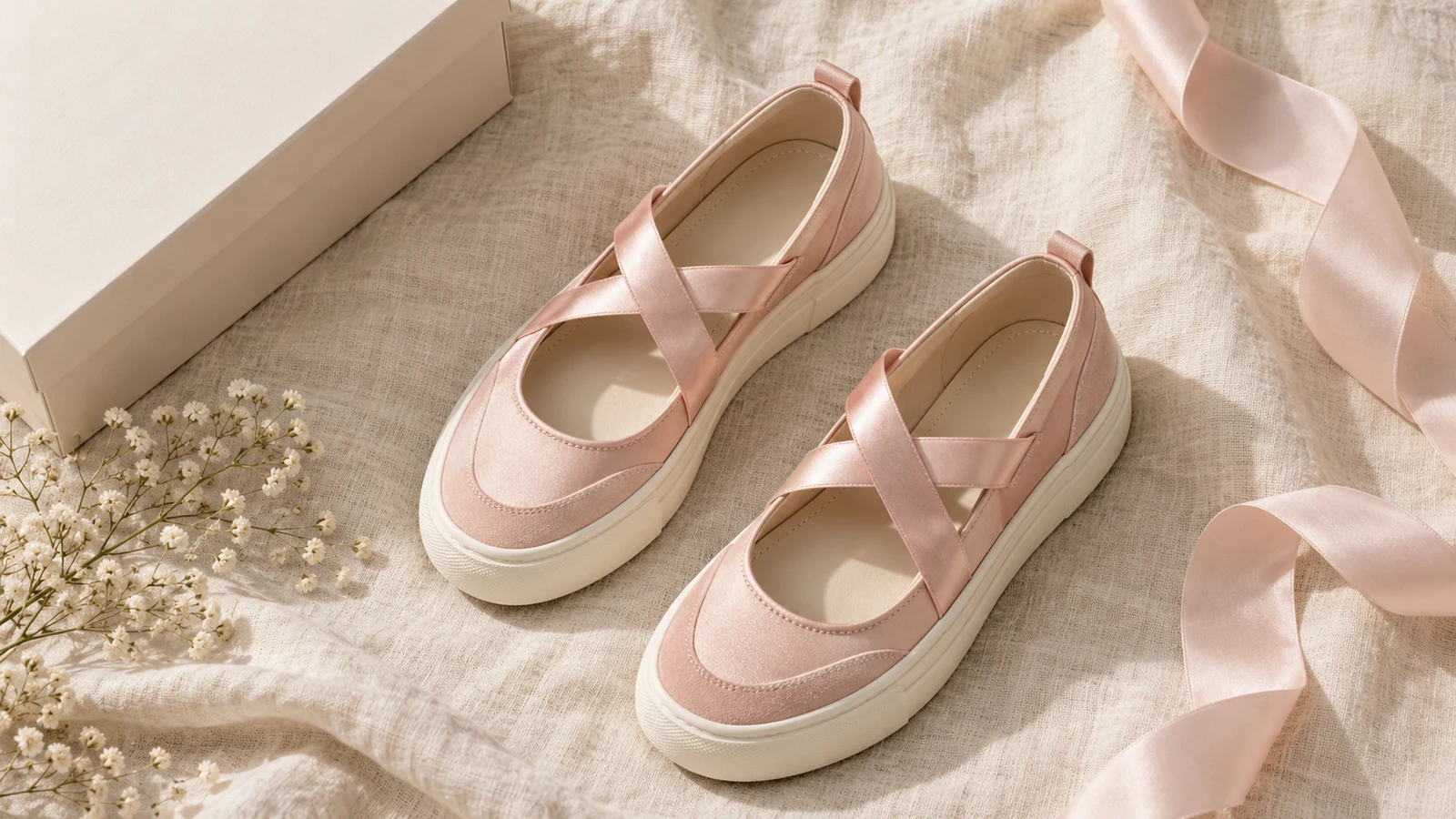
Ballerina sneakers — also called ballet sneakers or ballet-flat sneakers — are a fashion footwear hybrid that combines the silhouette and softness of a traditional ballet flat with the comfort and structure of a casual sneaker sole. They are not dance shoes used in class or on stage; they are a fashion item inspired by ballet aesthetics that has gained significant popularity in mainstream fashion.
If you searched “ballerina sneakers” looking for actual ballet shoes for dance class, see our guide: Canvas vs Leather Ballet Shoes. This guide covers the fashion trend specifically.
The Balletcore Trend and Its Origins
Ballerina sneakers emerged from the broader “balletcore” fashion movement that peaked in 2022–2024. Balletcore takes aesthetic inspiration from classical ballet training — pale pink, ribbons, tulle, wrap cardigans, and soft silhouettes — and translates it into everyday fashion. It was driven by social media (particularly TikTok and Instagram), street style photography, and endorsement from major fashion houses.
Brands including New Balance, Nike, and Onitsuka Tiger produced ballet-flat hybrid sneakers, while independent designers and luxury labels created their own versions. The style appealed to women and girls who love the elegance of ballet aesthetics but want the practicality of a wearable everyday shoe.
How Ballerina Sneakers Look
The typical ballerina sneaker features:
- A low, streamlined profile — no chunky soles
- Soft, rounded toe box
- Often in pale or neutral colors: blush pink, cream, white, pale grey
- Sometimes featuring ribbon-like laces or decorative bows
- A sole with more grip and cushioning than a true ballet flat
- Materials that mimic the satin or leather of ballet shoes — often satin-finish, patent, or soft leather
Are Ballerina Sneakers Suitable for Dance Class?
No. Ballerina sneakers are not suitable for dance class, barre, or any ballet training. They do not provide the sole flexibility, fit precision, or structural support that ballet training requires. The RAD and other examining bodies specify approved footwear for examinations, and fashion sneakers — however ballet-inspired — do not qualify.
For actual ballet class shoes, see our guides:
The Ballet Flat: The Original Ballerina Shoe
The classic ballet flat — a thin-soled, low-cut shoe with a rounded or slightly squared toe — has been a mainstream fashion item since the 1950s, when Audrey Hepburn popularised it. Ballet flats draw their name and silhouette from the ballet slipper but have never been dance shoes; they have always been street footwear inspired by the elegance of classical ballet.
The current ballerina sneaker trend is essentially a modern, sportswear-influenced evolution of the classic ballet flat: the same aesthetic inspiration but with more cushioning for the demands of urban life.
Frequently Asked Questions
Why are ballet-inspired shoes so popular in fashion?
The aesthetic of classical ballet — femininity, grace, lightness, pale colors, ribbons — translates naturally into fashion. Ballet has always had a close relationship with fashion design: Christian Dior, Hubert de Givenchy, and many other couturiers drew directly on ballet for their work. The current balletcore trend is the latest expression of a very long-standing connection between the two worlds.
What should my daughter wear to ballet class, not a ballerina sneaker?
For RAD or ISTD ballet classes, your child needs properly fitted canvas or leather ballet shoes, a leotard in the appropriate color for their grade, and pink tights. See the full uniform guide for your child’s level: RAD Ballet Uniform Guide by Grade.
Are ballerina sneakers good for everyday wear?
As fashion items, ballerina sneakers are comfortable and versatile for light everyday use — shopping, school, casual outings. They are not designed for running, sport, or intensive walking, as their thin soles provide less support than purpose-built sports shoes. For everyday comfort, look for versions with adequate cushioning and a sole that suits the terrain you walk on.