Why Flexibility Matters for Dancers
Flexibility is one of the physical foundations of dance. Whether your child studies ballet, contemporary, or jazz, a supple, well-conditioned body allows for safer movement, greater range of expression, and reduced injury risk. The good news: flexibility can be improved at any age with consistent, correct practice.
This guide covers the most effective methods recommended by dance physiotherapists and experienced teachers — safe for children, teenagers, and adult beginners alike.
The Difference Between Flexibility and Hypermobility
It is important to distinguish between flexibility (earned range of motion achieved through regular stretching and strengthening) and hypermobility (a joint laxity that some people are born with). Hypermobile dancers need strength work more than stretching — pushing already loose joints further increases injury risk. If your child’s joints click, hyperextend easily, or if they have been told they are “double-jointed,” consult a physiotherapist before starting an intensive flexibility program.
The Golden Rules of Stretching for Dancers
- Never stretch cold — always warm up with 5–10 minutes of light movement (jogging on the spot, jumping jacks, body rolls) before any deep stretch
- Hold, don’t bounce — static stretches held for 30–60 seconds are safer and more effective than bouncing (ballistic) stretches for developing long-term range
- Breathe throughout — tension and held breath prevent muscles from releasing; exhale as you deepen a stretch
- Pain is a stop signal — a stretching sensation is normal; sharp, stabbing, or joint pain is not and means stop immediately
- Stretch after class, not before — the optimal time for deep flexibility work is after a full class when the body is thoroughly warm
Key Areas to Stretch for Ballet
Hamstrings
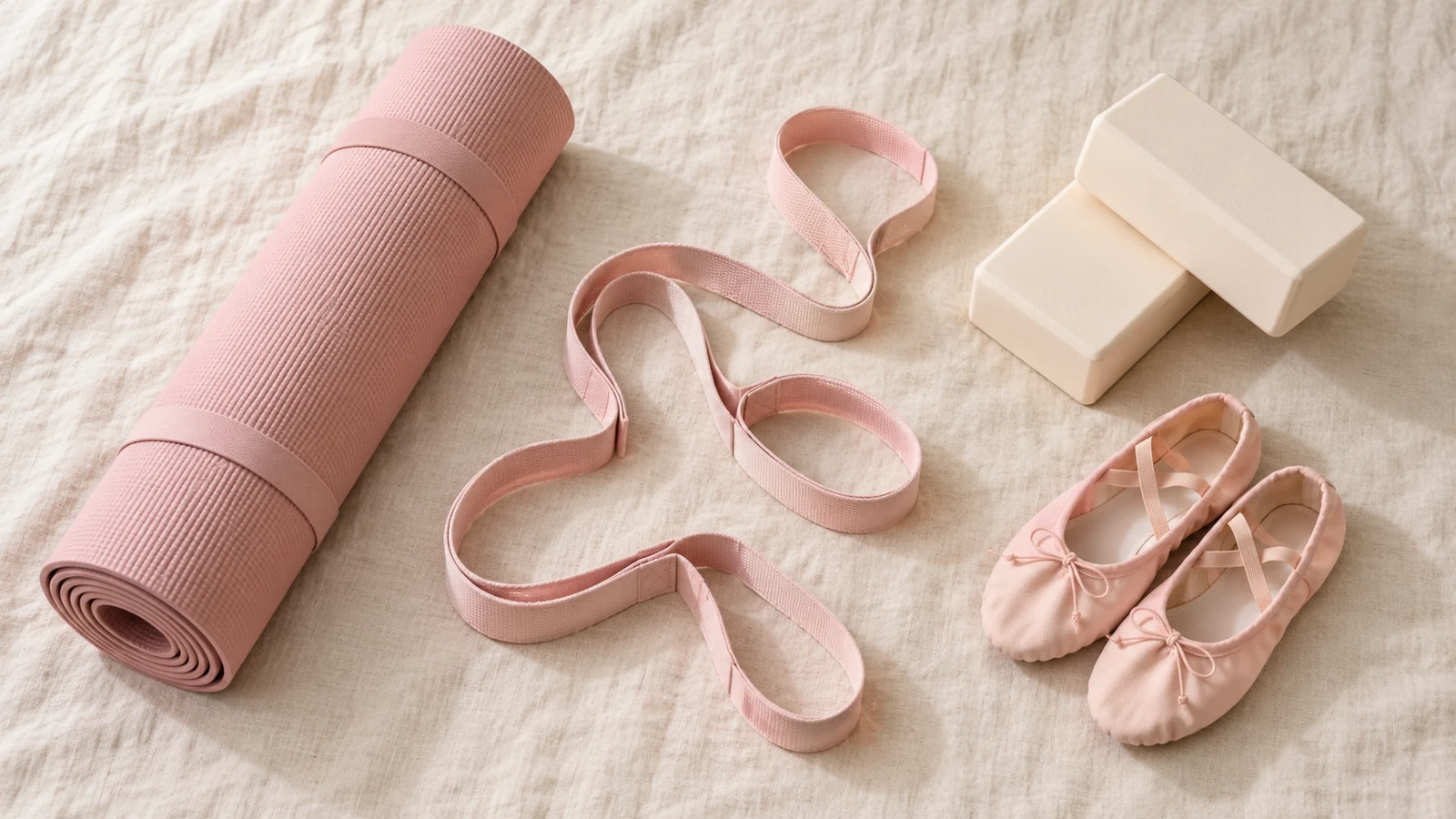
Tight hamstrings limit arabesque height, grand battement, and developé. Effective stretches: standing forward fold, seated pike stretch, and lying hamstring stretch with a resistance band. Hold each for 45–60 seconds per leg.
Hip Flexors
Tight hip flexors restrict arabesque, attitude, and high leg extensions to the back. The kneeling lunge stretch (low lunge) is one of the most effective: kneel on one knee, shift the hips forward gently, keeping the torso upright. Hold 45 seconds each side.
Turnout (External Hip Rotation)
Ballet turnout comes from the hip joint, not the knee or ankle. The butterfly stretch (sitting with soles of the feet together) and the figure-four stretch both target the external rotators. Strengthening these muscles is equally important — strong rotators provide sustainable turnout rather than forced positions that injure the knees.
Back
A supple, supported back is essential for port de bras and cambrés. The cobra stretch (lying on the stomach, pressing up through the hands to extend the spine) and the cat-cow exercise (on all fours, alternately arching and rounding the back) are safe and effective. Back flexibility work should always be paired with core strengthening.
Feet and Ankles
A well-pointed foot requires flexibility through the instep and toes. The tendu exercise builds this over time. Specific stretches: gently pressing the top of the pointed foot toward the floor, and theraband resistance work through the full range of point and flex.
Strengthening: The Essential Partner to Stretching
Flexibility without strength creates unstable joints and increases injury risk. For every stretching session, include complementary strengthening work:
- Core — plank holds, Pilates hundred, bicycle crunches
- Glutes and hip rotators — clamshells, side-lying leg lifts, resistance band work
- Ankle and foot — relevés, single-leg balance, theraband exercises
How Often Should You Stretch?
For measurable progress: daily stretching of 15–20 minutes produces results faster than three sessions per week. Consistency over months — not days — is what creates lasting change. Most dance physiotherapists recommend a 3–6 month program before expecting significant improvement in a stiff area.
What to Wear for Stretching Practice
Wear fitted, stretchy clothing that does not restrict movement. A fitted leotard with tights or warm-up trousers lets you and your teacher see alignment clearly. Leg warmers keep muscles warm during a cool-down stretch.
Frequently Asked Questions
At what age can children start serious flexibility training?
Children are naturally more flexible than adults and can begin gentle stretching from the earliest classes. However, intensive flexibility training — including oversplits and deep backbends — should wait until a child is physically mature enough and always be supervised by a qualified teacher. The RAD‘s syllabus introduces stretching progressively through the grades.
How long does it take to get the splits?
This varies enormously by individual anatomy, current flexibility, and training frequency. A student who stretches daily and is already moderately flexible might achieve a flat split in 3–6 months. A naturally tight student may take a year or more. Neither timeline is wrong — consistency matters more than speed.
Is yoga good for dancers’ flexibility?
Yes. Yoga develops both flexibility and body awareness, and many professional dancers use it as a supplement to their dance training. Yin yoga (long-held passive stretches) is particularly effective for developing range. Pilates is equally beneficial for strengthening the core and stabilising flexible joints.
Can stretching before class cause injury?
Cold static stretching before class can temporarily reduce muscle power and increase injury risk. The current guidance from sports medicine and dance medicine is to use dynamic movement (leg swings, body rolls, light jumping) to warm up before class, and save deep static stretching for the end of the session when the body is fully warm.