
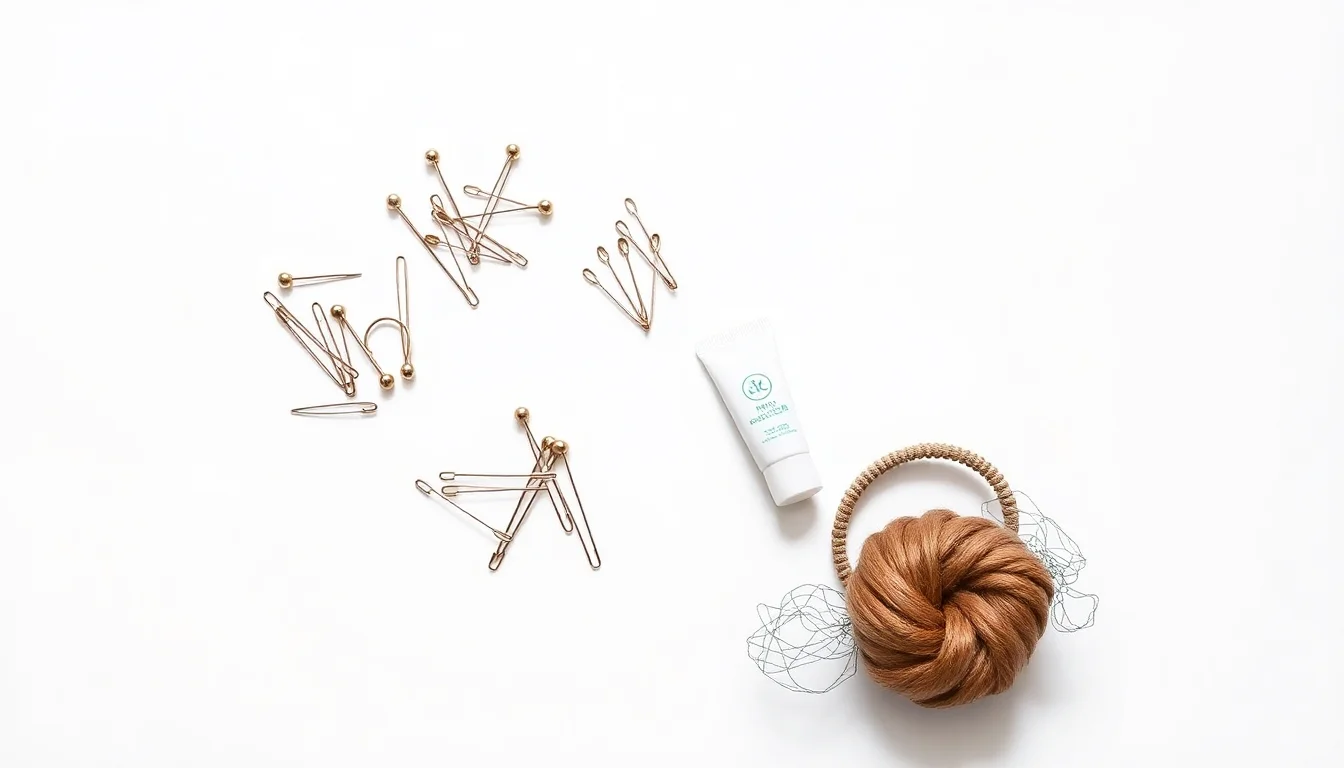
A neat ballet bun is the standard hairstyle for ballet class and graded exams. All hair must be off the face and neck, and a firm, flat bun at the back of the head is the classic way to achieve this. With the right tools and a little practice, most parents can make a tidy bun in under five minutes.
Short answer: A neat ballet bun is the standard hairstyle for ballet class and graded exams. All hair must be off the face and neck, and a firm, flat bun at the back of the head is the classic way to achieve this.
What you need to make a ballet bun
Before you start, gather everything together so you are not searching mid-way through:
- A fine-tooth comb or soft bristle brush
- Hair gel or edge control for flyaways
- One or two hair elastics (matching the hair colour)
- A bun donut or bun ring (optional, for a fuller shape)
- 8–12 bobby pins or U-pins
- A hairnet that matches the hair colour
- Hairspray to finish
Most dance schools sell starter bun kits that include several of these items together.
How to make a ballet bun step by step
- Brush all hair smooth. Work from the nape of the neck upward, removing tangles and smoothing any bumps. Apply a small amount of gel to the hairline to catch flyaways.
- Pull hair into a high ponytail. Position the ponytail at the crown of the head, directly above the ears. Secure with a hair elastic. The ponytail should feel firm — no loops or loose strands.
- Twist and coil. Hold the ponytail at its tip and twist the whole length tightly into a rope. Then coil the twisted rope around the base of the elastic in a flat spiral, tucking the end underneath as you go.
- Pin the bun in place. Press bobby pins into the bun at four evenly spaced points (top, bottom, left, right), angling each pin down toward the scalp. Add more pins around the edge if needed.
- Cover with a hairnet. Stretch the hairnet over the whole bun, tucking the edges under and securing with two or three extra pins. Spray lightly with hairspray and smooth any remaining flyaways.
Tips for fine, short or curly hair
Fine hair tends to slide out of pins. Use gel generously at the roots and choose U-pins rather than standard bobby pins, as they grip more of the hair. A bun donut — a foam ring in the hair colour — adds volume and gives the bun a rounder shape, which can look neater on fine hair than a flat coil.
For curly or textured hair, apply a leave-in conditioner before brushing to reduce frizz and make the hair easier to smooth. Work in sections and take more time at the ponytail stage to ensure all strands are gathered evenly. A bun donut is especially useful here because it gives the hair a defined shape to wrap around.
How to keep a ballet bun neat all class long
The bun needs to stay in place through jumping, turning and floor work, so the foundation — the ponytail — must be pulled as tight as the dancer can comfortably tolerate. Common reasons a bun falls apart mid-class are: not enough pins, pins placed at the surface instead of anchored into the scalp, or a ponytail that was left slightly loose. Carrying a small emergency kit in the dance bag — a few extra pins, a spare elastic and a travel hairspray — can fix most bun disasters before class.
What the RAD requires for exam hair
For Royal Academy of Dance examinations, hair must be completely off the face and neck. A neat, secure bun placed at the crown or upper back of the head is the expected style for all grades from Pre-Primary upward. The RAD does not specify a particular product or method, but the bun must remain in place for the full length of the exam. Avoid decorative accessories unless your teacher has confirmed they are permitted.
Shop from Zoe Dancewear
Frequently Asked Questions
What is the best hair tie to start a ballet bun?
Use a fabric-covered elastic (often called a bun tie or ballet hair tie) in a color that matches the dancer's hair. Metal-free elastics are gentler on hair and do not snag. Avoid very thin or tight elastics that cut into the hair.
How do I stop a ballet bun falling down during class?
The most common reason a bun falls is too few pins. Use at least ten to fifteen bobby pins, placed around the bun and pointing inward toward the center. A hair net placed over the finished bun and pinned to the base adds a final layer of security.
My child has thin, fine hair — how can we make a bigger bun?
A bun donut or foam former creates volume and fullness even with fine hair. Place it at the base of the ponytail and wrap the hair over and around it before pinning. The donut adds size and makes the bun look fuller.