
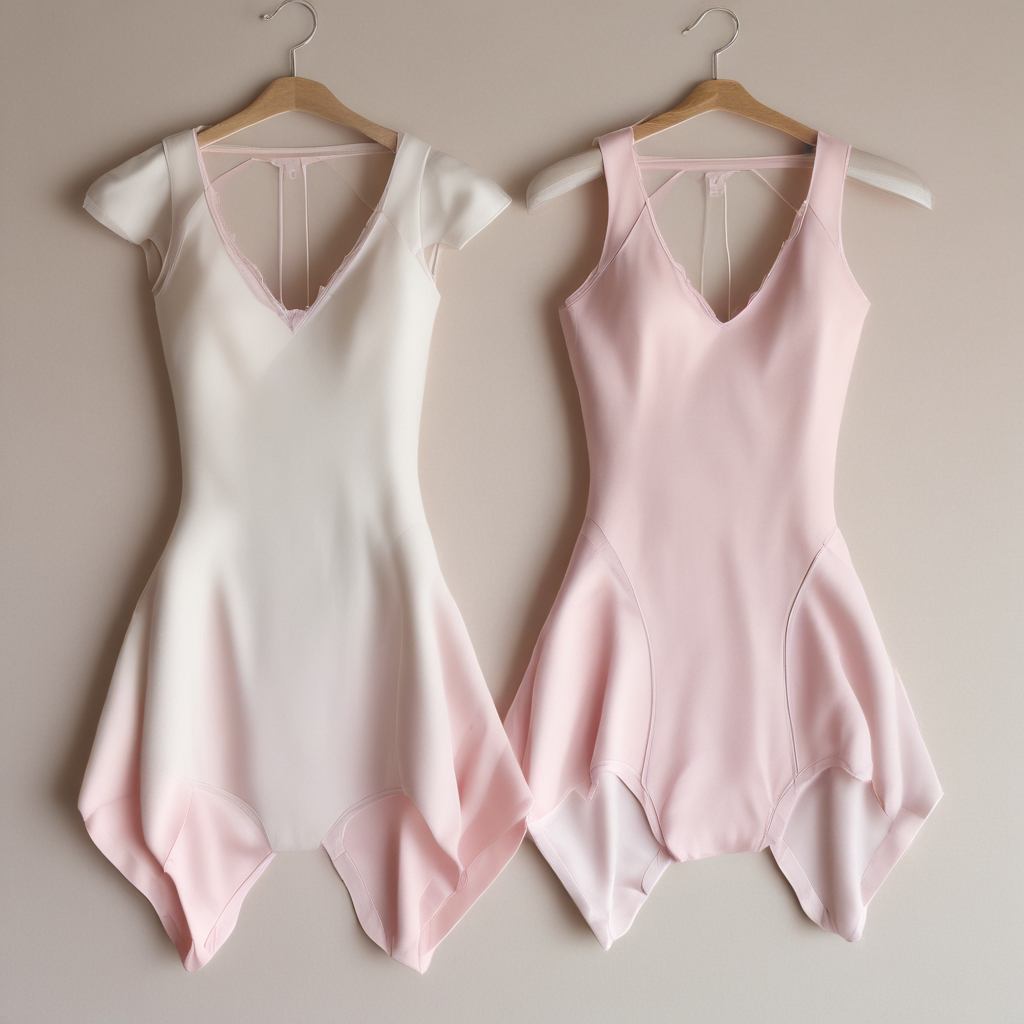
When buying a ballet leotard, the material matters almost as much as the fit. Cotton and nylon (also sold as nylon-lycra, polyamide or elastane blends) are the two most common fabric families, and they behave very differently in a dance class environment.
Cotton Ballet Leotards
Cotton leotards are soft, breathable and comfortable against the skin. They feel gentle and natural, which makes them popular for very young children whose skin is sensitive. Cotton also tends to be less shiny, giving the garment a matte, understated appearance.
The main limitation of cotton for dance is its behaviour when wet. Cotton absorbs sweat readily but holds onto moisture — after an active class, a cotton leotard can feel heavy and clammy. Cotton also has limited natural stretch and does not snap back to its original shape the way nylon does. Cotton blends — mixed with a small percentage of elastane — improve the stretch significantly while keeping the softness of cotton.
Nylon and Elastane Ballet Leotards
Nylon-elastane blends are the industry standard for dance and gymnastics leotards. The fabric stretches in all four directions, returns to its original shape after every movement, and does not retain moisture the way cotton does. Sweat wicks away from the skin during class, and the leotard remains lightweight throughout. Nylon leotards hold their shape across hundreds of washes and maintain their colour better than cotton over time.
What RAD Schools Typically Specify
Most RAD-affiliated schools specify a nylon or nylon-elastane leotard for class use — the fabric performs consistently throughout a demanding class and maintains its appearance across the school year. A cotton or cotton-blend leotard may be acceptable for toddler and Pre-Primary levels where classes are shorter and less physically demanding.
What About Examinations and Performances?
For examinations and end-of-year performances, nylon-elastane leotards have a cleaner, smoother line under stage lighting and retain their shape better through a long examination morning. Cotton can look slightly crumpled and may show sweat more visibly under bright lights.
Summary
For everyday ballet class, a nylon-elastane leotard is the practical choice: it performs better, lasts longer, and looks better throughout the school year. Cotton or cotton-blend leotards suit toddler-level classes or sensitive-skinned younger children. For RAD examinations and performances, nylon is almost universally the better choice. See our full RAD leotard colour guide for information on which colours are required at each grade level.