
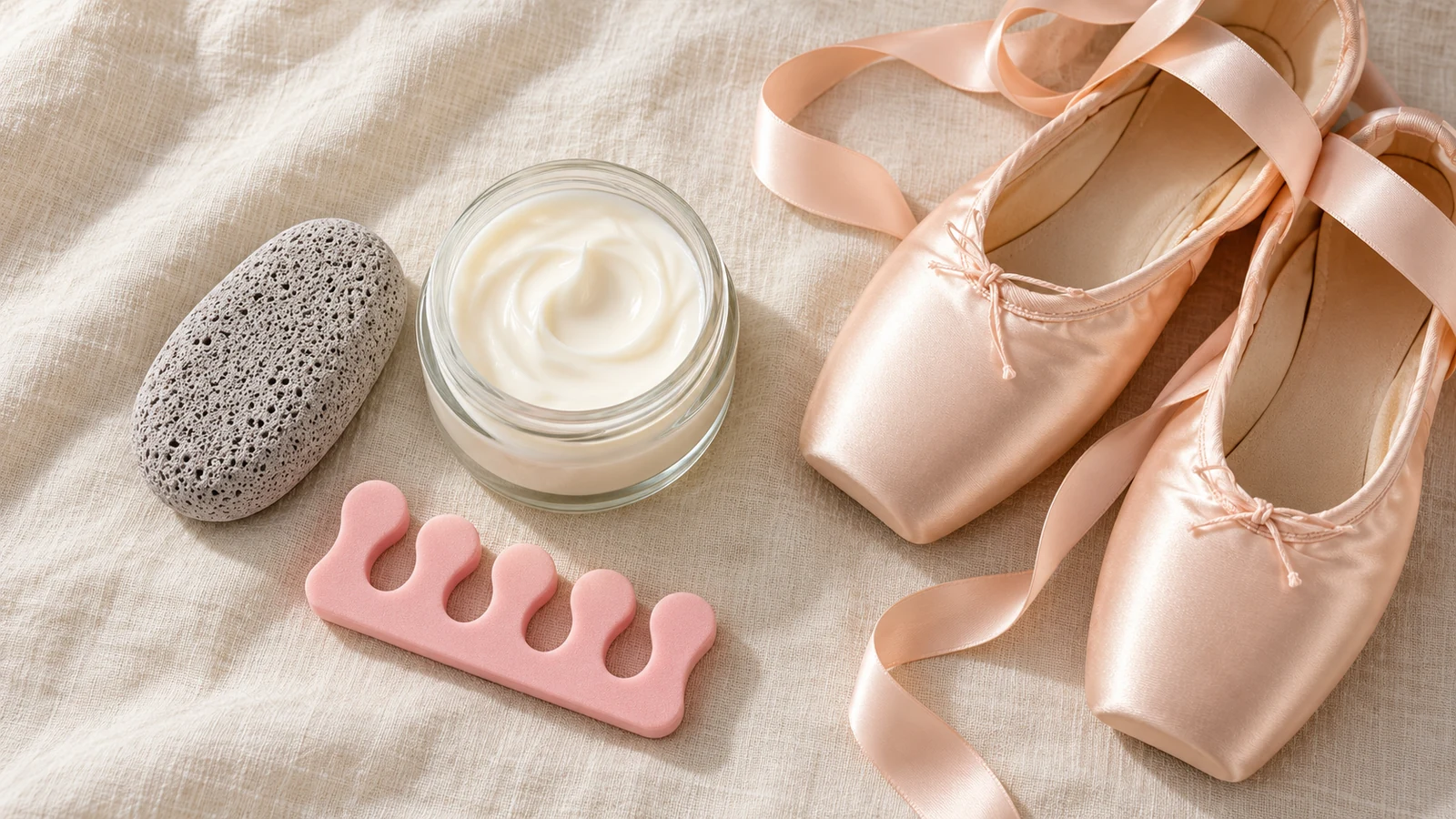
Why Foot Care Matters in Ballet
A ballet dancer’s feet work harder than virtually any other athlete’s. They absorb repeated impact, sustain balance on a single point, articulate into extreme positions, and do so across decades of training and performance. Whether your child is in Pre-Primary or working towards their first pointe shoes, developing good foot care habits early protects their health and longevity in the studio.
Common Foot Problems in Ballet Dancers
Blisters
The most universal complaint, especially when breaking in new shoes or after a long rehearsal period. Blisters form where the shoe rubs repeatedly against the skin. Prevention: ensure shoes fit correctly (neither too loose nor too tight), use a small amount of petroleum jelly on known friction points, and allow new shoes to be broken in gradually rather than wearing them for a full class immediately.
Calluses
Thickened skin on the ball of the foot, the tips of the toes, and the heel develops as a natural response to repeated friction. A moderate amount of callus is actually protective for dancers — it reduces blister formation. However, very thick or cracked calluses can split painfully. Keep calluses smooth with a pumice stone after bathing, and apply a thin layer of foot cream before bed.
Ingrown Toenails
Caused by tight-fitting shoes, improper toenail cutting, or repeated pressure on the toes. Cut toenails straight across — never round the corners — and keep them short (just past the end of the toe). Never cut into the sides. If an ingrown nail becomes infected, see a podiatrist promptly.
Bruised Toenails
Common in dancers who spend time on pointe or in tight shoes. A black toenail results from bleeding beneath the nail caused by pressure. Keep toenails trimmed short to minimize this. If the nail becomes very painful or the area becomes infected, seek medical advice.
Dry, Cracked Heels
Dancers who frequently go barefoot in changing rooms or who have naturally dry skin are prone to cracked heels. Apply a thick foot cream (urea-based creams work well) every evening. Silicone heel pads can protect cracked areas during class.
Daily Foot Care Routine for Dancers
After class:
- Remove shoes immediately and allow feet to air
- Check for blisters, hot spots, or any new areas of pain
- Wash feet thoroughly, including between the toes
- Dry completely — fungal infections thrive in moisture, especially between the toes
- Apply a light moisturiser or foot cream to the soles and heels
Weekly:
- Gentle pumice on any calluses after a warm bath or shower
- Trim toenails straight across if needed
- Check inside dance shoes for worn areas that may be causing friction
The Importance of Correctly Fitted Shoes
Most foot problems in young ballet students trace back to ill-fitting shoes. A shoe that is too long causes the toes to curl; too short creates pressure on the nails; too wide allows the foot to slide; too narrow compresses the toes into unnatural positions. Have shoes fitted professionally and replace them when they are worn through — holes in the sole alter foot mechanics and increase injury risk. See our guide: How Should Ballet Shoes Fit?
Foot Strengthening Exercises
Strong intrinsic foot muscles reduce the impact on bones and joints and improve articulation for exercises like tendu and relevé. Simple exercises recommended by dance physiotherapists include:
- Towel scrunches — place a small towel on the floor and scrunch it with the toes repeatedly
- Marble pickups — pick up marbles from the floor using the toes
- Doming — lift the arch of the foot while keeping the toes flat on the floor
- Theraband resistance — point and flex the foot against gentle resistance
When Pointe Work Begins: Extra Care Needed
Once a dancer starts pointe work, foot care becomes significantly more demanding. Toe pads, lambswool, and gel spacers help manage the increased pressure on the toes. Pointe shoes must be fitted by a professional fitter — a poorly fitted pointe shoe is the single largest cause of foot problems in young dancers.
Frequently Asked Questions
Are damaged feet inevitable in ballet?
No — the image of severely damaged dancer’s feet is associated with professional dancers who perform many hours daily over many years, often en pointe. Recreational and grade-level students who look after their feet properly should not experience significant damage.
What foot cream is best for dancers?
A urea-based foot cream (such as those marketed for dry skin or diabetic foot care) is highly effective for softening calluses and preventing cracking. Avoid very greasy creams before class — they make the foot slip inside the shoe.
Should my child wear toe pads before starting pointe?
No. Toe pads are designed to cushion the toes in pointe shoes. Wearing them in ballet shoes is not standard practice and may alter the foot’s position inside the shoe negatively. Focus on correctly fitted ballet shoes and good foot care habits instead.