
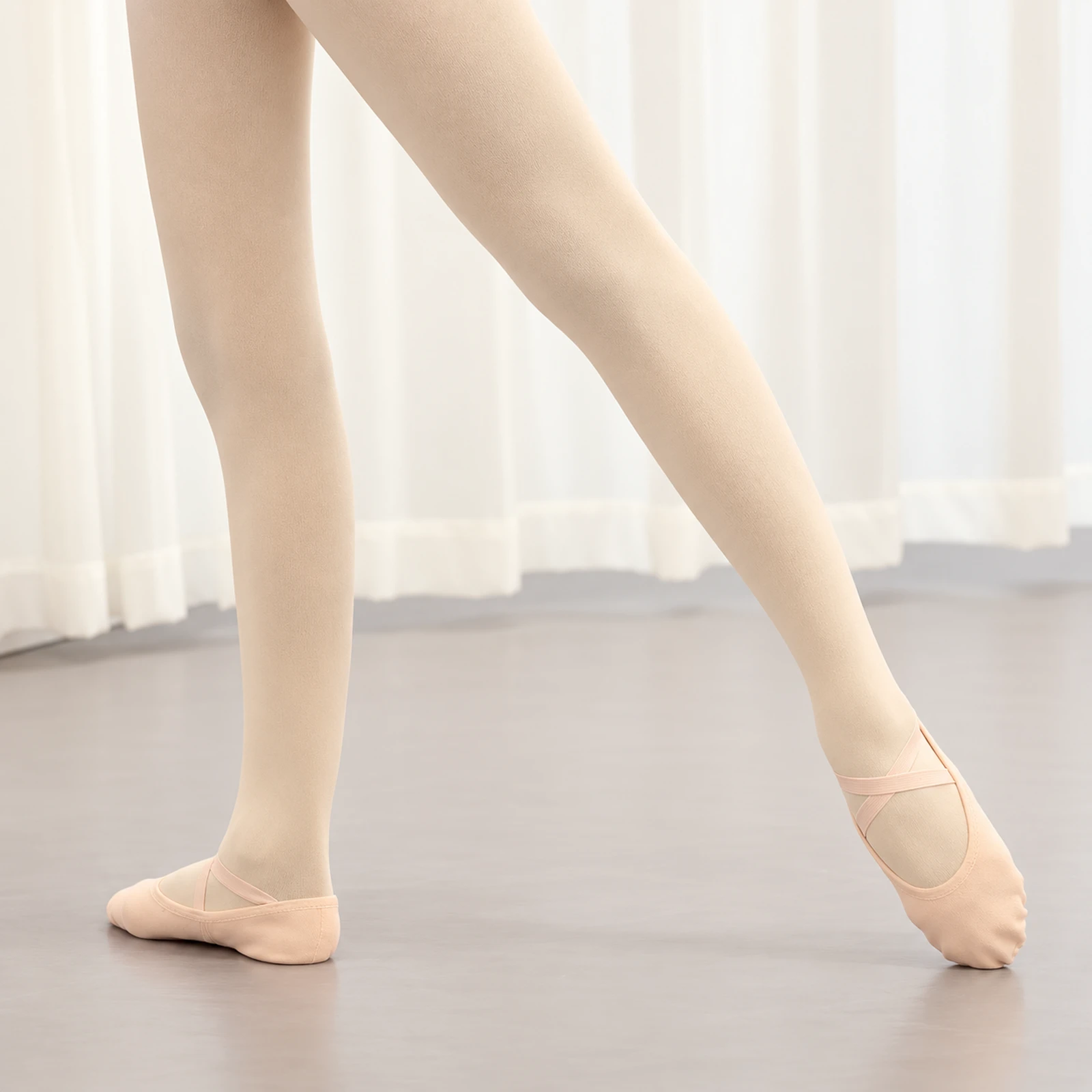
Short answer: footed tights cover the whole foot, convertible tights have a hole at the heel so the foot can be left out, and stirrup tights have a strap that loops under the foot. Footed is the simplest for class and exams; convertible and stirrup are popular when dancers switch between shoes and bare feet.
What are footed tights?
Footed tights have a built-in foot, like regular tights. They go on in one step, they are the easiest to wear for young children, and they stay put inside the ballet shoe. A flat toe seam helps them sit comfortably in a soft shoe.
What are convertible tights?
Convertible tights have an opening at the bottom of the foot. The dancer can wear the foot as normal, or roll the foot up above the ankle to leave the toes bare. They suit dancers who switch between ballet shoes and bare feet in the same class.
What are stirrup tights?
Stirrup tights have no foot. A strap loops under the arch, holding the leg in place. They are popular in dance schools that work barefoot, and for modern or contemporary work, but are less common for classical ballet exams.
How do they compare?
| Footed | Convertible | Stirrup | |
|---|---|---|---|
| Foot | Covered | Optional | Bare, strap under arch |
| Easiest for kids | Yes | Medium | Medium |
| Barefoot work | No | Yes | Yes |
| Typical use | Class and exams | Mixed classes | Contemporary, barefoot |
Which should I buy?
- Ballet class and exams: footed unless your school says otherwise.
- Mixed barefoot and shoe classes: convertible.
- Contemporary or barefoot classes: stirrup.
How do I look after ballet tights?
- Turn them inside out and put them in a mesh wash bag.
- Wash gently at a cool temperature with mild soap, without fabric softener.
- Do not wring them out. Press out the water.
- Dry flat or hang away from direct heat.
- Trim loose threads instead of pulling them, to stop a run.
What should I look for when choosing tights?
- Fit. The crotch should sit close to the body and not sag. Tights that are too small pull at the waist and wear out faster.
- Seams. A flat toe seam is more comfortable in a ballet shoe. Run a finger across the toe to check for bulk.
- Waistband. Choose a soft waistband that does not roll or dig in.
- Stretch. Tights should stretch smoothly at the knees without becoming see-through.
Are footed or convertible tights better for children?
Footed tights are usually the easiest for children. They go on in one step and do not slip. Convertible tights offer flexibility, but the extra hole can be confusing for small dancers who must remember to roll it back, and a loose edge can slip inside the shoe. If your child has both ballet and a barefoot class on the same day, convertible is worth having. Otherwise footed is simpler.
How many pairs do I need?
Two pairs for weekly classes is a good start. One goes in the wash while the other is in use. Keep a spare in the dance bag for emergencies, especially before an exam. If the dancer has several classes in a week, three pairs make life easier.
How long do ballet tights last?
With careful washing, a pair often lasts a term or two, but it depends on how often they are worn and how rough the floor is. Replace tights when they develop runs, thin knees or a loose waistband. A run can spread quickly, so a small dab of clear nail polish at the end of a run may stop it for a day, but do not rely on it for an exam.
If you are unsure which style your school prefers, ask the teacher before you buy. Our size guide will help you pick the right size.
Frequently asked questions
What are footed ballet tights?
Footed tights have a built-in foot that covers the whole foot, like regular tights. They are simple to wear and stay put inside a ballet shoe.
What are convertible tights?
Convertible tights have an opening at the bottom of the foot so the dancer can leave the toes bare when needed.
What are stirrup tights?
Stirrup tights have no foot and use a strap under the arch to hold the leg in place.
Which tights are best for ballet exams?
Most schools prefer footed ballet pink tights, but always check your school's requirements.
How do you wash ballet tights?
Turn them inside out, wash gently in a mesh bag with mild soap, do not wring them, and dry flat away from direct heat.