
If your child has just started ballet or is preparing to move into graded work, the RAD grading system can feel confusing at first. What is the difference between Pre-Primary and Primary? When does a child start working toward exams? What happens after Grade 8? This guide explains how the system works from the very beginning.
What Is the RAD?
The Royal Academy of Dance (RAD) is one of the world’s leading dance education and examination bodies, based in London. Their graded syllabus is used by accredited teachers in over 80 countries and sets a consistent standard for ballet training from early childhood through to pre-professional level.
Not every ballet school uses the RAD system. Some use the Imperial Society of Teachers of Dancing (ISTD), the British Association of Teachers of Dancing (BATD) or their own in-house structure. If you are unsure which system your child’s school uses, ask the teacher.
The RAD Graded Syllabus: An Overview
The RAD graded syllabus runs in two sections: the Primary grades (Pre-Primary and Primary) and the Main Grades (Grades 1 through 8). Together they cover approximately 10–12 years of training for a typical student who begins around age 4.
Pre-Primary (Ages 4–6 Approximately)
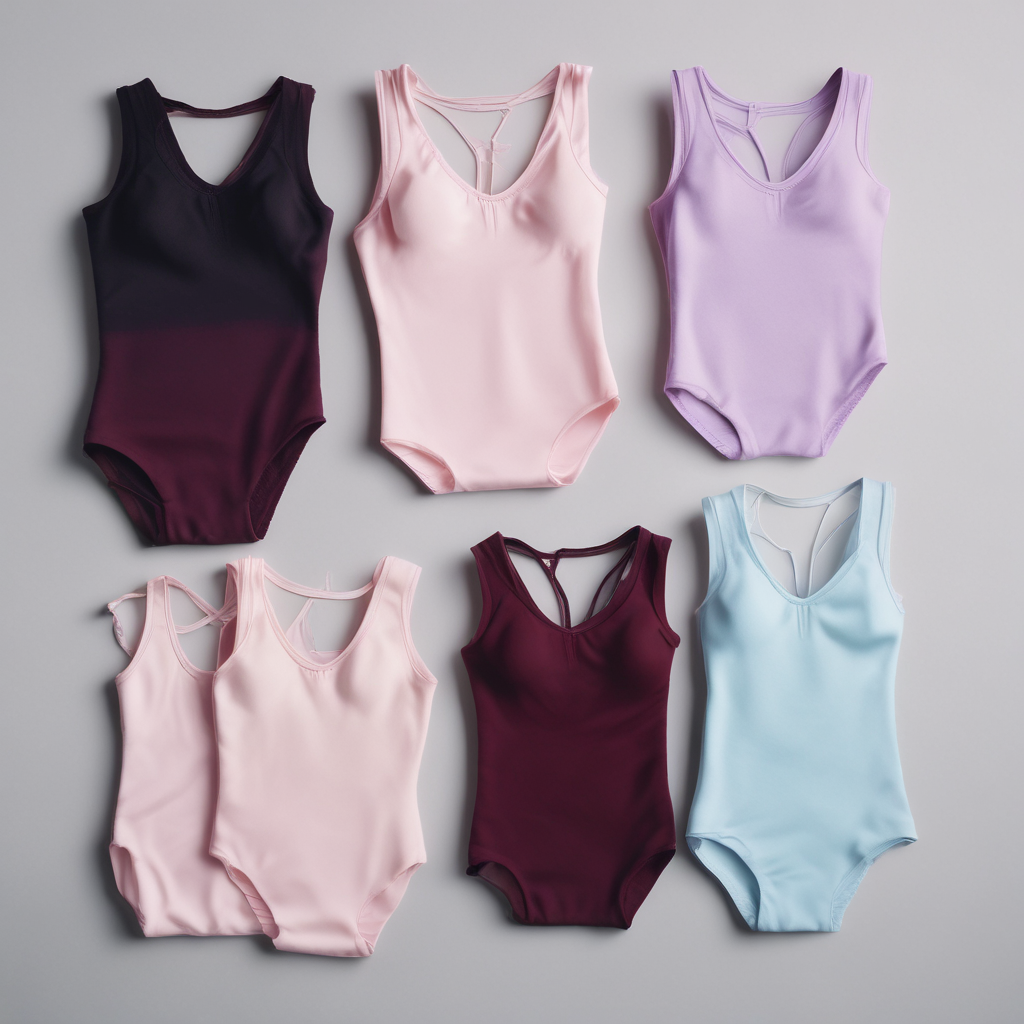
Pre-Primary is the starting point of the RAD system. Children at this level focus on musicality, coordination and basic dance vocabulary through games, songs and exploratory movement. Exams are optional at this level — many schools use it as a foundation year before entering formal examination work. The uniform is a simple pink leotard and pink ballet shoes.
Primary (Ages 5–7 Approximately)
Primary introduces more structured barre and centre work. Students begin to learn basic RAD exercises and the vocabulary used throughout the graded syllabus. The first formal RAD examination is available at Primary level. The uniform is typically the same as Pre-Primary — pink leotard, pink tights, pink shoes.
Grades 1 and 2 (Ages 7–9 Approximately)
Grade 1 and Grade 2 introduce more demanding technique: turned-out positions, rises and basic pointe preparation exercises. Students learn specific exercises for each part of the class — barre, centre, allegro. The uniform changes from pink to a blue leotard (typically royal or sky blue) with pink tights.
Grades 3, 4 and 5 (Ages 9–13 Approximately)
These middle grades develop classical technique more fully: clean footwork, expressive port de bras, small jumps and classical enchainements. Character dance is introduced. The uniform typically changes to a burgundy or raspberry-coloured leotard.
Grades 6, 7 and 8 (Ages 13–16 Approximately)
The senior graded years demand consistency, expressiveness and technical refinement. Students at Grade 6–8 level work with considerable detail on port de bras, pointe work for eligible students, and more complex allegro and pirouette work. The uniform at this level is typically a purple leotard worn with a long mesh skirt, an elastic belt and a matching bow.
After Grade 8: Vocational Graded Examinations
Students who wish to continue formal RAD examination work after Grade 8 can progress to the Vocational Graded syllabus: Intermediate Foundation, Intermediate, Advanced Foundation, Advanced 1 and Advanced 2. These are pre-professional level examinations designed for serious students considering dance as a career path or entering full-time training.
How Long Does Each Grade Take?
There is no fixed timeline. The speed of progression depends on the student’s natural aptitude, the frequency of classes, the school’s approach to examination preparation, and individual development. On average, many students take 1–2 years per grade during the middle grades (3–5). The teacher decides when a student is ready to enter an examination — parents should not pressure this decision.
Do All Students Take Exams?
No. Examinations are optional. Many students enjoy ballet purely for the joy of dancing and never take an exam. Others work through the full graded syllabus and beyond. The RAD system is designed to work for both — the classes are valuable regardless of whether the student sits the examination.
What Does the Uniform Tell You About the Grade?
The leotard colour is a useful shorthand for which grade a student is working at. Teachers and examiners can identify a student’s level at a glance. This also means the uniform must be correct — wearing the wrong colour to an examination will be noticed.
Shop from Zoe Dancewear
Frequently Asked Questions
What age should a child start RAD ballet?
Most RAD-accredited schools begin with Pre-Primary classes for children aged 4–5. Some schools accept children from age 3 for creative movement classes, but formal RAD work typically starts at 4. There is no upper age limit — adults can begin ballet at any age.
Can a child skip grades?
In theory, yes — the RAD does not mandate that every grade must be taken in sequence. In practice, most teachers recommend working through the grades progressively because each grade builds on the technical foundation of the previous one. Skipping grades may leave gaps in technique that become problematic at higher levels.
How do I know if my child’s school is RAD-accredited?
RAD-accredited teachers are registered with the RAD and have completed RAD teacher training. You can search for registered teachers and schools on the RAD website (rad.org.uk). Accredited teachers display their RAD registration and use the RAD logo.
What happens during a RAD examination?
Students are examined in a group (typically 4–6 students) by an independent RAD examiner. The examination follows the syllabus exercises set for that grade: barre work, centre work, character and free movement sections. Results are typically returned within 6–8 weeks.