Posted on

Ballet Leotards for Women: A Complete Buying Guide for Adult Dancers

Ballet Leotards for Women: A Complete Buying Guide for Adult Dancers

Ballet Leotards for Women: What Adult Dancers Need to Know

Whether you are returning to ballet after a long break or attending your first adult beginner class, choosing the right leotard matters. Unlike children’s school ballet, adult ballet classes at most studios have a flexible dress code — you have more freedom to choose what suits your body, your preferences and the level of the class.

Do Adult Ballet Classes Have a Dress Code?

Most adult ballet classes have a relaxed approach:

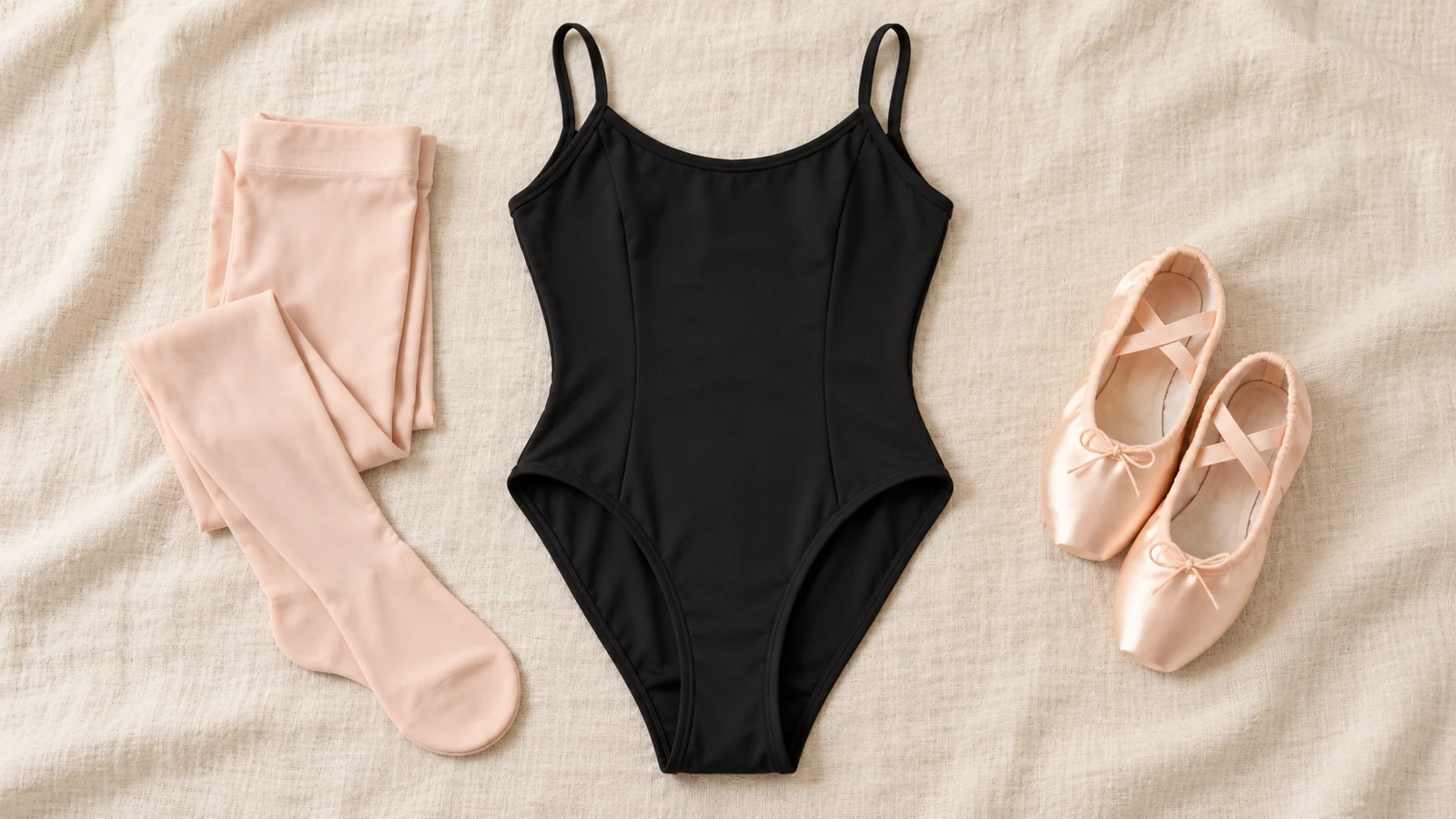
  • A leotard with tights is the traditional and most teacher-preferred option, as it allows full visibility of alignment and leg placement.
  • Many studios also accept fitted activewear — a sports bra with fitted shorts or yoga trousers.
  • RAD adult programs (Vocational and Adult grades) may specify a closer-to-uniform look — check with the school in advance.

If you enjoy the feel of training in ballet clothes, a leotard gives you the full experience. It stays in place, moves with you and signals commitment to the class.

Which Leotard Style Is Best for Adult Women in Ballet?

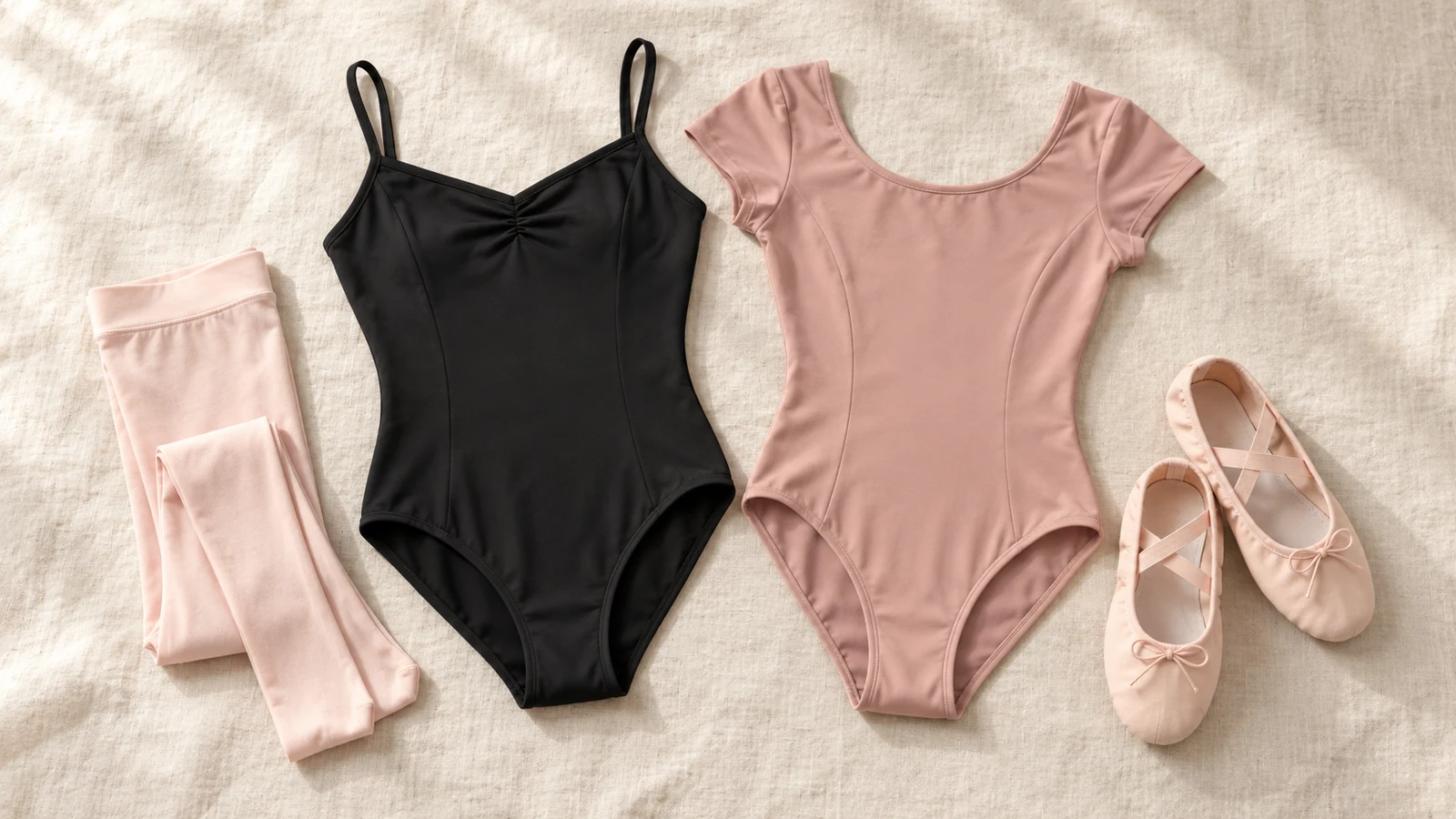
  • Camisole leotard: Thin straps, low back, elegant silhouette. Popular for its feminine look. Good for warmer studios and more advanced students comfortable with minimal coverage.
  • Sleeveless / tank leotard: Wider straps than a camisole, more supportive, better coverage. Ideal for beginners returning after a gap who want more security during class.
  • Short-sleeve leotard: Provides arm coverage while remaining fully fitted. A good option for those who prefer more coverage through upper-body exercises.
  • Long-sleeve leotard: Warm and covering. Preferred by some adult students during winter months or for classes in cooler studios.

What Features to Look for in an Adult Ballet Leotard

  • Fabric: An 80/20 nylon-elastane blend is ideal — soft, stretchy and shape-retaining through washing. Avoid heavy cotton blends that may restrict movement.
  • Built-in chest pads: Removable pads in most adult leotards provide a polished look without requiring a separate bra.
  • Waist fit: Should sit snugly at the natural waist without riding up. If it constantly needs adjusting during plié, try the next size up.
  • Color: Black is the most versatile and flattering for adult ballet. Burgundy, navy and blush are also popular choices.

What to Wear with an Adult Ballet Leotard

  • Tights: Pink footed tights give the traditional ballet look. Nude tights for a more subtle, elongated appearance.
  • Ballet wrap skirt: A chiffon wrap skirt is optional and popular with many adult students for a more feminine look.
  • Warm-up layer: A ballet cardigan or shrug at the start of class that can be removed once the body is warm.
  • Leg warmers: For cold studios or during barre work in winter.

Shop at ZoeDancewear

Girls Sleeveless Ballet Leotard — classic scoop-back style in multiple colors, suitable for adult students up to size 170 cm. Black Camisole Ballet Leotard Set — elegant camisole style with elastic belt. Free shipping over $99 to the US.

Frequently Asked Questions

Should adult beginners wear a leotard to their first ballet class?

A leotard is the traditional option, but for a first class at a new studio, fitted activewear is equally accepted at most adult ballet schools. Once you know the studio’s preferences and feel comfortable, a leotard gives you the full experience of how ballet training feels.

Can adult women wear a leotard without tights?

Yes — many adult ballet students wear a leotard without tights, particularly in warmer months. Some teachers prefer tights to see leg lines clearly, but most adult beginner classes are flexible on this point. A wrap skirt over a leotard without tights is also a popular option.

How do I know if a ballet leotard fits correctly?

A correctly fitting ballet leotard: lies flat against the body without gaps at the chest; does not pull at the crotch during plié; does not dig in at the shoulders; and stays in place without riding up during jumps and extensions. If any of these fit problems occur, try a different size or a different cut style.

n
Posted on

Ballet Leotards for Teenagers: What to Wear at RAD Grade 4 and Above

Ballet Leotards for Teenagers: What to Wear at RAD Grade 4 and Above

Ballet Leotards for Teenagers: What Changes at Higher Grades

As ballet students progress through their teenage years, the leotard requirements at RAD and other ballet schools change significantly. Teens attending RAD Grade 4 and above typically move away from the pink short-sleeve leotard of early grades toward more advanced styles — often a camisole or sleeveless leotard in deeper colors. Here is what to look for when buying ballet leotards for teenagers.

Which Leotard Does a Teenage Ballet Student Need?

The specific leotard depends on the syllabus and grade:

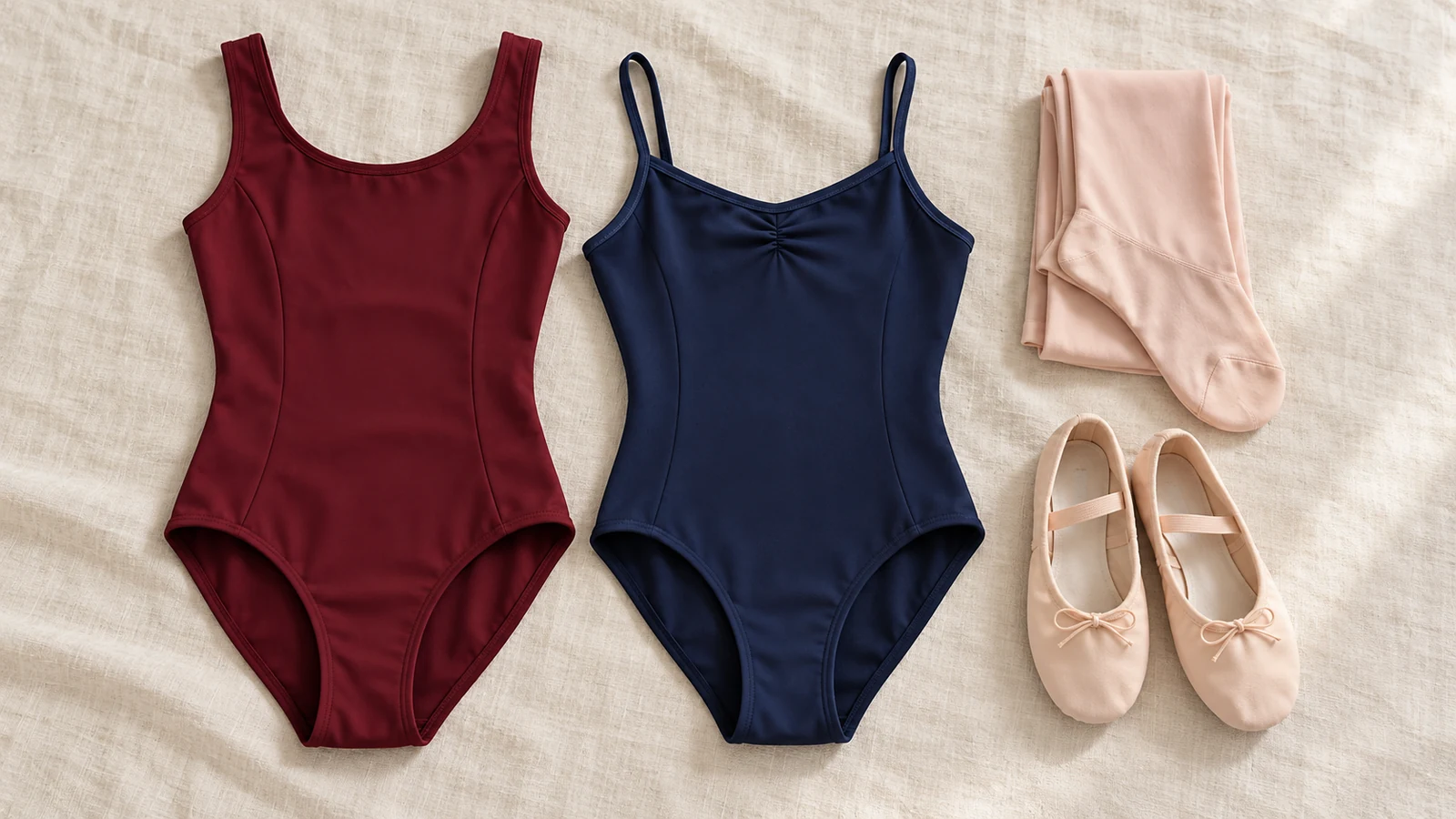
  • RAD Grades 4–5: Typically a sleeveless or camisole-style leotard in the approved grade color (often burgundy or another specified color). Check with your teacher for the exact requirement.
  • RAD Grades 6–8 and Vocational: Usually a black camisole leotard, often worn with an elastic belt. A character skirt is added for character work at these grades.
  • Open or non-syllabus classes: Often a plain black or navy leotard in any fitted style. The teacher will specify.

Always confirm with your dance teacher before purchasing — the exact color and style requirement varies by school and syllabus year.

Features to Look for in a Teen Ballet Leotard

  • Fabric: A nylon-elastane blend (at least 15% elastane) provides the stretch and shape retention needed for hours of class use. Cotton-nylon blends are also comfortable for everyday class wear.
  • Style: Sleeveless and camisole styles are standard for older students. They allow full freedom of movement and a clean line through port de bras.
  • Built-in chest pads: Many teen leotards include removable chest padding for modesty and a polished look without requiring a separate bra.
  • Fit: The leotard should be snug without being tight. It should not gap at the chest or pull at the crotch during movement. Measure against the size chart each time — teenagers grow quickly.

Sizing for Teen Ballet Leotards

Teen and adult ballet leotards are typically sized by height (e.g. 140/150/160/170 cm) or by S/M/L. The key measurements are:

  • Chest (bust): The fullest part of the chest
  • Waist: The narrowest point of the torso
  • Height: In bare feet

When between sizes, go up to avoid the leotard pulling during class or fitting too snugly after a growth spurt.

How Many Leotards Does a Teen Student Need?

Having two or three leotards means you always have a clean one available. Rotating them after each class extends the life of each garment — elastane fibres are under stress when washed and dried daily, so alternating lets each leotard recover between sessions.

Shop at ZoeDancewear

Black Camisole Ballet Leotard Set — camisole style with elastic belt and bow, suitable for RAD Grades 6–8 and older students. Girls Sleeveless Ballet Leotard — available in multiple colors including burgundy, suitable for earlier teen grades. Free shipping over $99 to the US.

Frequently Asked Questions

What color leotard should a RAD Grade 5 student wear?

RAD Grade 5 students typically wear the approved uniform for their school — often a burgundy or approved-color sleeveless leotard with pink footed tights and the elastic belt in the specified grade color. Check with your teacher for your school’s specific requirement.

Can a teenage ballet student wear a leotard with a skirt?

A separate chiffon skirt may be worn at Pre-Primary and Primary grades where the attached skirt is part of the set. At higher teen grades, the skirt is usually replaced by plain tights, or a character skirt for specific character work as the RAD syllabus specifies.

Do teenage ballet students need to wear a bra under their leotard?

Older teenagers may prefer to wear a sports bra or seamless bralette under their leotard for additional support, particularly if the leotard does not include built-in chest pads. Many ballet-specific leotards are designed to be worn without a separate bra, but personal comfort is the guide.

n

Posted on

How to Do the Splits for Ballet: A Step-by-Step Stretching Guide

How to Do the Splits for Ballet: A Step-by-Step Stretching Guide

How to Do the Splits: A Guide for Ballet Students and Dancers

Learning to do the splits is a flexibility goal for many dancers. Whether you are working toward a front split (one leg forward, one back) or a middle split (both legs out to the sides), the same principles apply: consistent daily warm-up, progressive stretching, and patience. Forced splits cause injury — genuine progress comes from regular work over weeks and months.

Front Split vs Middle Split: Which Should You Learn First?

  • Front split: One leg forward, one leg back, hips squared toward the front. Used in ballet for grand battement, développé and arabesque work. Typically the more achievable starting goal.
  • Middle split (straddle split): Both legs extended out to the sides, hips facing forward. Used in contemporary, gymnastics and some ballet adage work. Requires significant hip abductor and inner groin flexibility.

Most dance teachers recommend working on the front split first, as the hip flexors and hamstrings respond faster to stretching than the groin muscles required for a middle split.

Stretching Routine for the Front Split

Complete this daily after a 5–10 minute warm-up. Total time: 10–15 minutes.

Step 1: Warm Up

Walk briskly, do light jumps or complete a short barre warm-up. Never stretch cold muscles — this is the single most important rule in split training.

Step 2: Low Lunge (2 minutes per side)

Low lunge with front knee over ankle, back knee on the floor. Shift hips gently forward. Hold 60 seconds each side to open the hip flexors.

Step 3: Seated Hamstring Stretch (2 minutes per side)

Sit with one leg extended, fold forward with a flat back. Hold 60 seconds each side to lengthen the hamstrings of the front leg.

Step 4: Split Lowering (2–3 minutes per side)

From a kneeling lunge, slide the front foot forward and gradually lower toward the floor. Use yoga blocks under your hips to work safely within your range. Hold 60–90 seconds each side at your current end point without forcing.

Step 5: Butterfly Stretch (1 minute)

Soles of feet together, knees open, press them gently toward the floor. This opens the inner groin and hip flexors that support both front and middle split progress.

Stretching Routine for the Middle Split

Straddle Stretch (Seated)

Sit with both legs wide, toes pointed or flexed. Lean forward with a flat back and hold 60 seconds. Over time you will lean closer to the floor as the inner groin opens.

Sumo Squat Progression

Stand with feet wide apart in turnout. Bend the knees deeply into a sumo squat, then try to slowly lower the hips and straighten the legs. One of the most effective preparations for a middle split.

How Long Will It Take?

With consistent daily training:

  • Most students see measurable improvement in 4–8 weeks.
  • A full front split is achievable in 3–12 months depending on starting flexibility.
  • A full middle split typically takes longer — 6 months to over a year for many adults.

Shop at ZoeDancewear

Ballet Stretch Band with Numbered Loops — assists hamstring and hip flexor stretching for splits training. The numbered loops let you track flexibility progress over time. Free shipping over $99 to the US.

Frequently Asked Questions

Can adults learn the splits?

Yes. Adults can learn the splits with consistent training, though it typically takes longer than for children. With daily practice and a proper warm-up protocol, most adults can achieve significant improvement — and many can reach a full front split.

How often should I stretch for splits?

Daily stretching produces the fastest results. Every-other-day stretching also works but progress is slower. Consistency matters more than any single session: short daily sessions are more effective than longer infrequent ones.

Why does my hip hurt during split training, not my leg?

Pain in the hip during split stretching usually indicates tight hip flexors (back hip) or tight hip extensors and glutes (front hip). These areas need targeted stretching through lunge and pigeon-pose progressions rather than just hamstring work. If hip pain persists, consult a physiotherapist before continuing.

n

Posted on

Front Split for Ballet Dancers: How to Stretch and Achieve It

Front Split for Ballet Dancers: How to Stretch and Achieve It

What Is the Front Split?

The front split (also called a forward split) is a flexibility position in which one leg is extended forward and the other backward, with both legs in contact with the floor and the hips lowered until the inner thighs rest on the ground. In a full front split, the hips are level and squared forward with the body at a 180-degree angle along the floor.

In ballet, the flexibility leading to a front split directly supports grand battement, développé, high arabesque and penché. It is one of the most important flexibility goals for any serious ballet student.

How Long Does It Take to Get the Front Split?

The time varies considerably by individual. Key factors:

  • Natural hip flexibility: Some dancers have naturally more open hip joints that allow faster progress.
  • Consistency: Daily stretching produces much faster results than occasional sessions.
  • Age: Younger students tend to gain flexibility faster than adults, but adults absolutely can achieve a full split with consistent training.
  • Starting point: The closer you already are to the floor, the less time is needed.

With consistent daily practice, most students see significant improvement in 4–8 weeks. A full front split can take 3–12 months depending on the individual — this is completely normal.

Step-by-Step Front Split Stretching Routine

Always complete a warm-up (5–10 minutes of light movement) before stretching. Never stretch cold muscles.

1. Low Lunge (Hip Flexor Stretch)

Begin in a low lunge with the front knee over the ankle and the back knee on the floor. Gently shift the hips forward and down toward the floor. Hold 45–60 seconds each side. This targets the hip flexor of the back leg, one of the primary limiters of split depth.

2. Seated Hamstring Stretch

Sit with one leg extended forward and fold over it with a flat back (not a rounded spine). Hold 45–60 seconds each side. This targets the hamstring of the front leg.

3. Split Progression

From a kneeling lunge, begin to slide the front foot forward gradually. Use yoga blocks or folded blankets under the hips if needed — this is not cheating, it is how you train range of motion safely. Hold 60–90 seconds each side at your current limit. Ease in rather than forcing.

4. Cooldown

After split work, release gently and do a supine twist or child’s pose to release the lower back and hips before moving on.

The Front Split and Ballet Technique

The flexibility required for a front split directly supports:

  • Grand battement devant and derrière: High leg kicks to the front and back.
  • Développé: Slow controlled extension of the leg to front, side or back.
  • Penché arabesque: A forward tilt of the torso allowing the back leg to rise well above hip height.
  • Attitude derrière: High extension of the back leg in a bent-knee position.

Shop at ZoeDancewear

Ballet Stretch Band with Numbered Loops — use the numbered loops to assist hamstring and hip flexor stretching for split training and to track progress over time. Free shipping over $99 to the US.

Frequently Asked Questions

Is it safe to practice splits every day?

Yes, provided you warm up properly first and do not force range of motion. Daily consistency with correct warm-up is the most effective and safest approach to improving split flexibility.

What muscles need to be flexible for the front split?

The primary muscles are the hamstrings (front leg), hip flexors and hip extensors (back leg), and the inner groin (adductors). The lower back and glutes also contribute. Stretching all of these regularly produces the fastest improvement.

Should children do split stretches?

Yes, with supervision and correct technique. Children’s connective tissue is generally more pliable, but forced splits without warm-up can still cause injury at any age. Split training should always begin with a thorough warm-up and progress gradually over time.

n

Posted on

What Is a Biketard? Dance Leotard with Built-In Shorts Explained

What Is a Biketard? Dance Leotard with Built-In Shorts Explained

What Is a Biketard?

A biketard is a dance garment that combines a leotard body with built-in short shorts. The top portion fits like a standard leotard — close-fitting, typically with a scoop or camisole neckline — while the bottom portion includes attached shorts that extend to mid-thigh or just above the knee. The whole garment is one piece.

Biketards are sometimes called shorttards or dance biketards. They are popular in gymnastics, competitive dance and contemporary dance classes.

Biketard vs Leotard vs Unitard: What’s the Difference?

  • Leotard: Covers the torso only with no attached leg coverage. May have a standard or high-cut leg opening.
  • Unitard: One-piece garment covering the torso and full legs (leotard body plus full-length tights panel, combined). No separate sections.
  • Biketard: One-piece garment covering the torso with built-in shorts. A hybrid of leotard and short shorts — more coverage than a leotard, less than a unitard.

When Is a Biketard Used in Dance?

  • Gymnastics: A staple in artistic and rhythmic gymnastics training for girls and women.
  • Contemporary and jazz dance: Where a modern, relaxed look is preferred over a traditional leotard.
  • Acrobatics and tumbling: The shorts portion provides coverage during flips and cartwheels.
  • Dance fitness classes: Such as movement-based classes where a full leotard feels too formal.

Biketards are not standard for classical RAD ballet. Traditional ballet class and examination attire is a leotard with tights — the biketard’s shorts format would obscure the leg lines that teachers need to observe during technique assessment.

What to Look for in a Dance Biketard

  • Fabric: A four-way stretch nylon-spandex blend is best — it moves with the dancer and retains its shape after washing.
  • Short length: A 2–3 inch inseam provides coverage without restricting movement. Longer shorts can bind at the inner thigh during high kicks and jumps.
  • Neckline: Scoop neck and camisole styles are the most common and versatile.
  • Gusset: Look for a built-in cotton or modal gusset for comfort during floor work.

Shop at ZoeDancewear

Black Camisole Ballet Leotard Set — camisole leotard with elastic belt and bow, suitable for older students and studio practice. Free shipping over $99 to the US.

Frequently Asked Questions

Are biketards appropriate for ballet class?

Not for most classical ballet classes. Traditional RAD and syllabus-based ballet requires a plain leotard with tights so the teacher can see leg placement clearly. A biketard is better suited to gymnastics, contemporary dance or casual studio sessions.

Is a biketard the same as a gymnastics leotard with shorts?

Yes — a biketard is essentially a gymnastics-style one-piece with an attached shorts panel. It is the standard garment used in rhythmic gymnastics and many tumbling and acrobatics classes worldwide.

Can you wear a biketard with tights?

Yes. A biketard can be worn over tights in a dance class for warmth or a more polished look. The shorts portion sits over the tights, similar to how a short skirt sits over dance tights.

n

Posted on

Gift Ideas for Dance Teachers: What to Buy and What to Avoid

Gift Ideas for Dance Teachers: What to Buy and What to Avoid

The Best Gift Ideas for Dance Teachers

Finding the right gift for a dance teacher means choosing something thoughtful that reflects the time and care they put into teaching. The most appreciated gifts are practical for the studio, related to their love of dance, or simply personal and heartfelt. Here are the most popular options.

1. Ballet and Dance Keepsakes

Dance-themed decorative items make thoughtful gifts that teachers can display in their studio or at home:

  • A ballet figurine or nutcracker ornament
  • A framed print with a dance quote or ballet illustration
  • A personalized ornament with the teacher’s name
  • A ballet certificate and medal display box if they celebrate their students’ exam achievements

2. Studio Essentials

Many dance teachers appreciate practical gifts they can use in class:

  • A good quality resistance or stretch band set for student warm-ups
  • A professional dance bag
  • A studio planner or notebook
  • A portable Bluetooth speaker for class music

3. Personal Pampering Gifts

Dance teachers spend long hours on their feet. A pampering gift shows you understand:

  • Foot cream or massage oil
  • A spa or massage gift voucher
  • Comfortable loungewear or a warm ballet cardigan

4. Experience Gifts

Gifting an experience can be the most meaningful option:

  • Tickets to a professional ballet performance — almost always welcomed by any dance teacher
  • A masterclass or workshop in their area of specialisation
  • A gift card to a dance supply store

5. End-of-Term Thank-You Gifts from Students

Small personal gifts from individual students are always well received:

  • A hand-written card with a genuine message — often the most treasured gift a teacher receives
  • A small bouquet of flowers
  • A gift card to a coffee shop or restaurant
  • A beautiful certificate or medal display box

What to Avoid When Gifting a Dance Teacher

  • Generic mugs or candles — unless you know they love them, these accumulate quickly.
  • Dance shoes or dancewear: Sizes and preferences are very personal — teachers are specific about their footwear.
  • Strongly scented products: Be cautious about perfumes or heavily scented candles if you are unsure of their preferences.

How Much to Spend on a Dance Teacher Gift

  • Individual family gift: $15–$30 is a thoughtful and practical range.
  • Group gift from the whole class: Families pool contributions for a larger gift of $50–$100 or more.
  • After exam season: A slightly more generous gesture is common following a successful exam session.

Shop at ZoeDancewear

Nutcracker Figure — a timeless ballet keepsake, perfect for any dance teacher. Ballet Certificate Folder and Medal Box Set — a lovely gift for a teacher who celebrates their students’ achievements. Free shipping over $99 to the US.

Frequently Asked Questions

When is the best time to give a dance teacher a gift?

The most common times are: end of term, end of the dance year, after examinations, Teacher Appreciation Week, and Christmas. Many families give a gift at the end of the dance year in June or July when students may be moving up a grade.

Should the whole class contribute to a group gift?

A group gift is a lovely idea and allows for a more generous gesture. A class parent can organize a collection — keeping the contribution per family small (around $10–$15) so it is accessible for everyone. The combined result is usually a much more memorable gift than individual items.

What do ballet teachers like as gifts?

Ballet teachers most appreciate thoughtful, personal gifts — especially a genuine handwritten note expressing what the classes have meant to your child. Beyond that, ballet keepsakes, experience gifts (ballet tickets, spa treatments) and practical studio accessories are consistently well received year after year.

n

Posted on

Ballet Costumes for Shows and Performances: What to Know

Ballet Costumes for Shows and Performances: What to Know

Ballet Costumes vs Ballet Uniforms: What’s the Difference?

A ballet costume is a performance garment worn on stage for shows, recitals and competitions. It is different from a ballet uniform, which is the standard class attire — plain leotard, tights and ballet shoes — worn for regular lessons and examinations.

Costumes are designed to support the storytelling and visual impact of a performance. Uniforms are designed for technical visibility and freedom of movement in class.

Types of Ballet Costumes

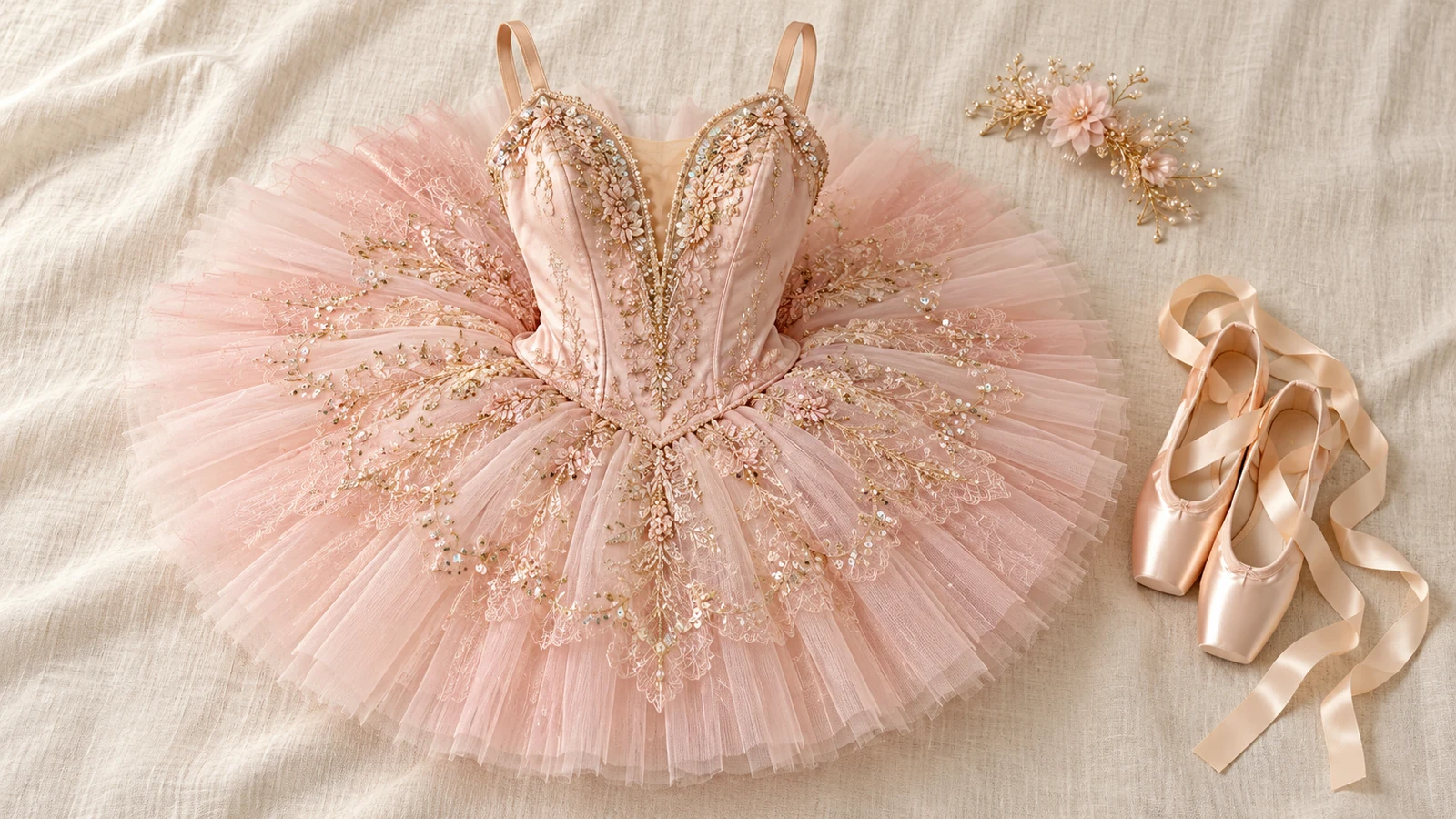
  • Classical tutu: A structured skirt with multiple layers of tulle or organza. Romantic tutus (soft, ankle-length) are used for ballets like Giselle. Classical tutus (stiff, short pancake style) are associated with Sleeping Beauty and Nutcracker performances.
  • Character costume: Worn for folk-style dances within classical ballets. Typically includes a character skirt, fitted top and character shoes.
  • Contemporary costume: May be a unitard, leotard with loose trousers, or modern clothing depending on the choreography.
  • Themed recital costume: End-of-year shows often feature themed costumes relevant to the music or story selected for each age group.

What Do Young Ballet Students Wear for Performances?

At most dance schools, end-of-year shows and recitals use costumes supplied or organized by the school. Parents typically:

  • Purchase or rent a costume specified by the school.
  • Provide accessories: pink tights, ballet or character shoes as specified, and hair accessories.
  • Pack and label the costume carefully for the performance day.

The school will specify whether students need pink footed tights or skin-tone tights, and whether hair should be in a bun or another style.

What to Wear Under a Ballet Costume

  • Tights: Usually pink footed or skin-tone tights as specified — wear them even when the costume has a long skirt.
  • Leotard or body liner: Most costumes are built onto a leotard body. If yours is not, wear a plain skin-tone leotard underneath for coverage.
  • No underwear: Ballet tights provide adequate coverage. Adding underwear creates visible lines under the costume and disrupts the silhouette.

RAD Character Costume Requirements

For RAD examinations, character work at Grade 6 and above requires a specific standardised character costume:

  • Black character skirt with satin ribbon bands worn over a leotard and tights
  • Black character shoes with a small heel
  • Elastic belt in the specified color for the grade

This is a standardised exam garment, not a theatrical performance costume.

Shop at ZoeDancewear

Black Character Dance Skirt — four satin ribbon bands, meets RAD character requirements for Grade 6 and above. Footed Ballet Tights — worn under costumes, available in pink and nude, sizes S to 2XL. Free shipping over $99 to the US.

Frequently Asked Questions

Who provides ballet costumes for school shows?

At most dance schools, the school coordinates costumes for end-of-year shows. Parents may be asked to purchase the costume from a specified supplier, or the school may hire them. Contact your school directly to confirm what is required for each performance.

What is the difference between a tutu and a leotard?

A leotard is a form-fitting bodysuit that covers the torso. A tutu is a skirt attached at the waist — it does not cover the torso alone. In performance, a ballerina typically wears a fitted bodice (which may be integrated into the tutu design) over the top half, with the tutu skirt at the waist.

Do ballet costumes come in standard sizes?

Yes. Most ballet costumes are sized similarly to dancewear — by age or by bust, waist and hip measurements. Because costumes are fitted garments, measure the dancer before ordering and use the size chart provided by the supplier. Between sizes, go up for growing students.

n

Posted on

The Five Positions of the Feet in Ballet: A Complete Guide

The Five Positions of the Feet in Ballet: A Complete Guide

The Five Positions of the Feet in Ballet

In classical ballet, there are five positions of the feet. Every step, jump and turn in ballet begins and ends in one of these positions. They were codified by ballet master Pierre Beauchamp in 17th-century France and have remained the foundation of classical technique ever since.

Each position is defined by the relationship between the heels and toes and by the degree of turnout — the outward rotation of the legs from the hip socket.

First Position (1st Position)

In first position, the heels are pressed together and the toes point outward to form a straight line. The rotation comes from the hip socket. A fully trained professional dancer may achieve close to 180 degrees, but beginners achieve what their natural hip flexibility allows without forcing.

First position is the most fundamental starting point in ballet. Port de bras exercises, plié combinations and many center exercises begin in first position.

Second Position (2nd Position)

In second position, the feet are in the same outward rotation as first position but separated by approximately one foot’s width — roughly 30 to 45 centimeters apart. Weight is distributed evenly between both feet. Second position is used for grand plié combinations, stretching exercises and as a preparation for certain jumps.

Third Position (3rd Position)

In third position, one foot is placed in front of the other with the heel of the front foot touching the arch of the back foot. Third position is often used in early RAD training as a stepping stone before fifth position is introduced, as it requires less flexibility and turnout to perform correctly.

Fourth Position (4th Position)

In fourth position, one foot is placed approximately one foot’s length in front of the other with both feet turned out. There are two variations:

  • Open fourth: A wider stance used in pirouette preparations and deep lunges.
  • Crossed fourth: A narrower placement based on fifth position, used specifically for turns.

Fourth position is the primary preparation position for pirouettes.

Fifth Position (5th Position)

In fifth position, the feet are fully crossed so the heel of the front foot meets the toe of the back foot, and vice versa. Fifth position requires the most turnout and is typically introduced after first, second and third positions are established. It forms the basis for many jumps and pirouettes at higher levels of training.

How Turnout Works in the Five Positions

Correct ballet turnout comes from the hip socket, not from forcing the feet outward at the ankle or knee. Forcing excessive turnout damages the knees and ankles over time. All five positions should be performed with the turnout the dancer can naturally achieve from their hip rotation. RAD training gradually increases the degree of turnout as the student’s strength and natural flexibility develops over years of training.

Shop at ZoeDancewear

Stretch-Canvas Ballet Shoes — soft pink canvas split-sole slippers that allow full foot articulation through all five positions. Free shipping over $99 to the US.

Frequently Asked Questions

What is the easiest ballet foot position for beginners?

First position is typically the first position taught because the heels-together alignment is easy to understand and provides a stable base. Second position is also introduced early as it requires less turnout to perform correctly than third or fifth.

Why is there no sixth position in classical ballet?

Classical ballet codified by the French school uses five positions. Some contemporary and modern dance forms use a “sixth position” — parallel feet at hip-width apart — but this is not part of classical ballet vocabulary.

At what age are ballet students taught fifth position?

In RAD training, fifth position is typically introduced around Grade 1 or Grade 2, after students have a solid foundation in first, second and third positions. The exact timing depends on the individual student’s development and their teacher’s assessment.

n

Posted on

Do Ballet Dancers Wear Shorts? When and Who Wears Them

Do Ballet Dancers Wear Shorts? When and Who Wears Them

Do Ballet Dancers Wear Shorts?

Yes, ballet dancers can wear shorts — but only in specific contexts. Boys in ballet class most commonly wear shorts as part of their standard class uniform. Girls may wear shorts in contemporary or warm-up situations where the school permits it, but traditional classical ballet classes require a leotard and tights without additional leg layers.

When Are Shorts Worn in Ballet?

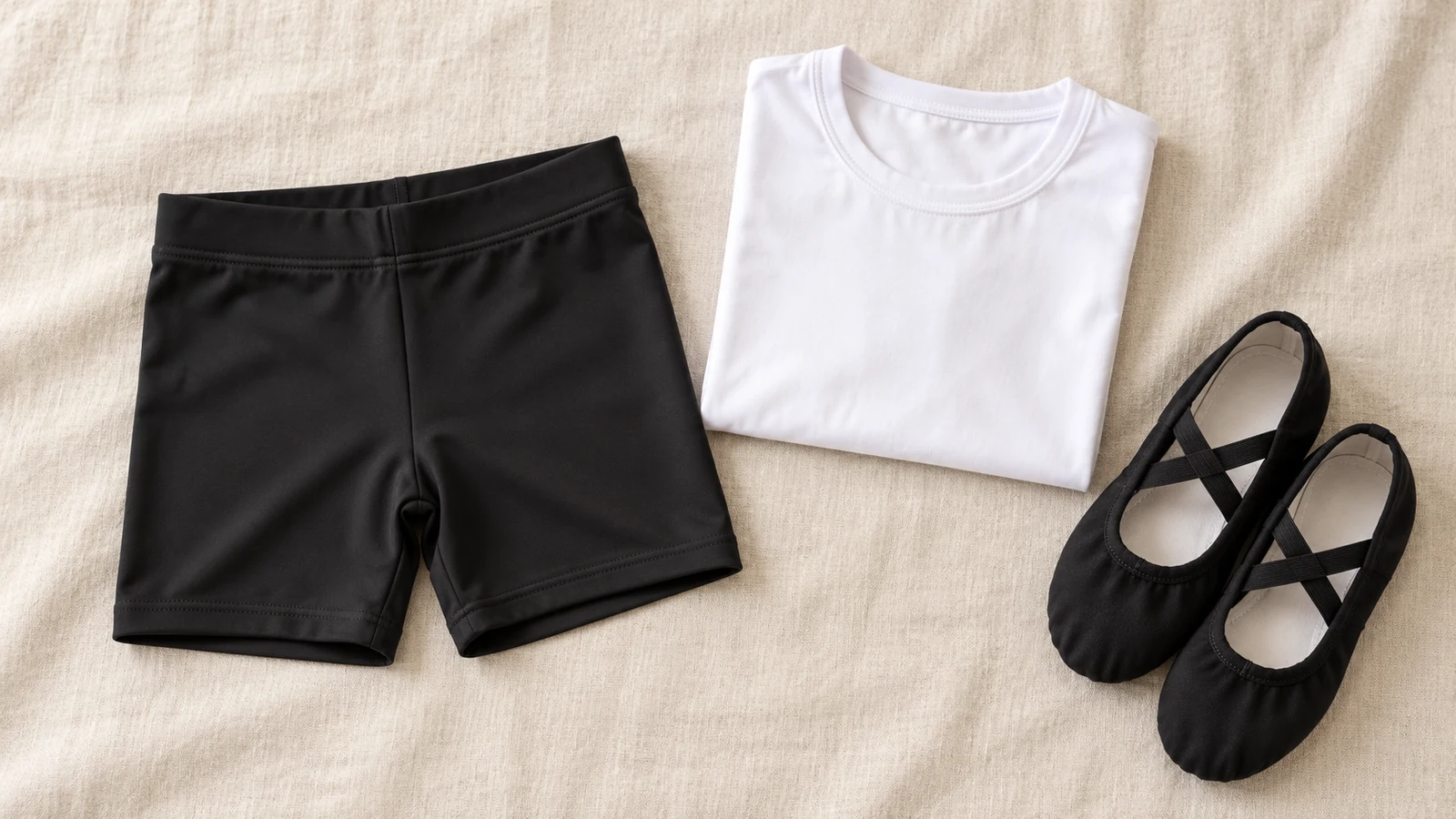
  • Boys’ ballet class: Male students at most schools, including RAD, wear a white fitted top and black shorts as their standard uniform. This is the accepted boys’ ballet look worldwide.
  • Contemporary ballet classes: Schools that teach contemporary alongside classical ballet often allow shorts or loose trousers for modern technique work.
  • Rehearsals: Some dancers wear shorts over a leotard during long rehearsals for comfort, though this varies by school policy.
  • Warm-up: Some advanced students wear shorts briefly before class starts, removing them once class begins so the teacher can see leg lines.

What Type of Shorts Are Used in Ballet?

Ballet practice shorts are typically:

  • Black and fitted with a modest length at mid-thigh or above the knee.
  • Lightweight and stretchy fabric — usually polyester-spandex — so they do not restrict movement.
  • Elastic waistband without bulky pockets or decoration that could catch during partner work or floor exercises.

Ballet shorts are different from casual athletic shorts — they are fitted, not baggy, and designed to show the leg line clearly so the teacher can see the student’s technique.

Can Girls Wear Shorts to Ballet Class?

This depends entirely on the school’s dress code. At most traditional ballet schools and for RAD examinations:

  • Girls wear a leotard with tights. No shorts are required or permitted over the leotard for class or exams.
  • Some schools allow girls to wear small fitted shorts over a leotard for warm-up exercises only.
  • RAD uniform specifications do not include shorts for girls — the uniform is leotard, tights and elastic belt.

Always check your school’s specific uniform policy before purchasing shorts for a female student.

Shorts for Boys in Ballet: What to Buy

For boys attending RAD or standard ballet class:

  • Black fitted shorts, mid-thigh length
  • Stretchy fabric that allows full range of movement including grand battement and jumps
  • No pockets, no visible logos or branding for class
  • Paired with a plain white fitted T-shirt or dance vest

Shop at ZoeDancewear

Boys Ballet Practice Set — white fitted top and black shorts in one set, correct for RAD and general ballet class, sizes 100–170. Free shipping over $99 to the US.

What are dance shorts, and how do you choose them?

Dance shorts are close-fitting, stretchy shorts worn over tights or on their own in jazz, modern and some adult classes. Choose a smooth, soft fabric with a flat waistband that does not roll, and a length that stays put when you lift the leg. For ballet class, check the dress code first, because many ballet teachers prefer to see the line of the legs in tights.

Frequently Asked Questions

Do boys wear tights in ballet?

At most schools, male students wear shorts rather than tights for class. For formal RAD examinations and some performances, boys may wear white or black tights. Check your school’s exam dress code for the specific requirement.

Can you wear bike shorts to ballet?

Standard fitted black shorts are preferred over bike shorts for ballet class. Bike shorts are often too long and resemble leggings rather than ballet shorts. Some schools may permit them for warm-up, but proper ballet shorts or tights remain the preferred option.

Why don’t female ballet dancers wear shorts in class?

Traditional ballet training requires the teacher to see the dancer’s leg lines clearly — the position of the hips, knees and feet through the tights. Shorts over a leotard obscure this view. RAD and most classical ballet syllabi require tights only, without additional leg coverage for girls.

n

Posted on

High-Cut Leotard for Ballet: What It Is and When to Wear One

High-Cut Leotard for Ballet: What It Is and When to Wear One

What Is a High-Cut Leotard?

A high-cut leotard is a style of leotard where the leg opening sits above the hip bone, cutting high across the upper thigh rather than following the natural leg crease. This creates the illusion of longer, leaner legs by exposing more of the hip and upper thigh. High-cut leotards are sometimes called high-leg leotards or French-cut leotards.

High-Cut vs Standard-Cut vs Regular-Cut Leotard

  • Regular cut: Leg opening follows the natural hip crease. Conservative, appropriate for all ages and levels including RAD class.
  • High cut: Leg opening sits above the hip bone, extending higher toward the lower hip or upper thigh. Visually elongates the leg line.
  • French cut: Another term for high-cut, particularly used in gymnastics and competitive dance contexts.

Who Wears High-Cut Leotards?

High-cut leotards are most commonly worn by:

  • Professional ballet dancers: For stage performances where the leg line must appear as long and uninterrupted as possible.
  • Competitive gymnasts: The high leg line is standard in artistic gymnastics competitions internationally.
  • Competition dancers: In contemporary, jazz and lyrical competitions where a long leg line is part of the aesthetic assessment.
  • Advanced ballet students: For performance pieces where the choreographer specifies a particular visual look.

High-cut leotards are not required for RAD ballet examinations. RAD uniform specifications call for a standard-cut leotard in the designated color for each grade.

What to Consider Before Buying a High-Cut Leotard

  • Age appropriateness: High-cut styles are best suited to older students (typically 14 and above) and adult dancers. For younger children in class or exams, a standard-cut leotard is the correct choice.
  • Wear with tights: High-cut leotards are designed to be worn with tights, not bare legs. The high cut is part of the long-line aesthetic, and tights complete it.
  • Check your school’s dress code: For RAD class and examinations, confirm with your teacher before purchasing a high-cut style.
  • Fabric: Look for a nylon-elastane blend with at least 15% elastane for full stretch through the high hip area without pulling.

Shop at ZoeDancewear

Girls Sleeveless Ballet Leotard — classic scoop-back style in multiple colors, sizes 100–170. Black Camisole Ballet Leotard Set — camisole style with elastic belt and bow, suitable for older students. Free shipping over $99 to the US.

Frequently Asked Questions

Can children wear high-cut leotards for ballet class?

High-cut leotards are generally more appropriate for older students and adults. For younger children attending RAD or other structured ballet classes, a standard-cut leotard that meets the school’s dress code is the better and more practical choice.

Are high-cut leotards worn with tights?

Yes. High-cut leotards are designed to be paired with tights. The high leg opening is part of the aesthetic, and tights complete the long-leg look while keeping the dancer appropriately covered during class and performance.

What is a French-cut leotard?

French-cut is another name for a high-cut leotard, particularly used in gymnastics. The term refers to the high leg opening that extends above the natural hip crease — a style popularised by competitive sport and professional dance where maximum leg length on stage is prioritised.

n