Posted on

The Benefits of Ballet for Children: Physical, Mental and Social Development

The Benefits of Ballet for Children: Physical, Mental and Social Development

Why Ballet Is Much More Than Dancing

Many parents enroll their child in ballet for the joy of movement and a love of music. What they discover over time is that ballet delivers a remarkable range of developmental benefits that extend far beyond the studio.

Physical Benefits

Posture and Alignment

Ballet teaches children to stand tall, hold their shoulders back, and carry their heads correctly. These postural habits, practiced weekly from a young age, become second nature and carry into everyday life.

Strength and Flexibility

Ballet develops strength in a long, lean pattern — working the core, legs, and back simultaneously. Regular practice also improves flexibility throughout the hips, hamstrings, and ankles. Unlike sports that only develop one type of movement, ballet works the body in all planes of motion.

Balance and Coordination

Ballet is exceptionally demanding on proprioception — the body’s sense of where it is in space. Children who study ballet regularly show improved balance, body awareness, and coordination compared to non-dancing peers.

Cardiovascular Fitness

A full ballet class, particularly from Grade 3 upwards, provides a genuine cardiovascular workout. The combination of pliés, jumps, turns, and combinations challenges the heart and lungs while building endurance.

Mental Benefits

Discipline and Focus

Ballet class requires sustained attention. Students must listen to their teacher, follow complex instructions, and remember sequences of steps — all at the same time. This builds the kind of focused concentration that benefits academic learning as well.

Memory and Pattern Recognition

Learning choreography and syllabus exercises is a significant memory challenge. Research suggests that children who learn dance show improvements in working memory, which supports learning across many school subjects.

Confidence and Self-Esteem

Mastering a difficult step, earning a good exam result, or performing on stage builds genuine confidence. Ballet gives children tangible evidence of what their bodies can achieve through hard work.

Social Benefits

Teamwork and Group Awareness

Even solo ballet work involves dancing in a group. Students learn to take up the right amount of space, respond to others’ movements, and work together towards a shared performance.

Respect and Manners

Ballet classes begin and end with a reverence (bow or curtsy) to the teacher. Students address teachers formally. These rituals build respectful habits in children from a young age.

Resilience

Ballet is genuinely hard. Progress is slow and visible. Children learn to keep working at something that takes time to master — an invaluable life skill.

Frequently Asked Questions

Is ballet good for shy children?

Exceptionally so. Ballet gives shy children a structured environment, a clear set of expectations, and a way to express themselves without having to speak. Many parents report that ballet has dramatically increased their shy child’s confidence.

How early do these benefits appear?

Physical benefits such as improved flexibility and coordination appear within a few months of regular classes. Confidence and discipline benefits tend to build over years rather than weeks.

Does my child need to aim to be a professional for ballet to be worthwhile?

Absolutely not. The vast majority of ballet students never pursue a professional career, and the benefits of ballet — physical fitness, discipline, confidence, musical appreciation — are just as valuable for a child who dances for fun until they are 16 as they are for a future professional.
Posted on

Ballet vs Gymnastics for Children: Which Is Right for Your Child?

Ballet vs Gymnastics for Children: Which Is Right for Your Child?

Two Great Activities, Different Paths

Ballet and gymnastics are often the two activities parents consider for young children who show early signs of coordination, flexibility, and a love of movement. Both are excellent. The right choice depends on your child’s personality, goals, and the type of environment where they thrive.

What Ballet and Gymnastics Have in Common

  • Both develop excellent body awareness, coordination, and flexibility
  • Both require discipline, focus, and consistent practice
  • Both involve graded progression through levels and formal assessments
  • Both can be done recreationally or pursued seriously at competitive level
  • Early starts are common — both welcome children from age 3 onwards

Key Differences

Focus and Movement Style

Ballet emphasises grace, precision, musical interpretation, and expressive performance. Every movement has a specific aesthetic: the angle of the arm, the line of the leg, the direction of the gaze. Ballet is a performing art as much as a physical discipline.

Gymnastics emphasises power, acrobatics, tumbling, and apparatus skills (beam, bars, vault). It is a sport with measurable performance outcomes scored in competition.

Performance vs Competition

Ballet culminates in performance — on stage, in front of an audience. Gymnastics culminates in competition — scored by judges against objective criteria. Children who love performing and being part of a story often gravitate to ballet; children who are competitive and goal-oriented by nature sometimes prefer gymnastics.

Risk Profile

Both activities carry injury risk. Gymnastics has a higher rate of acute injuries due to apparatus work and tumbling. Ballet has a higher rate of overuse injuries, particularly in the feet, ankles, and hips. Proper coaching and gradual training load reduce risk in both disciplines.

Costs and Commitment

Both activities require similar commitments at recreational level — one to two sessions per week, plus appropriate clothing and footwear. Competitive gymnastics at higher levels can involve very significant time and travel commitments. Serious ballet training (vocational level) is similarly intensive, but typically begins later in the child’s dance journey.

Can Children Do Both?

Yes, particularly at young ages. Many children enjoy both ballet and gymnastics in the primary school years. As they progress and commitment increases, most children naturally choose one over the other. Cross-training can actually be beneficial — gymnastics builds strength and aerial awareness; ballet builds flexibility, artistry, and musical sensitivity.

Frequently Asked Questions

Which is better for flexibility?

Both develop flexibility effectively. Gymnastics tends to pursue extreme ranges of motion (splits, back walkovers) more aggressively. Ballet develops functional, sustained flexibility with more emphasis on controlled use of that flexibility in movement.

Which is harder?

Both are very demanding at serious levels. At recreational level, the difficulty is comparable. Most children find whichever activity matches their natural inclinations to be easier — because they want to do it.

My daughter is very flexible — should she do gymnastics or ballet?

Natural flexibility is an asset in both. The better question is whether your daughter loves music and storytelling (ballet) or speed, power, and competition (gymnastics). Talk to her about what excites her most and try a trial class in each.

Posted on

How Ballet Improves Posture and Alignment: What Parents Need to Know

How Ballet Improves Posture and Alignment: What Parents Need to Know

Why Posture Matters for Children

In an era of screen time, heavy school bags, and sedentary habits, poor posture in children is increasingly common. Rounded shoulders, a forward head position, and a weak core are problems that become harder to correct the longer they are left unchecked. Ballet addresses all of these issues directly and systematically.

How Ballet Trains Posture

Spinal Alignment

Every ballet class begins with an emphasis on a tall, neutral spine. Students learn to stack their vertebrae correctly, lifting through the crown of the head without jutting the chin forward. This spinal awareness, practiced weekly over years, builds a natural postural habit that carries into daily life.

Core Strength

Ballet uses the deep core muscles — transversus abdominis and the muscles surrounding the lumbar spine — constantly. A dancer must hold their center engaged during pliés, turns, jumps, and balances. This builds the deep, functional core strength that underpins good posture far more effectively than surface-level exercises.

Shoulder and Upper Back Positioning

The position of the arms in ballet (en bas, en avant, à la seconde, en haut) requires constant engagement of the mid-back muscles that pull the shoulder blades down and together. Over time, this counters the forward rounding that comes from hours of sitting at a desk or using a device.

Head Carriage

Ballet teaches specific head positions — épaulement — that require awareness of how the head sits on the neck and spine. Children who study ballet develop an instinctive sense of where their head is and how to carry it well.

What Children Look Like After Years of Ballet Training

It is easy to spot a child who has trained in ballet: they sit and stand differently from their peers. The back is long and straight, the shoulders are relaxed and wide, the neck is long, and movement — even everyday movement — tends to be more deliberate and graceful.

Does Ballet Help with Scoliosis?

Ballet can help with mild, non-structural postural asymmetry, but scoliosis (curvature of the spine) requires assessment by a medical professional. In some cases, moderate exercise including dance is recommended alongside medical treatment; in others, specific movements may be contraindicated. Always consult a paediatrician or physiotherapist before making activity decisions for a child with diagnosed scoliosis.

How Long Before You See Results?

Postural changes from ballet are gradual. Within three to six months of regular weekly classes, many parents notice their child standing slightly taller and sitting more upright. Significant, lasting postural improvement typically takes one to two years of consistent training. The earlier ballet is started, the more deeply the postural habits become ingrained.

Frequently Asked Questions

Can older children benefit from ballet’s posture benefits?

Yes. Older beginners — including teenagers and adults — can absolutely improve their posture through ballet. The benefits simply take longer to establish the later training begins, because older students must work against more deeply ingrained movement habits.

My child slouches. Would ballet help?

Ballet is one of the most effective ways to address habitual slouching in children because it makes good posture feel natural rather than effortful. Most children find that standing tall becomes automatic after a year or two of regular classes.

Does wearing a correct ballet uniform help with posture awareness?

Yes — fitted dancewear allows children (and their teachers) to see the spine, shoulder, and hip alignment clearly. Baggy clothing hides misalignments that a teacher needs to correct.

Posted on

Famous Classical Ballet Productions: Swan Lake, Sleeping Beauty, The Nutcracker and More

Famous Classical Ballet Productions: Swan Lake, Sleeping Beauty, The Nutcracker and More

The Great Classical Ballets

A handful of ballets are performed by companies around the world year after year. If you are new to ballet — either as a parent taking your child to their first performance, or as an adult dancer curious about the repertoire — this guide introduces the most famous works, their stories, and what makes each one special.

Swan Lake (1876)

Music: Pyotr Ilyich Tchaikovsky
Story: Prince Siegfried falls in love with Odette, a princess enchanted by an evil sorcerer (Von Rothbart) and turned into a swan by day. The sorcerer tries to break the spell by tricking Siegfried into pledging love to Odile — the Black Swan — instead.

What to look for: The pas de deux between the White Swan (Odette) and the prince is one of the most famous scenes in all of ballet. The Black Swan Act III is famous for its 32 fouettés — a demanding sequence of whipping turns performed by the ballerina playing Odile.

Best for: All ages, though the story has a melancholic ending in some versions. Duration: approximately 2.5–3 hours including interval.

The Nutcracker (1892)

Music: Pyotr Ilyich Tchaikovsky
Story: Clara receives a nutcracker doll on Christmas Eve, which comes to life and takes her on a magical adventure through the Kingdom of Sweets.

What to look for: The Snow Scene and the Waltz of the Snowflakes are breathtaking ensemble pieces. The Sugar Plum Fairy’s solo is one of the most recognisable passages in ballet.

Best for: Young children making their first trip to the ballet. Performed at Christmas time by virtually every major company worldwide. Duration: approximately 1.5–2 hours.

Sleeping Beauty (1890)

Music: Pyotr Ilyich Tchaikovsky
Story: Princess Aurora is cursed at birth by the evil fairy Carabosse to die by a spinning wheel. A good fairy softens the curse — Aurora will not die, but sleep until woken by a prince’s kiss.

What to look for: The Rose Adagio in Act I, where Aurora balances on pointe while taking each prince’s hand in turn, is a supreme test of a ballerina’s technique and poise.

Best for: Children aged 5 and over. The story is familiar and the costumes are spectacular. Duration: approximately 3 hours including intervals.

Giselle (1841)

Music: Adolphe Adam
Story: Giselle, a peasant girl, falls in love with a nobleman in disguise. When she discovers his deception and his engagement to another woman, she dies of a broken heart and joins the Wilis — spirits of jilted women who dance men to their deaths.

What to look for: Act II, the “white act,” is one of the most technically and emotionally demanding passages in the classical repertoire — the corps de ballet of Wilis must maintain perfect unison in difficult lighting.

Best for: Older children and adults. The themes are adult and the production can be quite serious in tone. Duration: approximately 2 hours.

Romeo and Juliet (various versions)

Music: Sergei Prokofiev
Story: Shakespeare’s tragedy told through movement — two star-crossed lovers from feuding families.

What to look for: The Balcony Scene pas de deux is widely considered one of the most romantic scenes in any art form. The fight sequences are among the most dramatic staging in classical ballet.

Best for: Older children and teenagers who know the story. Duration: approximately 3 hours including intervals.

Frequently Asked Questions

Which ballet is best for a child’s first visit to the theatre?

The Nutcracker is almost universally recommended for first-time young audience members. The story is simple, the music is immediately recognisable, and many productions include spectacular staging that delights children of all ages.

Are these ballets always the same wherever you see them?

The music and general story are the same, but every company stages its own choreography and production design. Some contemporary versions make significant changes to costumes, setting, or even the ending. Check the production notes when booking.

Is the Nutcracker only performed at Christmas?

Nearly always, yes. The Nutcracker is the Christmas production for most major ballet companies and many amateur companies. It is rarely performed at other times of year.

Posted on

The World’s Most Famous Ballet Companies: A Guide for Dance Families

The World's Most Famous Ballet Companies: A Guide for Dance Families

Why Knowing the World’s Top Ballet Companies Matters

Whether you are taking your child to their first performance, exploring where to watch ballet online, or simply curious about the broader world your young dancer is entering, understanding the major ballet companies provides an invaluable cultural context.

The Royal Ballet (London, United Kingdom)

Based at the Royal Opera House in Covent Garden, London, the Royal Ballet is one of the two or three most prestigious ballet companies in the world. Founded in 1931 by Ninette de Valois, it has produced some of history’s greatest dancers, including Margot Fonteyn, Anthony Dowell, Darcey Bussell, and Carlos Acosta. The Royal Ballet uses the RAD-influenced classical style and maintains one of the most rigorous training pipelines in dance through the Royal Ballet School.

Watch online: The Royal Ballet releases archive performances and filmed productions through its YouTube channel and streaming partners.

Paris Opéra Ballet (France)

The oldest national ballet company in the world, founded in 1661 under Louis XIV. The Paris Opéra Ballet has its own distinctive style — refined, precise, and deeply French. Its school, the École de Danse, has trained some of ballet’s most influential dancers. The company is based at the Palais Garnier and the Opéra Bastille.

American Ballet Theatre (New York, USA)

Founded in 1940, ABT is one of America’s premier classical companies, known for its diverse and international roster of dancers. Based in New York City, ABT performs at the Metropolitan Opera House each summer and tours extensively. Former stars include Mikhail Baryshnikov and Gelsey Kirkland.

Bolshoi Ballet (Moscow, Russia)

The Bolshoi is synonymous with grand scale — large casts, spectacular productions, and a bold, powerful style distinct from the more refined Western European aesthetic. Founded in 1776, the Bolshoi has maintained its reputation as one of the world’s greatest companies across political upheavals and eras. Globally famous for its Swan Lake and Spartacus.

The Australian Ballet (Melbourne and Sydney, Australia)

Australia’s national ballet company, founded in 1962 and based in Melbourne. The Australian Ballet tours nationally and internationally, and has a strong tradition of nurturing homegrown talent alongside international guest artists. It is one of the most respected companies in the Asia-Pacific region and regularly tours to major international venues.

The Royal New Zealand Ballet (Wellington, New Zealand)

New Zealand’s national ballet company, founded in 1953, is one of the oldest professional ballet companies in the Southern Hemisphere. It tours extensively across New Zealand and has a strong commitment to developing New Zealand talent. For families in New Zealand, this is likely to be the company your child’s teachers and syllabi are most connected to.

Other Notable Companies

  • San Francisco Ballet (USA) — the oldest professional ballet company in the US (founded 1933)
  • National Ballet of Canada (Toronto) — one of the most respected companies in North America
  • Stuttgart Ballet (Germany) — known for full-length narrative ballets and John Cranko’s choreography
  • Mariinsky Ballet (St Petersburg, Russia) — formerly the Kirov, birthplace of many of the great 19th-century classics

Frequently Asked Questions

Does the Royal Ballet use the RAD syllabus?

The Royal Ballet and the RAD are separate organizations, though both are UK-based and their approaches share common roots. The Royal Ballet School uses its own training program, while the RAD provides a graded syllabus used by registered teachers around the world.

Can I watch these companies from home?

Yes. The Royal Ballet, ABT, the Australian Ballet, and the Bolshoi all offer filmed productions through streaming platforms including their own websites, YouTube, and on-demand services such as Marquee TV and OperaVision.

Which company should my child aspire to?

The right professional company depends on a child’s nationality, training background, and the style that suits their physique and temperament. At junior and primary level, the goal is simply to enjoy dancing — professional ambitions, if they emerge, are best assessed in the teenage years.

Posted on

Ballet for Boys: How to Handle Social Pressure and Build Confidence

Men's Leotards and Unitards for Ballet: What Male Dancers Wear

The Myth That Ballet Is Just for Girls

Ballet was invented by men, performed by men, and dominated by male dancers for the first two centuries of its history. The idea that ballet is a girls-only activity is a cultural misconception that has developed relatively recently — and one that denies boys access to one of the world’s most physically demanding and artistically rich disciplines.

What Male Dancers Actually Do

Male ballet dancers perform extraordinary athletic feats. They lift ballerinas above their heads in complex partnering sequences, execute powerful jumps — grand jetés crossing more than two meters in a single leap — and perform rapid turns that require significant core strength and physical control. Some of the most physically demanding roles in all of performance belong to male ballet soloists.

Many professional athletes — footballers, rugby players, martial artists — include ballet as part of their cross-training. It builds exactly the qualities that competitive sport requires: balance, body control, spatial awareness, and explosive power from a stable center.

Famous Male Ballet Dancers Who Changed the Narrative

  • Mikhail Baryshnikov — regarded by many as the greatest male ballet dancer of the twentieth century. His athleticism and charisma redefined what a male dancer could be.
  • Rudolf Nureyev — the Soviet dancer whose defection to the West in 1961 made international headlines. His stage presence was electric and his artistry unmatched.
  • Carlos Acosta — born in Cuba, trained in a government ballet school, became the first Black Principal Guest Artist at the Royal Ballet. Now a choreographer and director of Birmingham Royal Ballet.
  • Wayne Sleep — the former Royal Ballet dancer who became one of Britain’s most loved stage performers, demonstrating that ballet careers lead to extraordinary breadth in the performing arts.

How to Handle Teasing and Social Pressure

Talk to Your Son First

Ask how he actually feels about potential teasing — children are often more resilient than parents expect. Many boys who dance are proud of their ability, and a quiet confidence in what they do is often enough to deflect casual comments.

Give Him the Facts

Knowledge helps. Tell him about male ballet athletes, their physicality, and the career paths ballet opens. A boy who knows his heroes includes some of the world’s greatest athletes is on much stronger footing.

Find a Welcoming School

Not all ballet schools are equally welcoming to boys. Look for a school with at least some other male students, a teacher who actively encourages boys, and a culture of mutual respect. A good teacher will recognize the rarity and value of a committed male student and make him feel that.

Connect With Other Dancing Boys

Knowing other boys who dance — through school, local competitions, or summer workshops — can be transformative. Finding a peer group where ballet is normal removes much of the social pressure.

What Boys Wear to Ballet Class

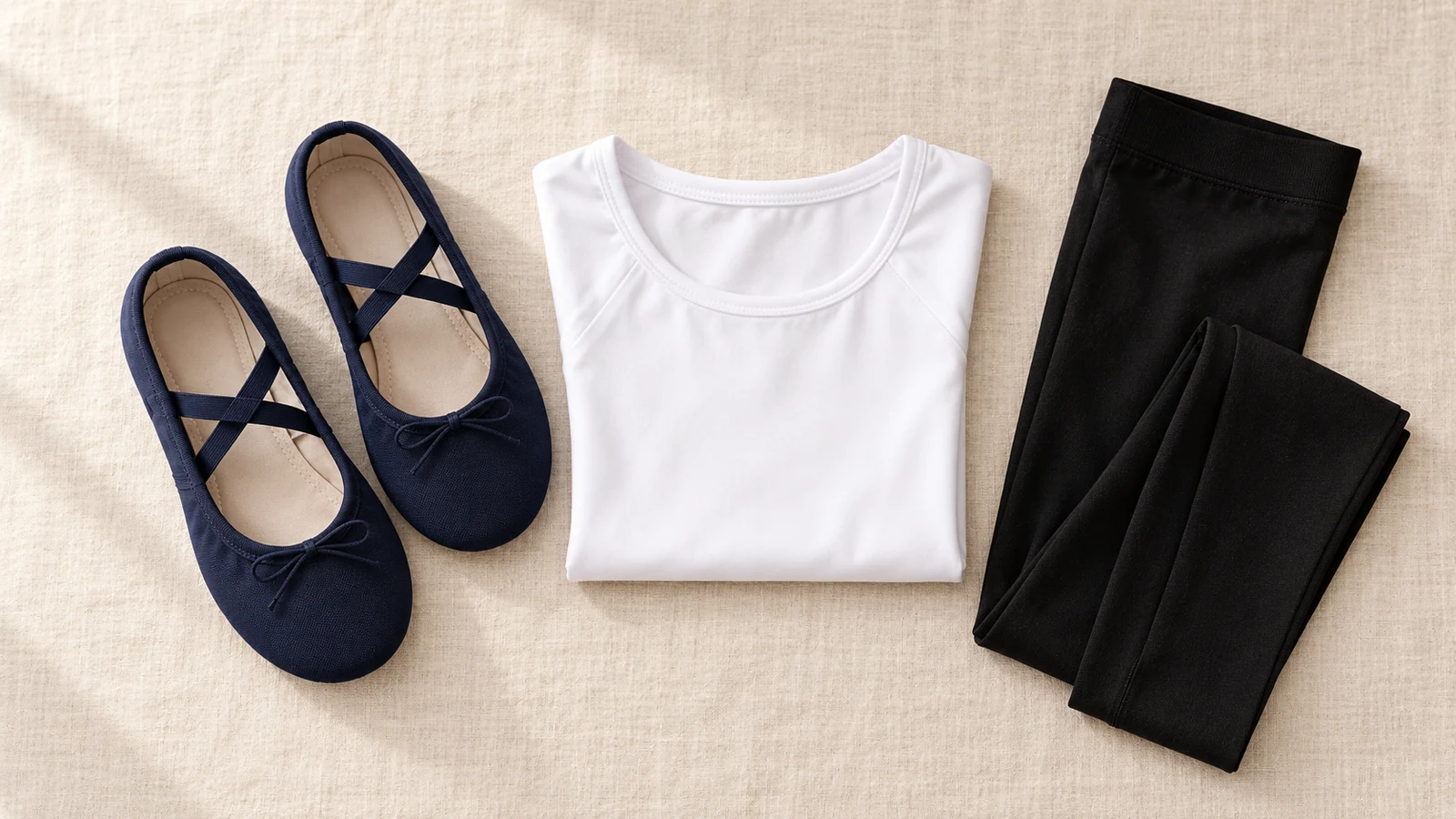
Boys’ ballet attire is simple and practical: a fitted white or black T-shirt, black tights or fitted dance shorts, and canvas ballet shoes. Some schools require boys to wear a dance belt (a supportive undergarment) from a certain age. See our full guide: Male Ballet Attire: A Complete Guide.

Frequently Asked Questions

Is it unusual for boys to do ballet?

In many Western countries, boys are underrepresented in recreational ballet classes relative to girls. In Russia, Cuba, and much of Eastern Europe, male dancers are celebrated as elite athletes from early childhood. The cultural associations differ dramatically by country and community.

Will ballet make my son a better athlete in other sports?

Very likely, yes. The balance, coordination, body awareness, and core strength developed in ballet directly transfer to virtually every other sport. Many professional sports clubs actively encourage ballet cross-training for their athletes.

What if my son wants to stop because of teasing?

Take his feelings seriously. Social pressure is real and can be painful. Work with his teacher to address the situation, find other male dancers for him to connect with, and make sure he is still genuinely enjoying the dancing itself. The goal is always his wellbeing, not the activity for its own sake.

Posted on

When Does a Ballet Student Move Up a Grade? A Parent’s Guide

When Does a Ballet Student Move Up a Grade? A Parent's Guide

How Ballet Grade Progression Works

Moving up a ballet grade is not automatic. Unlike school years, where all children advance together, ballet progression is based on readiness — both technical and physical. Understanding how teachers assess that readiness helps parents support their children through each stage.

Who Decides When a Student Moves Up?

The student’s ballet teacher makes this decision. At RAD-registered schools, the teacher considers:

  • Whether the student has taken and passed the current grade’s examination (or made equivalent progress on a non-exam route)
  • Whether the student’s technique is secure enough to succeed at the next level
  • The student’s age and physical development
  • The student’s attendance and application in class

Parents should not pressure teachers to move children up ahead of schedule. A student who moves up before they are ready will struggle — and the struggle often damages confidence rather than building it.

Typical Time Spent at Each Grade

The following timelines are general guides. Individual children vary considerably:

  • Pre-Primary in Dance: 1–2 years (often until age 5 or 6)
  • Primary in Dance: 1–2 years
  • Grade 1: 1–2 years, typically taking the exam at the end
  • Grade 2: 1–2 years
  • Grade 3: 1–2 years — the point where training becomes more technically demanding
  • Grade 4 and 5: 1–2 years each
  • Grade 6, 7, and 8: Variable — some students take two years per grade, particularly if they attend one class per week

Exam Route vs Non-Exam Route

Not all students take RAD examinations. Some schools offer a non-exam route where students work through the syllabus at their own pace without formal assessment. On this route, the teacher determines when a student has acquired the skills of the current grade and is ready to advance to the next. Progress is typically reviewed each term.

On the exam route, students usually advance to the next grade only after receiving a Pass result (or above) in the current grade’s examination.

Signs a Student May Be Ready to Move Up

  • They can perform all set exercises in the current syllabus cleanly and with good technique
  • They demonstrate musicality — dancing in time with the music, not just going through the motions
  • They are bored or unchallenged by the current material
  • Their teacher has indicated that they are working at the upper end of the grade

Can Students Skip a Grade?

Occasionally, yes — particularly gifted or older beginners may be placed into a grade above where they would normally start. However, skipping grades within the standard progression is unusual at RAD-registered schools, because each grade builds specific technical foundations that the next grade assumes are in place.

Frequently Asked Questions

My child has been in the same grade for two years. Should I be concerned?

Not necessarily. Spending two years on a grade is common, particularly in the lower grades where foundations are being laid and at the middle grades where the syllabus becomes more demanding. The important question is whether your child is making progress and enjoying class — not whether they are keeping pace with other students.

What if my child wants to move up but the teacher says they are not ready?

Trust the teacher’s assessment. The teacher can see your child’s technique, attendance record, and development in a way that parents cannot. Ask what specific skills your child needs to develop to be ready, and how you can support that at home.

Is being older for a grade a problem?

Generally no. Ballet grades are not strictly age-linked. Exams are taken in mixed-age groups and assessed purely on technique and performance quality, not on the student’s age relative to their peers.

Posted on

What to Wear to the Ballet: A Family Dress Guide

What to Wear to the Ballet: A Family Dress Guide

Is There a Dress Code at the Ballet?

Most ballet companies have no strict dress code, but audiences traditionally dress smart-casual. The goal is to look neat and feel comfortable for two to three hours in a theatre seat. Opening-night galas can call for formal wear; regular performances rarely do.

What Smart-Casual Means at the Ballet

Smart-casual covers a wide range. For adults, think tailored trousers, a blouse or shirt, a midi dress, or a blazer over neat trousers. A little black dress is always a safe choice. For children, clean school uniform, a tidy dress, or smart trousers with a button shirt all work well.

Avoid very casual items such as gym wear, football shirts, ripped jeans, or flip-flops. They are not banned, but they stand out and can feel disrespectful to the performers and other audience members.

What to Avoid Wearing

  • Tall hats or large hair accessories – they block the view of the person behind you.
  • Strong perfume or cologne – theatres are enclosed spaces.
  • Noisy jewelry or shoes – hard soles echo on theatre steps and floors.
  • Very formal ball gowns – unless the performance is a gala event.

What Children Should Wear

Children love to dress up for the ballet, and that enthusiasm is wonderful. A party dress, smart shoes, or a neat blazer are all perfect. Keep footwear comfortable for any walking between car parks, foyers, and seats. A small bag or backpack to hold a program, a snack, and a wrap in case the theatre is chilly is a practical addition.

If your child dances, wearing their own ballet-pink leotard under a pretty skirt is a lovely touch for younger audience members — just make sure it is covered up once inside the auditorium.

Matinee vs Evening Performances

Matinee performances (afternoon shows) tend to draw a slightly more relaxed crowd. Smart jeans, a tidy top, and comfortable shoes are perfectly acceptable. Evening shows, especially at flagship venues such as the Royal Opera House or the Sydney Opera House, attract a dressier audience, though a suit or cocktail dress is optional rather than required.

What to Bring to the Ballet

  • A light wrap or cardigan — theatres can be cool once the lights go down.
  • Water (most venues allow a small bottle in the auditorium).
  • A program — these usually cost a few pounds or dollars at the box office.
  • Binoculars for upper-circle seats at larger venues.

Frequently Asked Questions

Can I wear jeans to the ballet?

Yes, clean and tidy jeans are generally acceptable, particularly at matinee performances or community ballet companies. Dark, well-fitted jeans with a smart top are a reasonable choice.

Do I have to dress up?

No formal dress code exists at most venues. Smart-casual is the practical standard: you will fit in and feel comfortable without feeling overdressed.

What should a young child wear to their first ballet?

Something they feel special in — a party dress, neat trousers, or a tidy school-style outfit. Comfortable shoes matter more than formal ones, as children walk more than adults realize between car parks and theatre foyers.

Is it rude to arrive late to the ballet?

Yes. Most companies do not seat latecomers until a natural pause, which can mean waiting until the end of the first act. Aim to arrive at least 15 minutes early.

Posted on

What Is a Dance Uniform? Ballet and Dance Class Dress Codes Explained

What Is a Dance Uniform? Ballet and Dance Class Dress Codes Explained

What Is a Dance Uniform?

A dance uniform is a specified set of clothing worn by students in a dance class or during a dance examination. Unlike performance costumes — which are designed to look impressive on stage — a dance uniform is functional training attire. It must allow full freedom of movement, stay in place during jumps and turns, and allow the teacher to assess technique clearly.

Dance uniforms vary by dance style, school policy and examining body. In classical ballet, the most widely recognized uniform system is that of the Royal Academy of Dance (RAD), which specifies exact colors and garments for each grade level.

Why Do Dance Schools Require a Uniform?

  • Technical visibility: A fitted leotard and tights allow the teacher to see the student’s posture, alignment, turnout and leg lines without loose clothing obscuring the view. This is essential for correct technique feedback.
  • Focus and discipline: A consistent uniform removes distraction and encourages students to focus on their movement rather than their clothing choices.
  • Examination requirements: RAD, ISTD, BATD and other accrediting bodies specify exact uniform requirements for examinations. Students in incorrect uniform may not be permitted to sit the exam.
  • School identity: A uniform creates a sense of community and belonging among students attending the same school.

What Does a Standard Ballet Dance Uniform Include?

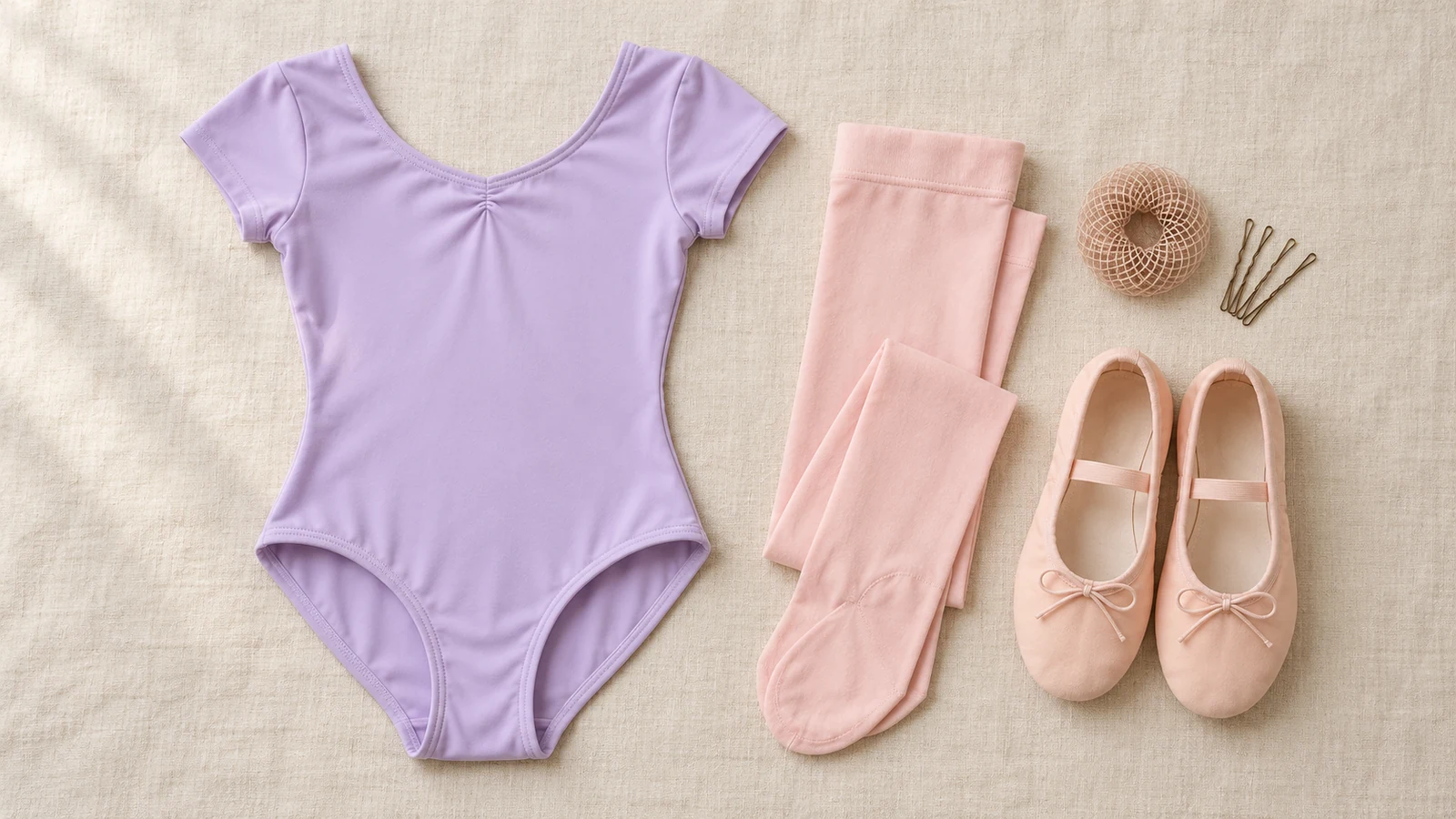
For a girl attending a RAD ballet class, the standard uniform includes:

  • A leotard in the specified color for the grade (pink for Pre-Primary and Primary, burgundy and other colors at higher grades)
  • Pink footed ballet tights
  • Pink canvas ballet shoes with elastic sewn on
  • An elastic ballet belt in the approved color for the grade
  • Hair in a neat ballet bun

For boys, the standard uniform is: white fitted T-shirt or ballet vest, black ballet shorts or trousers, and black or white ballet shoes.

Dance Uniforms by Style

  • Classical ballet (RAD): Leotard, footed tights, ballet shoes, elastic belt. Color varies by grade.
  • Contemporary dance: Often a plain leotard or fitted top and shorts, sometimes with bare feet.
  • Tap dance: Fitted clothing with tap shoes.
  • Jazz: Fitted clothing with jazz shoes. Some schools specify a leotard color.
  • Ballroom / Latin: Practice dresses for women, fitted trousers and shirt for men.

How to Find Out Your School’s Dance Uniform Requirements

  1. Ask the dance teacher or school office directly — they usually have a written uniform guide for new students.
  2. Check the school’s website under “enrolment” or “FAQ” sections.
  3. Ask another parent whose child already attends — they will know exactly what is in use at that school.

Shop at ZoeDancewear

Girls Sleeveless Ballet Leotard — available in key RAD-approved colors, sizes 100–170. Footed Ballet Tights — pink footed tights for class and exams, sizes S to 2XL. Adjustable Ballet Elastic Belt — 14 color options for different grade requirements. Free shipping over $99 to the US.

Frequently Asked Questions

What happens if a student wears the wrong uniform to a ballet exam?

For RAD examinations, incorrect uniform can result in the student being asked to change before the exam (causing delays) or, in serious cases, not being permitted to sit the examination. Always confirm the exact uniform requirements with your teacher several weeks before the exam date.

Are dance uniforms the same worldwide?

No. Dance uniform requirements vary by country, school and examination body. The RAD system — used widely in the UK, Australia, New Zealand and internationally — has specific color-coded uniform requirements by grade. The ISTD, Royal Ballet School and independent schools each have their own uniform specifications.

Can students personalize their dance uniform?

Generally not — the point of a uniform is consistency. Hair accessories (pins, nets, hair bows) within the school’s guidelines are usually permitted. At some schools, a choice in wrap skirt or warm-up layer style is allowed for class, though not for examinations.

n

Posted on

The Most Famous Female Ballet Dancers in History

The Most Famous Female Ballet Dancers in History

The Most Famous Female Ballet Dancers in History

Classical ballet has produced some of the most celebrated performing artists in history. These famous female ballet dancers shaped the art form, set new standards of technique and artistry, and inspired generations of students across the world.

Anna Pavlova (1881–1931)

Anna Pavlova was a Russian ballerina widely regarded as the most influential female ballet dancer of the early 20th century. Born in St. Petersburg, she trained at the Imperial Ballet School and became a principal dancer with the Mariinsky Ballet. She is best known for her iconic role as the Dying Swan in the short solo choreographed for her by Michel Fokine — a performance she gave thousands of times across the world.

Pavlova was the first dancer to bring classical ballet to audiences in countries that had never seen it before, touring to India, Australia, Japan and the Americas. She is credited with popularising ballet internationally more than any other single dancer of her era.

Margot Fonteyn (1919–1991)

Dame Margot Fonteyn was the defining British ballerina of the 20th century. She joined the Vic-Wells Ballet (later the Royal Ballet) and became its prima ballerina assoluta — one of only two dancers in the company’s history to hold this title. Fonteyn is remembered for her legendary partnership with Rudolf Nureyev, which she began at the age of 42. Together they created some of the most celebrated performances in ballet history.

Sylvie Guillem (born 1965)

Sylvie Guillem is a French ballet dancer recognized as one of the greatest technical performers of the late 20th century. Her extraordinary flexibility — she could extend her leg well above 180 degrees — set her apart from her contemporaries. She joined the Paris Opera Ballet at 16 and was named étoile (principal dancer) by Rudolf Nureyev at just 19. Guillem later moved to the Royal Ballet in London and expanded into contemporary dance. She retired in 2015.

Misty Copeland (born 1982)

Misty Copeland is an American ballerina who made history in 2015 as the first African American woman to be promoted to principal dancer at American Ballet Theatre — one of the most prestigious ballet companies in the United States. Her appointment was a landmark moment in breaking down barriers of representation in classical ballet. Copeland began ballet at the age of 13 (exceptionally late compared to the standard training path) and rose to become one of the most recognized ballet dancers in the world.

Tamara Rojo (born 1974)

Tamara Rojo is a Spanish ballerina who became one of the leading figures in British ballet. She spent many years as a principal dancer with the Royal Ballet before becoming Artistic Director of English National Ballet in 2012, where she staged acclaimed productions and championed new choreography. She is now Artistic Director of San Francisco Ballet.

Alicia Alonso (1920–2019)

Alicia Alonso was a Cuban ballerina and choreographer who co-founded the Cuban National Ballet. She danced principal roles including Giselle while nearly blind due to a degenerative eye condition, relying on other dancers to guide her on stage. She continued performing into her 70s and directed the Cuban National Ballet until shortly before her death at age 98, making her one of the most remarkable figures in ballet history.

Shop at ZoeDancewear

Nutcracker Figure — a beautiful ballet keepsake inspired by the world of classical ballet. Free shipping over $99 to the US.

Frequently Asked Questions

Who is considered the greatest female ballet dancer of all time?

Opinions vary, but Anna Pavlova is most often cited as the most influential female ballet dancer in history for her international impact on the art form. Margot Fonteyn is frequently named the greatest British ballerina. Sylvie Guillem is widely regarded as the greatest technical female dancer of the late 20th century.

Who was the first Black principal dancer at American Ballet Theatre?

Misty Copeland became the first African American woman to be named principal dancer at American Ballet Theatre in 2015 — a historic milestone in the representation and diversity of classical ballet.

How many professional female ballet dancers are there worldwide?

Major ballet companies worldwide employ several thousand professional dancers. The largest companies — the Royal Ballet, Paris Opera Ballet, Bolshoi Ballet, and ABT — each have between 80 and 200 dancers on their rosters. The rank of principal dancer is held by a much smaller group within each company.

n