
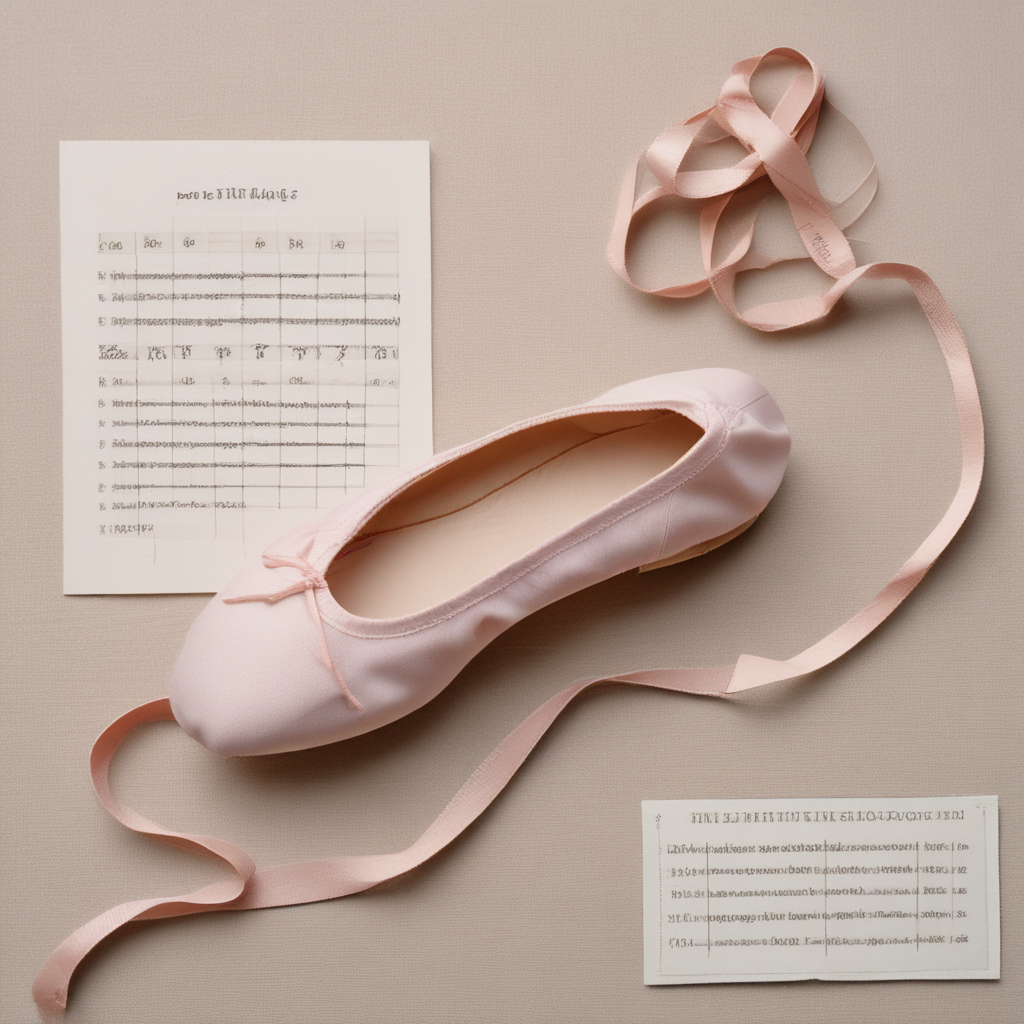
Ballet shoes do not fit like school shoes. They sit snugly — sometimes uncomfortably snug by everyday standards — and that close fit is intentional. Understanding why ballet shoes fit the way they do, and what the difference between a correct fit and a damaging one looks like, saves a lot of frustration and wasted money.
The General Rule: Snug but Not Painful
A well-fitting ballet shoe should feel like a second skin. There should be no excess fabric bunching at the toes or the sides, and the shoe should not slip at the heel when the dancer walks. At the same time, the toes should not be curled or pressed against the end — that causes blisters and can contribute to longer-term foot problems.
Most manufacturers recommend sizing ballet shoes half to one full size smaller than a standard street shoe. This varies by brand and style, so always check the specific size chart for the shoe you are buying.
Fitting the Toes
Stand the dancer on a hard floor in the shoes. The tips of the longest toes should just brush — or come within a couple of millimetres of — the end of the shoe. You should not be able to push a finger between the toe and the shoe end when the dancer is standing flat.
When the dancer rises to demi-pointe, the toes should flatten slightly and the shoe should hold them without the fabric wrinkling excessively at the sides. A small amount of gathering in the drawstring area is normal; large folds of canvas across the top of the shoe indicate the shoe is too wide or too long.
Fitting the Heel
The heel of the shoe should sit flat against the Achilles tendon with no gap or slippage. Ask the dancer to rise to demi-pointe and lower back down several times: if the heel of the shoe lifts away from the foot, the shoe is too long or the elastics need adjusting.
Fitting the Width
Ballet shoes are available in different width fittings. Most standard shoes are made for a medium width foot. Dancers with wider feet should look specifically for wide-fitting shoes, as forcing a wide foot into a standard fitting shoe creates pressure points across the knuckles of the toes.
Our ballet shoe width fitting guide explains narrow, medium and wide options in detail and covers how to measure your child’s foot at home before buying.
How Much Growing Room Is Acceptable?
None, ideally. Unlike school shoes, ballet shoes should not have growing room built in. A shoe with half an inch of space at the toe will wrinkle at the instep, prevent the foot from pointing cleanly, and cause the dancer to grip with the toes to stop the shoe from falling off. This means ballet shoes need replacing more often than street shoes. Children in active classes often need new shoes every four to six months during growth spurts.
Buying Online: How to Measure at Home
Place a piece of paper on a hard floor. Have the dancer stand on it with their weight evenly distributed. Trace around both feet. Measure the distance from the back of the heel to the tip of the longest toe on each foot — feet are often slightly different sizes. Use the larger measurement as your reference.
Compare this to the brand’s size chart, and if your measurement falls between sizes, go for the smaller size when the brand suggests a snug fit, as most ballet shoe brands do. See our full online buying guide for more tips on measuring and sizing remotely.