
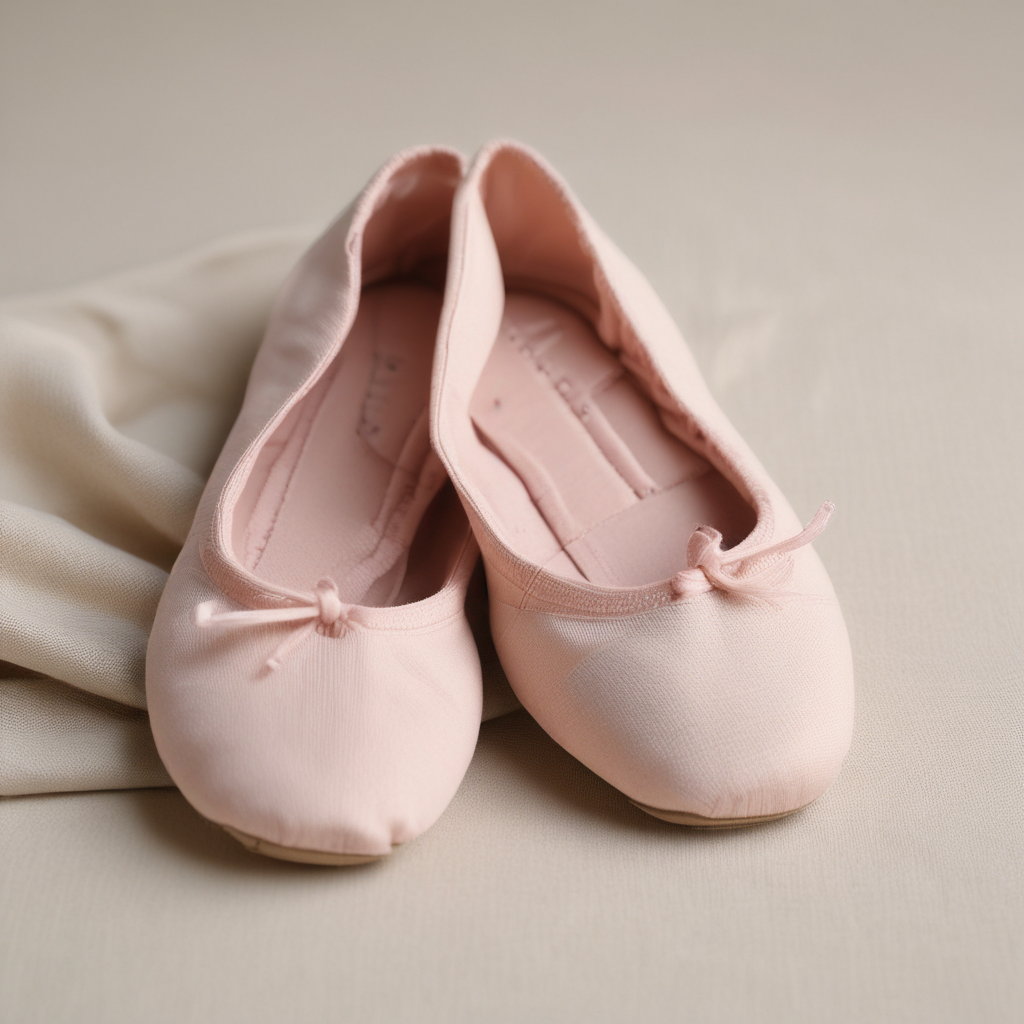
When you start shopping for ballet shoes you quickly notice two main styles: full sole and split sole. Both look similar on the outside, but they work very differently underfoot — and choosing the wrong one at the wrong stage can actually slow a young dancer’s progress.
What Is a Full Sole Ballet Shoe?
A full sole ballet shoe has a single piece of leather or canvas running the entire length of the sole, from heel to toe. Because the sole is continuous, the shoe offers moderate resistance when the foot tries to point. This resistance is precisely what makes full sole shoes excellent for beginners.
When a child is learning to point their foot, they are developing the small muscles of the arch and the intrinsic muscles between the metatarsals. A full sole shoe gives those muscles something to work against — a gentle resistance that builds strength gradually. Skipping this stage by moving too quickly to a split sole shoe is like learning to lift weights with zero resistance: you miss the foundational strengthening work.
What Is a Split Sole Ballet Shoe?
A split sole ballet shoe has two separate pads of material — one under the ball of the foot and one under the heel — with the arch of the foot exposed. With nothing supporting the middle of the foot, the shoe allows the full range of the dancer’s point to show without restriction.
Split sole shoes are flattering on the foot and popular with older, more experienced dancers whose arches are already strong and flexible. Without the built-in resistance of a full sole, the dancer’s own muscles must hold the arch and instep when pointing — which is only appropriate once those muscles have been properly developed.
Which Age and Stage Needs Which?
Most RAD teachers recommend full sole shoes for children up to approximately age seven or eight, or through Grade 3 level. At this stage the foot is still developing and the arch muscles need the resistance the full sole provides.
Once a student has a secure demi-pointe and begins RAD Grade 3 or above, many teachers allow a move to split sole canvas shoes. The dancer should already be able to hold a strong demi-pointe without the shoe doing the work for them.
Adult beginners follow slightly different guidance. Because an adult foot is already fully formed, many teachers start adults directly in a split sole canvas shoe, as the arch muscles in an adult respond differently to resistance training than a child’s developing foot.
Canvas vs Leather: Does It Affect the Choice?
Both full sole and split sole shoes come in canvas and leather versions. Canvas ballet shoes are the most common choice for class because they are lightweight, breathable and mould to the foot quickly. Leather full sole shoes are slightly more durable and are sometimes preferred for very young children whose feet grow fast and put shoes through more wear.
Satin ballet shoes, which you may have seen in performances, are almost exclusively full sole and are not suitable for everyday class use.
What Do RAD Dance Schools Usually Specify?
Many RAD-affiliated schools specify the shoe type in their uniform policy. Always check with your child’s teacher before purchasing. If your school has not specified, a good rule of thumb is:
- Pre-Primary through Grade 2: full sole canvas or leather
- Grade 3 and above: split sole canvas (teacher’s discretion)
- Adult beginners: split sole canvas is widely accepted
Can You Tell the Difference by Looking?
From above, full sole and split sole shoes look almost identical. Turn the shoe over: a full sole shoe has an unbroken layer covering the whole underside, while a split sole shows the fabric of the upper between the two pads. The arch of a split sole shoe is noticeably flexible when you bend it in your hand.
Summary
Full sole ballet shoes build the arch strength that young dancers need. Split sole shoes let that strength show once it has been developed. Starting with a full sole shoe is not old-fashioned — it is the foundation for a clean, strong technique that will serve a dancer for years.
If you are unsure which type is right for your child’s current stage, ask their teacher before buying. Our guide to buying ballet shoes online also covers width fitting, sizing and what to look for when you cannot try shoes in person.