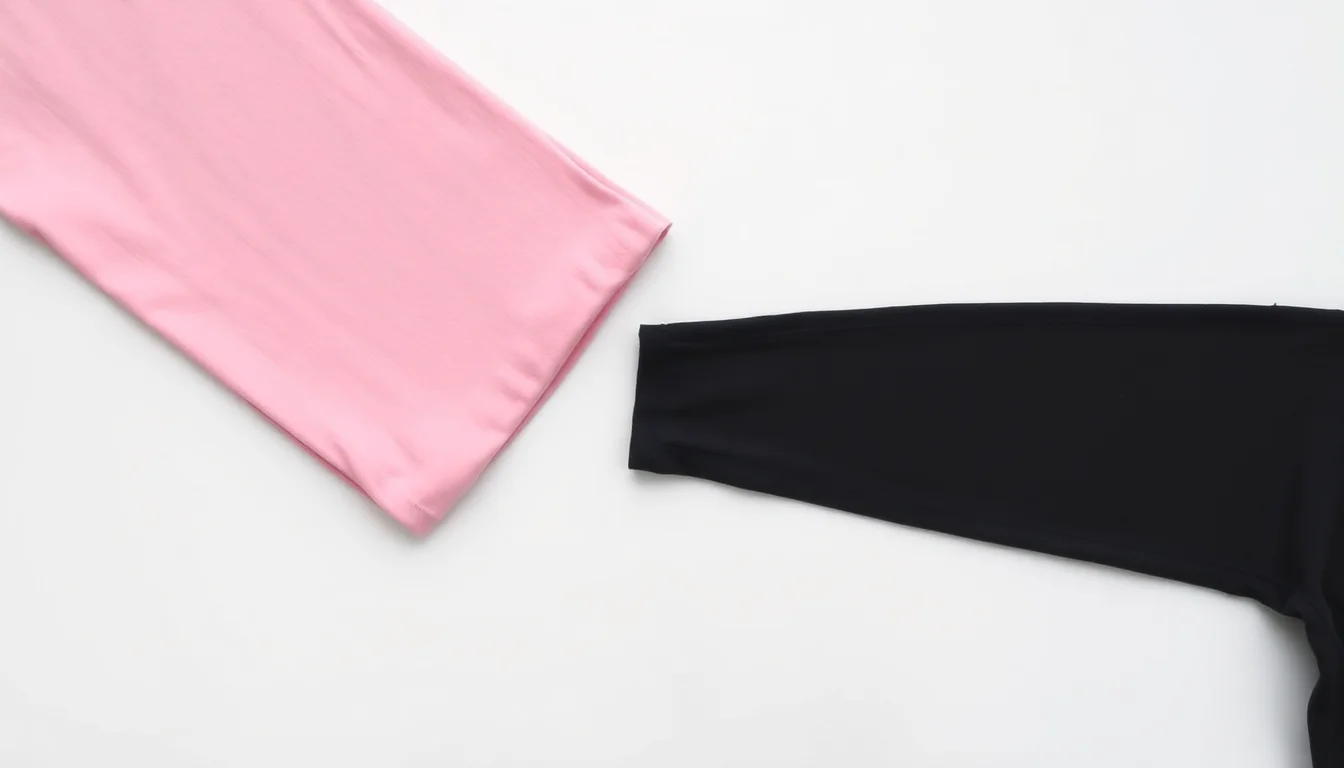
Short answer: Tights are a single-piece garment that covers both legs and the waist. They come in a wide range of thicknesses (measured in denier) from very sheer to thick and opaque.
What Are Tights?
Tights are a single-piece garment that covers both legs and the waist. They come in a wide range of thicknesses (measured in denier) from very sheer to thick and opaque. Dance tights are engineered for movement, with reinforced gussets, high stretch content, and a professional finish designed to stand up to the demands of class and performance.
What Are Leggings?
Leggings are stretchy, form-fitting trousers ending at the ankle. Unlike tights they are much thicker and more opaque, have a waistband at the natural waist, and do not include feet. Leggings are designed as outerwear for casual or gym use.
Key Differences
| Feature | Tights | Leggings |
|---|---|---|
| Coverage | Waist to toes | Waist to ankle |
| Thickness | Sheer to 80 denier | Much thicker (opaque) |
| Feet | Footed, convertible, or stirrup | No feet |
| Purpose | Base layer / performance | Outerwear / casual |
| Used in ballet class | Yes — required | Usually not |
Which Is Correct for Ballet Class?
Ballet tights are the correct choice — not leggings. Dance schools and syllabi specify ballet tights because they allow the teacher to see the dancer’s leg lines, foot placement, and muscle engagement clearly. The sheer or semi-sheer finish also maintains the clean, uniform look that is part of ballet’s professional tradition. Most RAD and ISTD schools specify pink ballet tights for girls.
When Are Leggings Acceptable in Dance?
- Worn over tights as a warm-up layer in cold studios
- Some contemporary and commercial dance styles
- Adult barre fitness classes where strict dress codes may not apply
- Hip hop and street dance
For classical ballet and RAD examinations, tights are always the correct choice.
Types of Ballet Tights
- Footed tights: Full coverage to the toes; standard for most ballet classes
- Convertible tights: A hole in the toe allows them to be worn both footed and footless
- Stirrup tights: A strap under the arch, toes exposed
- Fishnet tights: For performances and character work
Shop from Zoe Dancewear
Frequently Asked Questions
What is the difference between tights and leggings?
Tights are a sheer or semi-sheer single-piece garment covering the waist to the toes, worn as a base layer. Leggings are thick, opaque, ankle-length trousers worn as outerwear. Ballet class requires tights, not leggings.
Can I wear leggings to ballet class?
Most ballet schools require tights. Check your school’s dress code. Some permit dark leggings for adult beginner classes, but for RAD and ISTD graded classes, ballet tights are standard.
What denier should ballet tights be?
Most ballet tights are 40 to 70 denier — enough coverage for a professional appearance while remaining lightweight and letting the teacher see leg lines.
What colour tights for ballet?
Pink is standard for most girls’ RAD classes. Some schools specify white or skin-tone for certain grades or performances. Always check your school’s specific dress code.