Posted on

Maria Tallchief: The Story of America’s First Prima Ballerina

Maria Tallchief: The Story of America’s First Prima Ballerina

Who Was Maria Tallchief?

Elizabeth Marie Tall Chief (24 January 1925 – 11 April 2013) was the first Native American prima ballerina in the United States and is widely regarded as one of the greatest American ballerinas of the twentieth century. She transformed the perception of ballet in America, brought George Balanchine’s neoclassical vision to life, and broke racial and cultural barriers at a time when the world of classical dance was deeply conservative.

Early Life and Heritage

Maria Tallchief was born on the Osage Nation reservation in Fairfax, Oklahoma. Her father was an Osage chief; her mother was of Scots-Irish descent. The family moved to Los Angeles when Maria was eight, and she began serious ballet training there, studying under Bronislava Nijinska (sister of Vaslav Nijinsky) and later David Lichine.

From the beginning, Tallchief combined exceptional technical talent with a fierce drive. Her teacher Nijinska recognized something extraordinary in her and pushed her accordingly. At seventeen she joined the Ballet Russe de Monte Carlo, the touring company that was at that time the most prominent ballet organization in the United States.

Meeting George Balanchine

The decisive event of Tallchief’s career was her meeting with the choreographer George Balanchine. In 1946 she joined his newly formed Ballet Society (which would become the New York City Ballet), and the following year she and Balanchine married. Their partnership — both personal and artistic — was one of the most creative in the history of American ballet, even after the marriage ended in 1952.

Balanchine choreographed several landmark works for Tallchief, most famously the revised Firebird (1949), in which her portrayal of the magical fire-bird became legendary. Her performances were fast, precise, electrifying — she embodied Balanchine’s vision of the American ballet dancer: technically brilliant, fleet, and unsentimental.

Prima Ballerina at the New York City Ballet

Tallchief became the first American dancer to be designated prima ballerina by a major company when NYCB granted her the title in the early 1950s. At a time when American ballet was considered inferior to European ballet, her talent commanded the world’s attention and proved that American dancers could compete at the highest level.

Her signature role became the Sugar Plum Fairy in Balanchine’s 1954 staging of The Nutcracker — a production that is credited with establishing The Nutcracker as the American Christmas tradition it remains today. Her performance of the grand pas de deux became the standard by which all subsequent interpretations were measured.

Later Career and Legacy

Tallchief left NYCB in 1965 and continued performing with other companies before retiring from the stage. She later founded the Chicago City Ballet in 1981 and spent decades teaching and promoting dance. She was awarded the Presidential Medal of Freedom in 1999 — the United States’ highest civilian honor — and the Kennedy Center Honors.

In 2019, the state of Oklahoma selected her as one of the five people to represent the state in the National Statuary Hall Collection in the US Capitol — the first Native American woman so honoured. A US quarter featuring her portrait was issued in 2023 as part of the American Women Quarters program.

What Maria Tallchief Means for Dance Students

Tallchief’s career demonstrates that exceptional talent, rigorous training, and determination can overcome barriers of origin and background. She came from a small reservation town in Oklahoma, faced the assumption that American dancers were not the equal of Europeans, and went on to define what an American ballerina could be. Her story resonates for anyone who has ever felt like an outsider in the dance world.

Frequently Asked Questions

What is Maria Tallchief most famous for?

Her most celebrated roles were the Firebird (Stravinsky / Balanchine, 1949) and the Sugar Plum Fairy in Balanchine’s Nutcracker (1954). She is also celebrated for helping establish the New York City Ballet as a world-class institution and for being the first Native American prima ballerina in the United States.

Was Maria Tallchief related to Marjorie Tallchief?

Yes — Marjorie Tallchief was Maria’s younger sister. Marjorie also became a professional ballet dancer, performing with the Paris Opéra Ballet, where she became the first American named étoile (star dancer) by that institution. The two sisters had parallel, distinguished careers in different countries.

Why is there a quarter with Maria Tallchief on it?

The US Mint’s American Women Quarters Program, running 2022–2025, features five women per year who made significant contributions to American history. Maria Tallchief was selected for her groundbreaking artistic achievements, her Native American heritage, and her cultural significance. The quarter was issued in 2023.
Posted on

How Much Do Ballet Dancers Earn? A Realistic Career Guide

How Much Do Ballet Dancers Earn? A Realistic Career Guide

Is Ballet a Viable Career Financially?

This is one of the most honest questions dance parents ask, and it deserves a straight answer. Professional ballet is a real career with a genuine salary structure — but it varies enormously depending on the company, the country, the dancer’s rank, and the length of their career. Here is what the numbers actually look like.

How Ballet Companies Pay Dancers

Most professional ballet dancers are employed on full-time or seasonal contracts by ballet companies. They receive a weekly or annual salary, plus performance fees in some cases. Contracts at major companies typically include healthcare and pension contributions. At smaller regional companies, benefits may be more limited.

Dancers are usually ranked within a company hierarchy:

  • Corps de ballet — the ensemble; the entry level for professional dancers
  • Demi-soloist / First Artist — intermediate rank, small solo roles
  • Soloist — regular solo roles
  • Principal / First Soloist — leading roles, the top rank

Salary increases significantly with rank, and top principals at major companies can earn very high figures.

Salary Ranges by Country and Company

United Kingdom

The Royal Ballet is the UK’s highest-paying company. Corps de ballet dancers at the Royal Ballet are reported to start at approximately £30,000–£35,000 per year (roughly $38,000–$45,000 USD). Principals earn significantly more — senior principals at major companies can earn £60,000–£100,000+ per year. Smaller UK companies pay less: regional corps de ballet starting salaries can be as low as £18,000–£22,000, close to minimum wage once hours are accounted for.

United States

Salaries in the US vary widely. American Ballet Theatre and New York City Ballet pay some of the highest rates. ABT corps de ballet members reportedly start around $1,200–$1,500 per week on a 37-week contract, totalling roughly $44,000–$55,000 per year. Principals at ABT or NYCB may earn $100,000–$200,000 or more per year. Smaller companies may pay significantly less — some regional companies offer contracts as low as $400–$600 per week.

Australia

The Australian Ballet is the country’s leading company. Corps de ballet salaries start at approximately AUD $55,000–$65,000 per year under the company’s enterprise agreement. Senior artists and principals earn more. Australian union agreements (negotiated through Equity) establish minimum rates across the industry.

What Affects a Ballet Dancer’s Earnings

  • Rank — the single biggest factor. A principal at a major company may earn five to ten times a corps member’s salary
  • Company size and prestige — the Royal Ballet pays more than a small regional company
  • Guest artist fees — star principals who guest with multiple companies can earn substantial per-performance fees
  • Commercial work — endorsements, advertising, film, and television can supplement a dancer’s income significantly
  • Teaching and choreography — many dancers supplement income through teaching; former principals can earn well from choreography commissions

Career Length and Financial Planning

Professional ballet careers typically peak between ages 18 and 35. Most dancers retire from performing in their mid-to-late thirties due to the physical demands of the profession. This means a career of 15–20 years at most. Sensible financial planning — savings, supplementary income from teaching, and transition planning — is essential.

Many former dancers go on to successful second careers in teaching, choreography, arts administration, physiotherapy, Pilates instruction, or performance arts management.

Frequently Asked Questions

Do ballet dancers get paid for rehearsals?

Yes. Full-time contracted dancers at professional companies are paid for rehearsal time as part of their salary. Rehearsal hours are typically regulated by union agreements.

Can a ballet dancer become famous and wealthy?

Yes — but it is rare. Principal dancers at the world’s top companies can achieve a very comfortable income, especially if they also take on commercial work, guest roles, and media appearances. However, the vast majority of professional ballet dancers earn moderate salaries rather than celebrity-level incomes.

Is ballet a good career choice financially?

Ballet is a viable career for those with exceptional talent and drive, but parents should be realistic: the profession is highly competitive, the window of earning is relatively short, and salaries outside top-tier companies can be modest. Most professional dancers are motivated by passion for the art form rather than financial reward.

Do dance teachers earn well after retiring from performing?

It depends greatly on the context. Running a private ballet school or teaching at a leading institution can provide a stable long-term income. Many former professional dancers build very successful teaching careers over decades.

Posted on

Home Ballet Barre Buying Guide: Portable vs Fixed, What to Look For

Home Ballet Barre Buying Guide: Portable vs Fixed, What to Look For

Do You Need a Ballet Barre at Home?

A home ballet barre is one of the most useful investments a serious dance student can make. It allows safe, supported practice between studio classes, reinforces the barre exercises taught by the teacher, and builds the muscle memory that accelerates technique. This guide covers what to look for, the types available, and what to spend.

Types of Home Ballet Barre

Freestanding Portable Barre

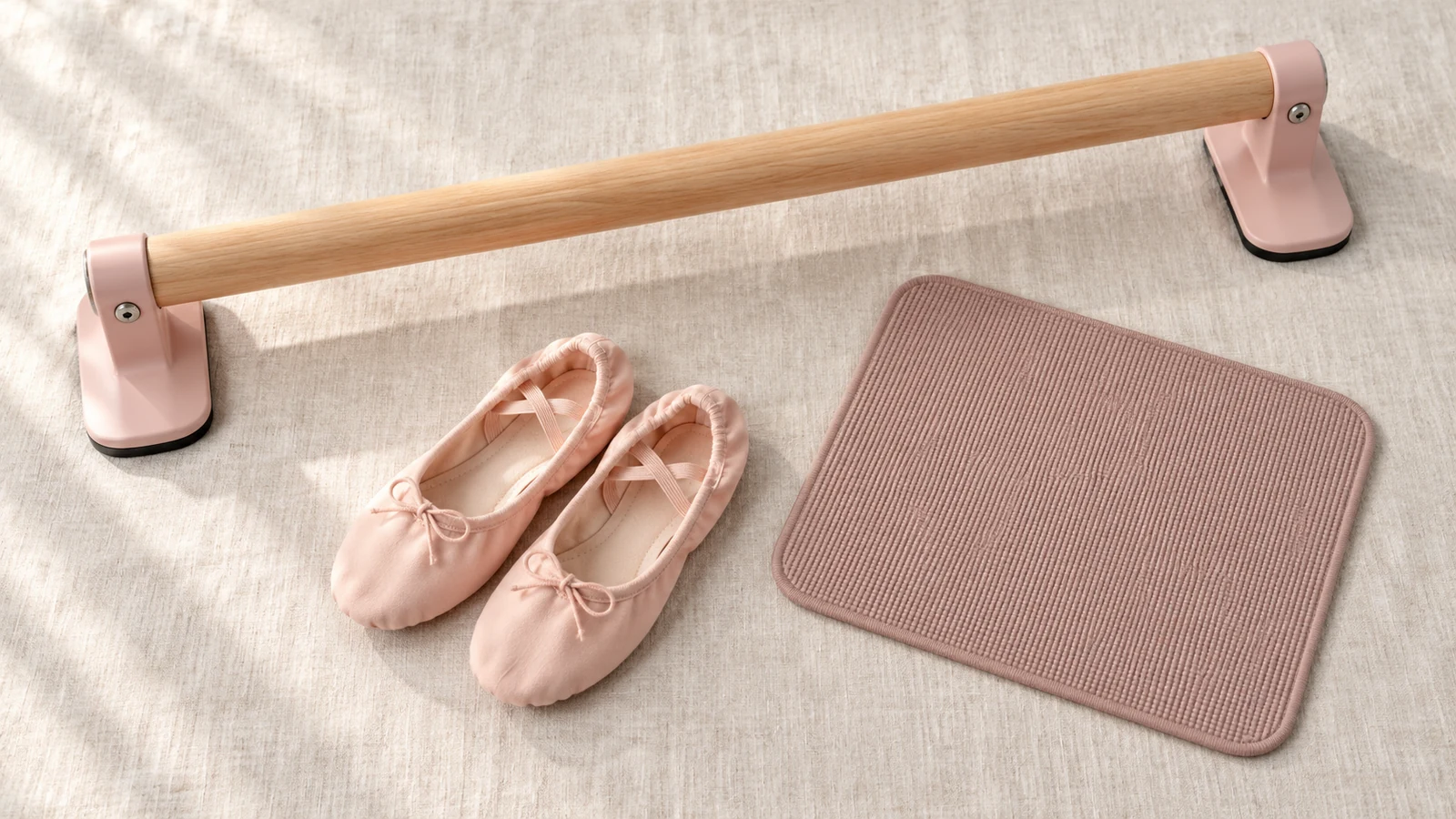
The most popular option for home use. A freestanding barre sits on its own base — no wall fixings required — and can be moved from room to room or folded for storage. Most quality models are height-adjustable, which is essential for growing children and for families where multiple people may use the barre.

Pros: No installation required, moveable, adjustable height, suitable for renters
Cons: Can wobble slightly more than a wall-mounted barre at higher extensions; base bars can get in the way of footwork practice

Wall-Mounted Fixed Barre

Fixed directly into wall studs, a wall-mounted barre is the most stable option and closest to a professional studio environment. It does not take up floor space and has no base to trip over.

Pros: Maximum stability, professional feel, no floor footprint
Cons: Permanent installation (not suitable for renters), requires drilling into walls, not adjustable in most cases

Double vs Single Rail

Double-rail barres have two horizontal rails — a lower and an upper — which gives students the option to work at different heights as they grow. Single-rail barres are simpler and more affordable. For a growing child, a double rail or a single adjustable rail is preferable.

What Height Should a Home Barre Be?

The correct barre height is hip height — approximately level with the dancer’s hip bone (iliac crest) when standing upright. For children this changes as they grow, which is why adjustability matters. As a rough guide:

  • Age 4–6: approximately 65–75 cm (25–30 inches)
  • Age 7–10: approximately 75–85 cm (30–34 inches)
  • Age 11–14: approximately 85–95 cm (33–37 inches)
  • Adults: typically 90–105 cm (35–41 inches)

Look for barres with at least 6–8 height settings so the barre can grow with your child.

What Material Is Best?

Steel Frame

The most common and recommended option. A powder-coated steel frame provides the rigidity and stability that barre work requires. Avoid lightweight aluminum frames — they flex noticeably during use and reduce confidence in the support.

Wood Rail vs PVC Rail

Traditional ballet studio barres use hardwood rails — typically birch or maple — because wood provides a natural, comfortable grip and does not become slippery when hands are warm. PVC rails are more affordable and weather-resistant, but can feel slippery and are less durable for heavy use. If budget allows, choose a barre with a wooden or wooden-covered rail.

What to Look for When Buying

  • Weight capacity — a minimum of 100 kg (220 lb) is recommended so the barre does not tip during supported stretches
  • Base width — a wider base is more stable; look for at least 60 cm (24 inches) of base spread
  • Rail length — 90–120 cm (36–48 inches) is adequate for a single student; longer rails (150 cm+) allow two students to use the barre simultaneously
  • Non-slip feet — rubber feet prevent the barre from sliding on hard floors
  • Weight — a portable barre should be light enough to move easily (under 10 kg / 22 lb) but heavy enough to be stable

What to Wear When Using a Home Barre

Always wear proper ballet shoes on a home barre — never socks on a hard floor. A fitted leotard and tights help you see your alignment clearly, and leg warmers keep muscles warm if your home practice space is cool.

Which barre types are there?

A wall-mounted ballet barre is fixed to the wall and stays steady, a freestanding barre stands on its own base and moves between rooms, and an adjustable barre changes height as a child grows. Choose by the space you have and whether you can drill into the wall.

Frequently Asked Questions

How much should I spend on a home ballet barre?

A reliable freestanding adjustable barre costs between $80 and $200 USD (£65–£160). Budget options below $60 tend to wobble and wear quickly. A wall-mounted barre from a dance supply company typically costs $40–$100 for the rail, plus installation. Avoid very cheap plastic-framed options — they are not safe for supported stretching.

What floor is safest under a home barre?

A smooth, clean hardwood or laminate floor is ideal. Place a non-slip mat under the barre base if you are using it on a polished surface. Avoid practicing on carpet — it catches the toe and limits footwork. See our full guide: How to Practice Ballet at Home.

Can a home barre replace studio classes?

No. A home barre supports studio training — it does not replace a teacher’s corrections and guidance. Only use a home barre to practice exercises that have already been taught by your teacher. Attempting new exercises without supervision risks developing incorrect technique.

Posted on

What Is Swan Lake About? The Full Story, Characters and Music Explained

What Is Swan Lake About? The Full Story, Characters and Music Explained

Swan Lake: The World’s Most Famous Ballet

Swan Lake is performed by ballet companies worldwide more than any other classical ballet. First staged in 1877 by the Imperial Russian Ballet with Tchaikovsky’s score, it has become the defining image of classical ballet — the white-costumed corps de ballet, the dramatic pas de deux, and the indelible melody of the Swan Theme. Here is everything you need to understand the story before you see it.

The Story of Swan Lake

Act I: The Prince’s Birthday

Prince Siegfried is celebrating his coming-of-age birthday with his friends and courtiers. His mother, the Queen, reminds him that he must choose a bride at tomorrow’s royal ball. Troubled by this responsibility, Siegfried goes hunting at night with his friends. He follows a flock of swans to a lakeside and is astonished to see them transform into women.

Act II: The Lake — Meeting Odette

At the lake, Siegfried meets Odette, the Swan Queen. She explains that she and her companions have been enchanted by the evil sorcerer Von Rothbart: by day they are swans; only at night do they return to human form. The spell can only be broken by a man who has never loved before pledging his eternal love to her — and keeping that pledge. Siegfried falls deeply in love with Odette and vows to be faithful. This act contains the famous White Swan pas de deux, one of the most poetic duets in all of ballet.

Act III: The Royal Ball — Odile’s Deception

At the ball, princesses from neighbouring kingdoms arrive as potential brides. Siegfried is uninterested in all of them — his heart belongs to Odette. Then Von Rothbart arrives in disguise, accompanied by his daughter Odile, dressed to resemble Odette exactly in black. Siegfried is deceived — he believes Odile is Odette and, swept up in the moment, pledges his eternal love to her. He has broken his vow. Odile’s famous 32 fouettés are performed in this act. Von Rothbart reveals the deception and vanishes. Siegfried realises what he has done and rushes back to the lake.

Act IV: The Lake — The Ending

Siegfried arrives at the lake and begs Odette’s forgiveness. The ending varies by production: in the tragic version (the most common), Odette and Siegfried choose to die together rather than be separated, and their love transcends death. In some versions they are saved and the spell is broken. The Bolshoi’s version traditionally uses the tragic ending; the Royal Ballet and many other companies also favour it.

The Key Characters

  • Odette — the Swan Queen, gentle and tragic; and Odile — the Black Swan, bold and seductive. Both are danced by the same ballerina — one of ballet’s most demanding double roles
  • Prince Siegfried — the hero, noble but fallible
  • Von Rothbart — the villain sorcerer
  • The Queen Mother — Siegfried’s demanding mother
  • Benno — Siegfried’s loyal friend
  • The Cygnets — four swan maidens who perform the famous Dance of the Little Swans in perfect unison

The Music

Pyotr Ilyich Tchaikovsky composed the Swan Lake score in 1875–76. The Swan Theme — a slow, sorrowful oboe melody — is one of the most recognisable passages in classical music. Other famous pieces include the Waltz in Act I, the White Swan pas de deux, the Black Swan pas de deux and its coda, and the Dance of the Little Swans.

What Makes Swan Lake Special

Swan Lake endures because it combines the most demanding ballet technique with a genuinely moving story. The ballerina dancing Odette/Odile must switch between two completely different characters — vulnerable and lyrical as the White Swan, powerful and seductive as the Black Swan — often within the same evening. The corps de ballet’s synchronised swan choreography is one of the most visually striking images in all of performing arts.

Frequently Asked Questions

How long is Swan Lake?

Most productions run approximately 2 hours 45 minutes to 3 hours including one or two intervals. Check the specific production schedule when booking.

Is Swan Lake appropriate for children?

Yes, for most children aged 5 and over. The story is dramatic but not frightening. The magic and the beauty of the swan imagery captivate young audiences. The tragic ending is sad rather than disturbing.

What are the 32 fouettés in Swan Lake?

The 32 consecutive fouetté en tournant turns in Act III are one of ballet’s most famous technical challenges. The ballerina whips one leg out to the side while spinning on the other, completing 32 full rotations without stopping. It has become a test of a ballerina’s technical command and became a tradition after Italian ballerina Pierina Legnani first performed it at the Mariinsky in 1895.

Which is the most famous Swan Lake production?

The Royal Ballet, the Bolshoi Ballet, American Ballet Theatre, and the Paris Opéra Ballet all maintain celebrated productions. The Mariinsky Ballet’s version in St Petersburg is often considered historically definitive, as the ballet was created there. No single production is universally “the” Swan Lake — each company brings its own choreographic interpretation.

Posted on

Giselle Ballet: Full Story, Characters and What to Watch For

Giselle Ballet: Full Story, Characters and What to Watch For

Giselle: Ballet’s Most Celebrated Romantic Work

Giselle has been performed continuously since its premiere in Paris in 1841, making it one of the longest-running works in the classical ballet repertoire. Deeply romantic, emotionally complex, and technically demanding, Giselle is the role that generations of ballerinas have used to prove their artistry. If your child studies ballet, they will almost certainly encounter Giselle in their training.

The Story of Giselle

Act I: The Village

Giselle is a young peasant girl in a medieval German village. She loves dancing more than anything — perhaps too much, as she has a weak heart. Into the village comes Albrecht, a nobleman who has disguised himself as a peasant named Loys. Giselle and Albrecht fall in love.

Hilarion, a gamekeeper who also loves Giselle, is suspicious of the stranger. He discovers Albrecht’s sword and cape, revealing his noble identity — and, crucially, that Albrecht is already engaged to Bathilde, a princess. When the hunting party arrives and Giselle sees Albrecht with Bathilde, the truth destroys her. Overwhelmed by grief and betrayal, Giselle loses her mind, relives moments from their courtship in a mad scene of devastating delicacy, and dies — some productions imply she dies of a broken heart, others that her weak heart simply gives out under the emotional shock.

Act II: The Midnight Forest

Giselle has become one of the Wilis — spirits of young women who died before their wedding day, condemned to dance for eternity and to lure men into dancing until they die from exhaustion. The Queen of the Wilis is Myrtha, a cold and merciless figure who commands absolute obedience from her subjects.

Hilarion comes to Giselle’s grave and is danced to his death by the Wilis. Then Albrecht arrives, overcome with grief and guilt. The Wilis demand he dance until he dies. But Giselle, even in death, still loves Albrecht. She shields him, dances with him to keep him moving without exhausting him, and protects him until dawn breaks. At dawn, the Wilis lose their power. Albrecht survives. Giselle vanishes back into the spirit world, her love preserved beyond death.

The Key Characters

  • Giselle — the heroine; requires extraordinary range from Act I’s innocent joy to Act I’s mad scene to Act II’s ethereal forgiveness. This is one of ballet’s most demanding dramatic roles.
  • Albrecht — the nobleman who deceives Giselle. He is not simply a villain — his grief and guilt in Act II are genuine, and the role requires real emotional depth from the male dancer.
  • Hilarion — the gamekeeper; a tragic figure who loves Giselle faithfully but whose honesty causes her death. He is not a villain either — his is a heartbreaking situation.
  • Myrtha, Queen of the Wilis — the cold supernatural antagonist of Act II. A major solo role requiring technical power and imperious stage presence.
  • Bathilde — Albrecht’s fiancée; a minor but important plot role.

Why Giselle Is Considered Ballet’s Greatest Challenge

Act I demands a dancer who can be warm, girlish, and light-footed — then shatter into one of the most dramatic mad scenes in performing arts — then die on stage convincingly. Act II requires an entirely different technique: the sustained, floating quality of a spirit, with slow adagio passages that expose every weakness in line and control, and a series of jumps and balances that must look effortless and supernatural.

The greatest ballerinas of every era — Carlotta Grisi (who created the role), Anna Pavlova, Galina Ulanova, Margot Fonteyn, Natalia Makarova, and Svetlana Zakharova — have all made Giselle their signature role.

What the “White Act” Means

Act II of Giselle is known as the “white act” — a term also applied to Act II of Swan Lake. The corps de ballet appears in long white tutus or romantic-length skirts, moving in synchronised formations in dim, moonlit lighting. The visual effect is one of the most hauntingly beautiful images in classical ballet.

Frequently Asked Questions

Is Giselle suitable for children?

Giselle is more emotionally complex than The Nutcracker or Sleeping Beauty. The themes of deception, madness, and death are adult, though not graphic. Most children aged 8 and over can follow and be moved by the story. Younger children may find Act II’s ghost-world setting slightly eerie.

How long is Giselle?

Most productions run approximately 1 hour 45 minutes to 2 hours, typically with one interval. It is shorter than Swan Lake or Sleeping Beauty.

When was Giselle first performed?

Giselle had its world premiere at the Paris Opéra on 28 June 1841. The choreography by Jean Coralli and Jules Perrot, and the score by Adolphe Adam, have been revised many times, but the essential structure has remained unchanged for nearly two centuries.

Posted on

Ballet Foot Care: How Dancers Look After Their Feet

Ballet Foot Care: How Dancers Look After Their Feet

Why Foot Care Matters in Ballet

A ballet dancer’s feet work harder than virtually any other athlete’s. They absorb repeated impact, sustain balance on a single point, articulate into extreme positions, and do so across decades of training and performance. Whether your child is in Pre-Primary or working towards their first pointe shoes, developing good foot care habits early protects their health and longevity in the studio.

Common Foot Problems in Ballet Dancers

Blisters

The most universal complaint, especially when breaking in new shoes or after a long rehearsal period. Blisters form where the shoe rubs repeatedly against the skin. Prevention: ensure shoes fit correctly (neither too loose nor too tight), use a small amount of petroleum jelly on known friction points, and allow new shoes to be broken in gradually rather than wearing them for a full class immediately.

Calluses

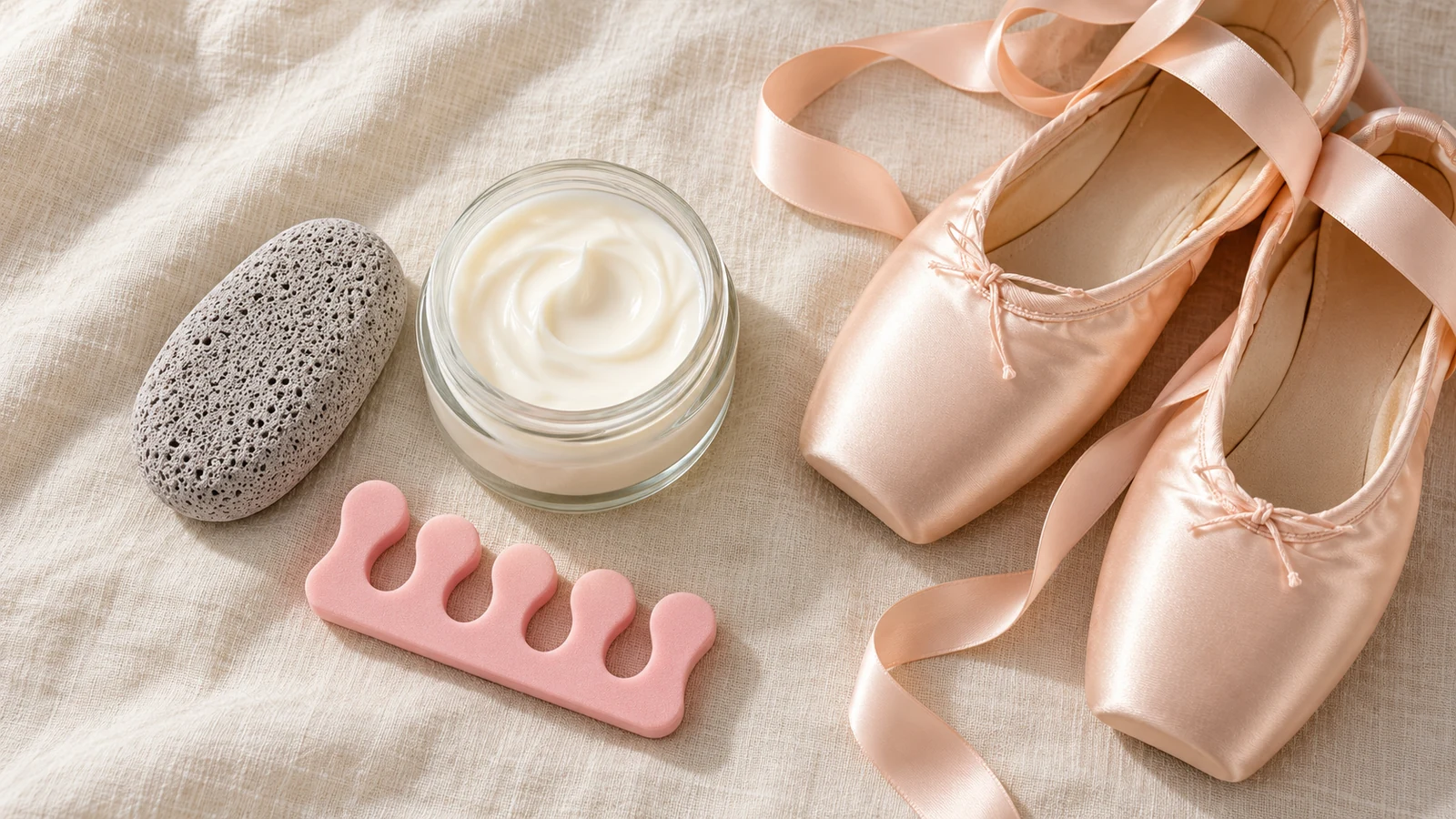
Thickened skin on the ball of the foot, the tips of the toes, and the heel develops as a natural response to repeated friction. A moderate amount of callus is actually protective for dancers — it reduces blister formation. However, very thick or cracked calluses can split painfully. Keep calluses smooth with a pumice stone after bathing, and apply a thin layer of foot cream before bed.

Ingrown Toenails

Caused by tight-fitting shoes, improper toenail cutting, or repeated pressure on the toes. Cut toenails straight across — never round the corners — and keep them short (just past the end of the toe). Never cut into the sides. If an ingrown nail becomes infected, see a podiatrist promptly.

Bruised Toenails

Common in dancers who spend time on pointe or in tight shoes. A black toenail results from bleeding beneath the nail caused by pressure. Keep toenails trimmed short to minimize this. If the nail becomes very painful or the area becomes infected, seek medical advice.

Dry, Cracked Heels

Dancers who frequently go barefoot in changing rooms or who have naturally dry skin are prone to cracked heels. Apply a thick foot cream (urea-based creams work well) every evening. Silicone heel pads can protect cracked areas during class.

Daily Foot Care Routine for Dancers

After class:

  1. Remove shoes immediately and allow feet to air
  2. Check for blisters, hot spots, or any new areas of pain
  3. Wash feet thoroughly, including between the toes
  4. Dry completely — fungal infections thrive in moisture, especially between the toes
  5. Apply a light moisturiser or foot cream to the soles and heels

Weekly:

  • Gentle pumice on any calluses after a warm bath or shower
  • Trim toenails straight across if needed
  • Check inside dance shoes for worn areas that may be causing friction

The Importance of Correctly Fitted Shoes

Most foot problems in young ballet students trace back to ill-fitting shoes. A shoe that is too long causes the toes to curl; too short creates pressure on the nails; too wide allows the foot to slide; too narrow compresses the toes into unnatural positions. Have shoes fitted professionally and replace them when they are worn through — holes in the sole alter foot mechanics and increase injury risk. See our guide: How Should Ballet Shoes Fit?

Foot Strengthening Exercises

Strong intrinsic foot muscles reduce the impact on bones and joints and improve articulation for exercises like tendu and relevé. Simple exercises recommended by dance physiotherapists include:

  • Towel scrunches — place a small towel on the floor and scrunch it with the toes repeatedly
  • Marble pickups — pick up marbles from the floor using the toes
  • Doming — lift the arch of the foot while keeping the toes flat on the floor
  • Theraband resistance — point and flex the foot against gentle resistance

When Pointe Work Begins: Extra Care Needed

Once a dancer starts pointe work, foot care becomes significantly more demanding. Toe pads, lambswool, and gel spacers help manage the increased pressure on the toes. Pointe shoes must be fitted by a professional fitter — a poorly fitted pointe shoe is the single largest cause of foot problems in young dancers.

Frequently Asked Questions

Are damaged feet inevitable in ballet?

No — the image of severely damaged dancer’s feet is associated with professional dancers who perform many hours daily over many years, often en pointe. Recreational and grade-level students who look after their feet properly should not experience significant damage.

What foot cream is best for dancers?

A urea-based foot cream (such as those marketed for dry skin or diabetic foot care) is highly effective for softening calluses and preventing cracking. Avoid very greasy creams before class — they make the foot slip inside the shoe.

Should my child wear toe pads before starting pointe?

No. Toe pads are designed to cushion the toes in pointe shoes. Wearing them in ballet shoes is not standard practice and may alter the foot’s position inside the shoe negatively. Focus on correctly fitted ballet shoes and good foot care habits instead.

Posted on

The Most Famous Male Ballet Dancers in History

The Most Famous Male Ballet Dancers in History

The Men Who Defined Ballet

Ballet was dominated by male dancers for its first two centuries — it was only in the Romantic era of the nineteenth century that ballerinas moved to center stage. But throughout history, and especially in the twentieth century, male dancers have produced some of the most extraordinary performances in all of performing arts. These are the dancers every dance parent and student should know.

Mikhail Baryshnikov (born 1948, Soviet Union / USA)

Widely considered the greatest male ballet dancer of the twentieth century, Baryshnikov trained at the Vaganova Academy in Leningrad and became a principal with the Kirov Ballet. He defected to Canada in 1974 while on tour, later becoming Artistic Director of American Ballet Theatre and a principal guest artist with New York City Ballet. His technique was extraordinarily precise, his jump phenomenal, and his artistry equally compelling in classical and contemporary work. He appeared in the film The Turning Point (1977) and the television series Sex and the City, bringing ballet to mainstream American audiences.

Rudolf Nureyev (1938–1993, Soviet Union / West)

One of the most charismatic performers in history, Nureyev trained at the Vaganova Academy and became a star of the Kirov Ballet before his 1961 defection to the West — one of the most dramatic events in Cold War cultural history. He became the frequent partner of Margot Fonteyn at the Royal Ballet in London, and their partnership is considered one of the greatest in ballet history. Nureyev later served as Director of the Paris Opéra Ballet. His technical power, expressive intensity, and outsized personality made him ballet’s first male superstar.

Vaslav Nijinsky (1889–1950, Poland / Russia)

Nijinsky is widely regarded as the greatest male dancer who ever lived, though his career lasted less than a decade before severe mental illness ended his performing life. A principal with Sergei Diaghilev’s Ballets Russes, he was famous for his extraordinary elevation — audiences swore he could hover in the air — and his ability to transform himself entirely into a character. He also choreographed revolutionary works including L’Après-midi d’un faune (1912) and Le Sacre du Printemps (1913), which caused a riot at its premiere.

Carlos Acosta (born 1973, Cuba)

Born in Havana to a poor family, Acosta was sent to the National Ballet School of Cuba and went on to become one of the most celebrated male dancers of his generation. He became the first Black Principal Guest Artist at the Royal Ballet in London, where he performed for two decades. Known for his extraordinary athleticism, dramatic presence, and generosity as a partner, Acosta later returned to Cuba to found Acosta Danza, a contemporary dance company. He was appointed Director of Birmingham Royal Ballet in 2020.

Ivan Nagy (1943–2014, Hungary / USA)

A principal dancer with American Ballet Theatre and later a director of companies in Chile and Birmingham, Nagy was celebrated for his partnering skills and the warmth and musicality of his performances. He was a frequent partner of Cynthia Gregory and Natalia Makarova.

Wayne Sleep (born 1948, UK)

A principal character artist with the Royal Ballet who became one of Britain’s best-loved entertainers, Sleep demonstrated that a ballet career can lead to extraordinary versatility. At 5 feet 2 inches he was considered too short by conventional ballet standards, but his extraordinary speed, elevation, and charm made him indispensable to the Royal Ballet for twenty years. He went on to a distinguished career in musical theatre, television, and his own dance shows.

Roberto Bolle (born 1975, Italy)

One of the most celebrated male dancers of the current era, Bolle is an étoile of La Scala Ballet and a guest principal with American Ballet Theatre and the Royal Ballet. Equally acclaimed for his classical technique and his charismatic stage presence, he has become Italy’s most internationally recognized ballet dancer.

Frequently Asked Questions

Why are there fewer famous male ballet dancers than female?

The Romantic era of the 1830s and 1840s shifted the spotlight dramatically onto the ballerina, pushing male dancers into a supporting role that lasted for nearly a century. The twentieth century — particularly through Nijinsky, Nureyev, and Baryshnikov — restored the male dancer to equal status. Today’s leading male dancers are as celebrated as their female counterparts.

Who is the greatest male ballet dancer alive today?

This is hotly debated. Roberto Bolle, Sergei Polunin, David Hallberg, Herman Cornejo, Marcelo Gomes, and Vadim Muntagirov (Royal Ballet) are among those most often cited as the finest male dancers of the current generation.

Do boys who study ballet have the same career opportunities as girls?

Boys who study ballet are highly sought after by professional companies — there are fewer of them relative to female dancers, which means that talented male students have very good career prospects. Male dance students are often offered scholarships and accelerated opportunities precisely because they are rare.

Posted on

Margot Fonteyn: The Life of Britain’s Greatest Ballerina

Margot Fonteyn: The Life of Britain's Greatest Ballerina

Who Was Margot Fonteyn?

Dame Margot Fonteyn de Arias (1919–1991) is universally regarded as the greatest British ballerina of the twentieth century and one of the most celebrated dancers in the history of ballet. Her career at the Royal Ballet spanned four decades, her partnership with Rudolf Nureyev became a legend, and her artistry defined what classical ballet could be at its highest level.

Early Life and Training

Born Margaret Evelyn Hookham on 18 May 1919 in Reigate, Surrey, she began dancing as a young child and showed exceptional promise from her earliest lessons. Her family moved to Shanghai when she was eight, where she studied with a Russian teacher, and later to London, where she joined Ninette de Valois’s Vic-Wells Ballet School (which would later become the Royal Ballet School) as a teenager.

She made her professional debut with the Vic-Wells Ballet in 1934, at the age of 15, and within two years was performing leading roles. She adopted the stage name Margot Fonteyn — keeping her mother’s maiden name — at de Valois’s suggestion, as English-sounding names were more marketable than her birth name in those days.

The Royal Ballet Years

Fonteyn became the company’s undisputed prima ballerina, creating roles in virtually every major production. She created the role of Aurora in Frederick Ashton’s staging of The Sleeping Beauty in 1939, and her portrayals of Juliet, Ondine (created for her by Ashton in 1958), and Giselle became the standard against which all others were measured.

Frederick Ashton, the Royal Ballet’s principal choreographer for decades, created many of his most important works with Fonteyn as his muse. Their artistic collaboration produced ballets that remain in the Royal Ballet repertoire today.

The Partnership with Nureyev

By the early 1960s, Fonteyn was approaching her forties — an age at which most ballerinas have long retired from leading roles. Then Rudolf Nureyev defected from the Soviet Union in 1961 and joined the Royal Ballet as a guest artist. The partnership that developed between them was wholly unexpected — they were 19 years apart in age — but electrifying.

Together they performed Swan Lake, Giselle, Romeo and Juliet, and many other works to overwhelming critical and public acclaim. Their pas de deux received standing ovations that went on for 40 minutes or more — there are records of 89 curtain calls at certain performances. The partnership extended Fonteyn’s career by more than a decade, and she did not retire from the stage until 1979, at the age of 60.

Personal Life

In 1955, Fonteyn married Roberto Arias, a Panamanian diplomat and politician. The marriage was turbulent; Arias was shot in 1964 during a political coup attempt in Panama and left permanently paralysed. Fonteyn devoted much of the latter part of her life to caring for him on their cattle farm in Panama. She was awarded the title of Prima Ballerina Assoluta by the Royal Ballet — an honor given to only the very greatest dancers.

Legacy

Fonteyn died of ovarian cancer on 21 February 1991 in Panama. She is remembered not only for her extraordinary technique but for the quality that is hardest to teach: a total musicality and an ability to find the deepest emotional truth in every role. The Margot Fonteyn Academy of Ballet in her name continues to promote ballet education internationally.

For anyone who studies ballet — at any level — Fonteyn’s career is an example of what happens when talent, discipline, musicality, and absolute commitment to the art form combine in one person.

Frequently Asked Questions

What was Margot Fonteyn most famous for?

Her most celebrated roles were Odette/Odile in Swan Lake, Giselle, and the title roles in The Sleeping Beauty and Cinderella. Her partnership with Rudolf Nureyev is perhaps the single most famous collaboration in ballet history.

How old was Fonteyn when she stopped dancing?

She made her final professional performance in 1979 at approximately age 60 — an extraordinary career length made possible partly by her partnership with Nureyev, which rejuvenated her artistically and extended her performing life by many years.

Did Margot Fonteyn train with the RAD?

Fonteyn trained with Ninette de Valois’s school, which eventually became the Royal Ballet School. The Royal Academy of Dance and the Royal Ballet School are distinct organizations, though both have roots in the development of British ballet in the 1920s and 1930s.

Posted on

Shimmer and Sparkle Ballet Tights: When to Wear Them and How to Choose

Shimmer and Sparkle Ballet Tights: When to Wear Them and How to Choose

What Are Shimmer and Sparkle Ballet Tights?

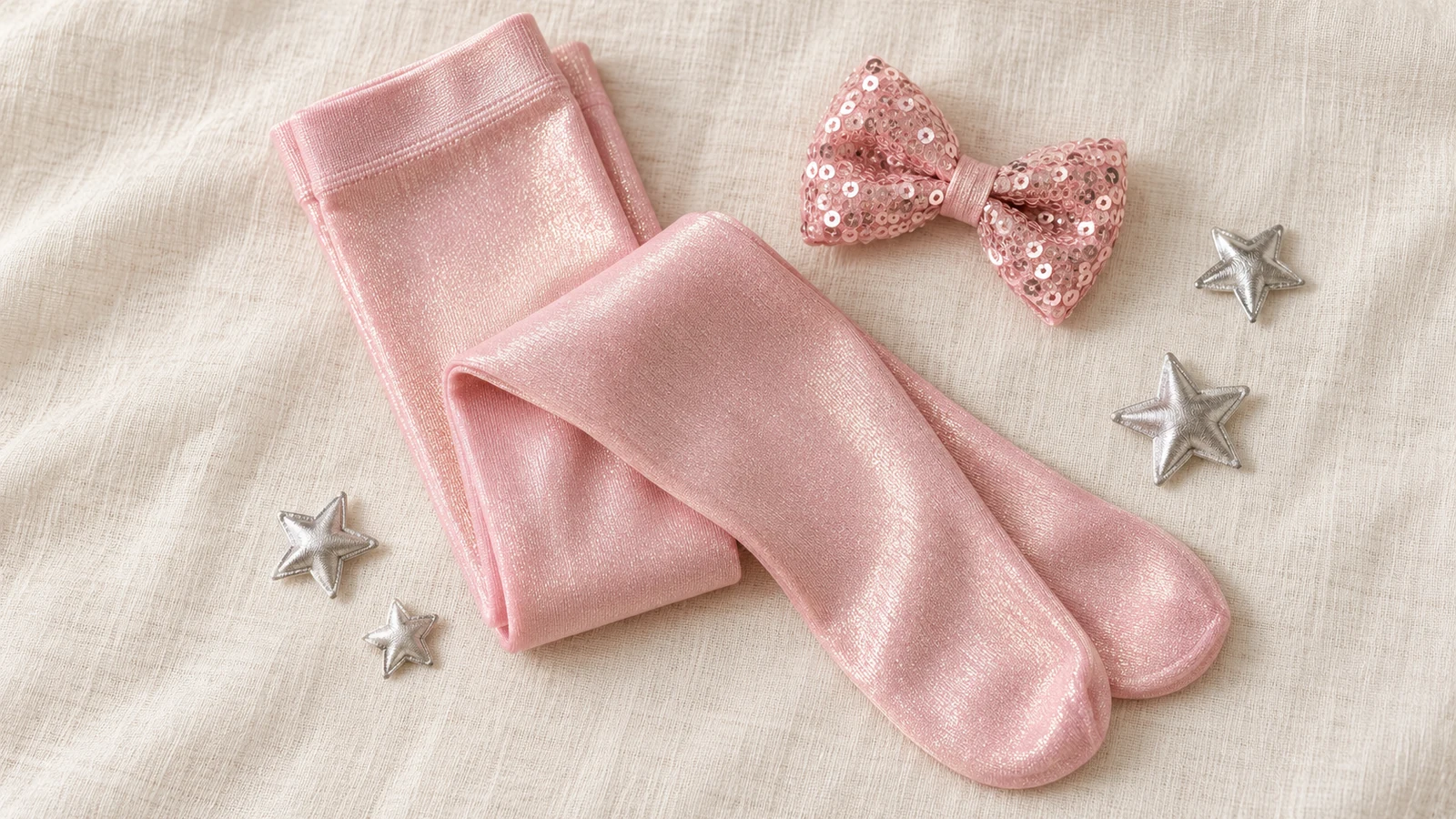
Shimmer tights, sparkle tights, and glitter tights are hosiery with a reflective, metallic, or iridescent finish that catches stage lighting. They are distinct from standard matte ballet tights and are not worn for regular class — they are a performance and occasion item.

When Are Shimmer Tights Worn in Ballet?

Performances and Shows

End-of-year shows, concerts, and ballet productions are the primary occasion for shimmer or sparkle tights. Stage lighting — whether from spotlights, LEDs, or follow-spots — reflects beautifully off a shimmery finish, making the dancer’s legs appear longer and more luminous under the lights. Many school productions costume the corps de ballet in matching shimmer tights for visual uniformity and stage impact.

Character Dance and Divertissements

The character dances in ballets like The Nutcracker (particularly the Spanish, Russian, and Arabian variations) are often costumed with tights that have a slight sheen or metallic finish to complement the elaborate costumes.

Exam Showcase Performances

Some dance schools include a showcase performance alongside exam preparation, where sparkle tights are appropriate as part of a costume. Always check with your teacher before purchasing — some schools specify a particular style or color.

When NOT to Wear Shimmer Tights

Shimmer tights are not appropriate for regular class or RAD examinations. In class and exams, standard pink or skin-tone matte tights are required. The reflective finish can distract in a teaching setting and, in exams, falls outside the uniform specification.

Types of Shimmer Ballet Tights

Sheer Shimmer / Foil Finish

A subtle all-over sheen woven into the fabric. These look elegant under any lighting and are the most versatile option. Good for shows where a polished but not overtly “sparkly” look is wanted.

Glitter Tights

Actual glitter or sequin-effect finish, either all-over or in a pattern. These are very eye-catching under stage lights but shed glitter and are better suited to a one-off performance than regular use.

Metallic Tights

A full metallic finish in gold, silver, or rose gold. Very dramatic on stage; best for character, jazz, or contemporary numbers rather than classical ballet.

Sparkle / Rhinestone Tights

Tights with strategically placed rhinestones or crystals. Very popular for competitions and gala performances. Ensure stones are well-secured and that the costume directive allows this level of decoration.

What Color to Choose

For classical ballet performances, a pink shimmer tight maintains the traditional look while adding stage presence. Skin-tone shimmer is an alternative for older students. Colored shimmer tights (white, black, gold) are appropriate for character or contemporary pieces — always follow the school’s costume specification.

How to Care for Shimmer Tights

Shimmer and sparkle tights require more careful handling than standard ballet tights:

  • Hand wash in cool water with a small amount of gentle detergent — machine washing can damage the reflective coating
  • Never wring or twist — roll gently in a towel to remove excess water
  • Lay flat to dry — hanging can stretch the fabric
  • Store flat or loosely rolled, not bunched — creasing can damage the shimmer coating
  • If tights have rhinestones or applied glitter, turn inside out for washing to protect the decorations

Frequently Asked Questions

Do RAD exams allow shimmer tights?

No. RAD examinations require the standard uniform for each grade, which specifies matte pink or skin-tone tights. Shimmer or decorative tights are not appropriate for examinations. See our full RAD uniform guide by grade for the specific requirements at each level.

What age are shimmer tights typically worn from?

There is no set age — it depends entirely on the school’s costume choices for its performance. Many schools dress younger students in standard matte tights for their first shows, introducing shimmer styles from approximately Grade 2 or 3 onwards. Some schools use shimmer tights from the earliest performances.

Are shimmer tights more fragile than regular ballet tights?

Yes. The reflective or glitter coating is less durable than a plain knitted tight. Treat them as a performance item and store carefully between uses. For regular class, stick to standard ballet tights.

Posted on

What Music Is Played in Ballet Class? A Guide to Children’s Ballet Accompaniment

What Music Is Played in Ballet Class? A Guide to Children's Ballet Accompaniment

Music Is the Foundation of Ballet

Ballet and music are inseparable. From the earliest Pre-Primary classes to professional company warm-ups, every exercise in a ballet class is performed to music — and the choice of that music is far from random. Understanding what is played, and why, adds a new dimension to your appreciation of your child’s training.

Why Live Piano Accompaniment Is Preferred

Most serious ballet schools use a live pianist rather than recorded music. This is not mere tradition — it has pedagogical value. A live accompanist can:

  • Adjust the tempo to suit the class’s progress through an exercise
  • Slow down to allow the teacher to correct technique, then resume
  • Respond to what the teacher is hearing and seeing in real time
  • Vary dynamics and phrasing to teach musicality at a deeper level

In RAD examinations, a live pianist plays the set music for each exercise — one of the distinctive features of the RAD examination format that sets it apart from many other systems.

What Type of Music Is Played in Ballet Class

Early Years Classes (Pre-Primary, Primary)

Music for the youngest students is simple, clear, and often narrative. Childhood songs, nursery rhymes set to classical piano, and simple waltzes and marches help children connect movement to musical pulse. Exercises have very clear rhythmic structures (2/4 or 4/4 time) so young children can feel the beat easily. Fun, image-based pieces — “pretend you are a butterfly,” “walk like an elephant” — are accompanied by music that suggests those images.

Grade 1–3

Music becomes more structured. Specific time signatures are taught in relation to exercises: pliés are often in ¾ time (waltz), tendus in 2/4 or 4/4, jetés in 2/4. Students begin to understand phrasing — the musical sentence — and how their movement should shape itself to the music rather than simply keeping the beat.

Grade 4 and above

Classical repertoire music begins to appear more frequently — passages from Tchaikovsky, Prokofiev, Delibes, and Minkus are used for barre and center exercises. Students learn to interpret music rather than just follow it: to respond to a ritardando (slowing), an accent, or a change in dynamic, and to express what the music is saying through movement.

Famous Composers Whose Music Appears in Ballet Classes

  • Pyotr Ilyich Tchaikovsky — Swan Lake, Sleeping Beauty, The Nutcracker; his music is the foundation of the classical ballet repertoire
  • Léo Delibes — Coppélia and Sylvia; beautifully structured for dance
  • Ludwig Minkus — Don Quixote and La Bayadère; the preferred composer of the great Russian choreographers
  • Frédéric Chopin — nocturnes, mazurkas, and waltzes used for adagio and lyrical exercises
  • Johann Strauss II — waltzes used extensively for waltz exercises and free movement
  • Sergei Prokofiev — Romeo and Juliet and Cinderella; more complex and dramatic

The RAD and Music

The RAD commissions and publishes specific musical arrangements for each grade’s syllabus. These pieces are composed or arranged to match the precise counts, tempos, and character of each exercise — which is why RAD examination students recognize their music immediately and why a live pianist must be familiar with the RAD’s published scores. The music changes when a new syllabus is introduced, which happens periodically as the RAD updates its grades.

Can Children Practice to Ballet Music at Home?

Absolutely. Playing classical music during home practice — or even during homework or bedtime — builds musical familiarity naturally. Tchaikovsky’s ballets, Chopin’s nocturnes, and Delibes’s Coppélia suite are all available on streaming platforms. Many families play these in the car on the way to class. Musical exposure outside the studio deepens a child’s musical intelligence in ways that benefit their dancing for life.

Frequently Asked Questions

Does my child’s ballet school need a pianist?

Not necessarily. Many excellent ballet schools use recorded music, particularly for younger classes. The quality of teaching matters far more than whether accompaniment is live or recorded. However, if your child reaches a stage where they are preparing for RAD examinations, they should have experience dancing to live piano, since examinations use a live accompanist.

What is the music in the RAD Pre-Primary syllabus?

The RAD commissions specific music for each syllabus. The current Pre-Primary music was composed for the most recent version of the RAD syllabus and is available from RAD Enterprises. Your child’s teacher will have access to the correct recordings.

Why do ballet classes always seem to start with a waltz?

The triple meter of a waltz (1-2-3, 1-2-3) maps naturally onto the rhythm of a plié — the first exercise in virtually every barre. The down-and-up movement of a plié in 3/4 time feels inherently musical. It is also a gentle, flowing starting tempo that warms the body gradually.