Posted on

Lyrical Dance Costumes: What to Wear for Class and Performance

Lyrical dance costumes are some of the most expressive in the dance world. The style sits between ballet and contemporary, drawing on both — and its costumes reflect that blend: soft and flowing, emotionally charged, often with elements of both classical elegance and modern freedom.

What Makes a Lyrical Dance Costume

Lyrical dance is defined by its connection to music and emotion. The movements — fluid, sustained, deeply expressive — tell a story drawn from the song’s lyrics or feeling. Costumes are designed to extend and amplify that storytelling. The key characteristics of a lyrical costume are:

  • Flowing fabric — chiffon, georgette and mesh are standard. Fabric that moves through the air creates visual trails on turns and jumps that reinforce the softness of the style
  • Feminine silhouette — lyrical costumes tend to be romantic and body-conscious, emphasising elongated lines
  • Emotional colour palette — colours are chosen to match the mood of the piece. Soft pastels for tender, vulnerable pieces; deeper jewel tones for passion or grief; white or pale gold for uplift and hope
  • Minimal hard structure — unlike ballroom or character costumes, lyrical pieces rarely have boning, stiff skirts or heavy embellishment. The costume moves with the dancer, not against them

Common Lyrical Costume Styles

The Chiffon Overlay Leotard

The most common lyrical competition costume is a fitted leotard base with chiffon panels attached — at the hip, the shoulder, or as full skirt layers. The leotard keeps the dancer’s body visible for judges while the chiffon creates the flowing visual effect the style is known for. These costumes are available ready-made or can be customised in terms of colour, cut and overlay placement.

The Lyric Dress

A fitted bodice with a soft, layered chiffon skirt — essentially a dance version of a party dress — is a traditional lyrical competition piece, particularly for younger dancers or pieces with a more romantic, balletic feel. The skirt typically sits at the high thigh to allow freedom in legwork. Layers of chiffon in the skirt create volume that moves beautifully.

Two-Piece Sets

A cropped top or bralette with high-waisted briefs or shorts — often connected with a mesh or chiffon panel — has become increasingly popular in lyrical dance, particularly for older students and pieces with a more contemporary feel. These costumes show more skin than the classic lyric dress and read as more modern on stage.

Contemporary-Influenced Costumes

As the boundary between lyrical and contemporary dance has blurred, so have the costumes. Many current lyrical pieces use more abstract, deconstructed designs — asymmetric hemlines, one-shoulder or one-sleeve constructions, single-colour minimalist pieces that emphasise the movement rather than the garment. These costumes are very close to what you would see in contemporary dance, differentiated mainly by colour and fabric choices.

Lyrical vs Contemporary Dance Costumes

The two styles are closely related, but their costumes tend to differ in feeling if not always in construction:

LyricalContemporary
ColourWarm, saturated, emotionally resonantNeutral, muted, abstract
Fabric movementSoft flowing; complements the dancerMay resist or challenge the body
SilhouetteFeminine, elongated, romanticMay be deliberately neutral or androgynous
EmbellishmentSome rhinestones at competition levelUsually none
Story-tellingCostume reinforces the song’s emotional storyCostume may contrast or complicate the movement

Footwear for Lyrical Dance

Lyrical dance is typically performed in bare feet or lyrical sandals (also called lyrical shoes or foot undies). Lyrical sandals cover only the ball and arch of the foot, leaving the heel and toes bare. They protect the feet during turns on the ball of the foot and reduce friction on smooth floors, while still allowing the floor connection that lyrical technique requires.

Half-soles (foot gloves or paws) are also used. Some teachers prefer full bare feet for the greatest floor connection and authenticity of movement.

What to Wear to a Lyrical Dance Class

For everyday lyrical classes, the approach is similar to contemporary: fitted and functional. Most lyrical teachers want to see the body clearly:

  • A leotard or fitted top with fitted shorts, leggings or jazz pants
  • Bare feet, lyrical sandals, or half-soles — check what your teacher prefers
  • Avoid very loose or baggy clothing that obscures your lines

Lyrical does not have a strict dress code in the way that ballet does, so there is more flexibility. Many students wear the same practice clothes to lyrical that they would wear to a jazz or contemporary class.

Buying a Lyrical Dance Costume for Competition

When buying a lyrical competition costume, consider the piece it will be worn for before you choose the garment. The costume should not exist independently of the music and choreography — it should feel like a natural extension of both.

  • Try the full choreography in the costume before the show — floor work, lifts, falls and fast directional changes all affect how a costume performs. Chiffon panels that look beautiful standing still can catch under the foot during floor sequences
  • Check the colour under stage lighting — white fabric becomes transparent; pale pastels can wash out; darker colours absorb light and may lose detail from a distance
  • Secure any floating elements — chiffon panels, arm pieces or skirt layers that come loose during a performance are distracting and potentially dangerous
  • Age-appropriate construction — competition rules for junior divisions often specify minimum coverage requirements. Check these before buying

A lyrical costume done well feels like a second skin — expressive, responsive, and invisible in the best possible way. The dance takes centre stage; the costume simply amplifies it.
Posted on

Ballet Heels: The Fashion Trend Explained

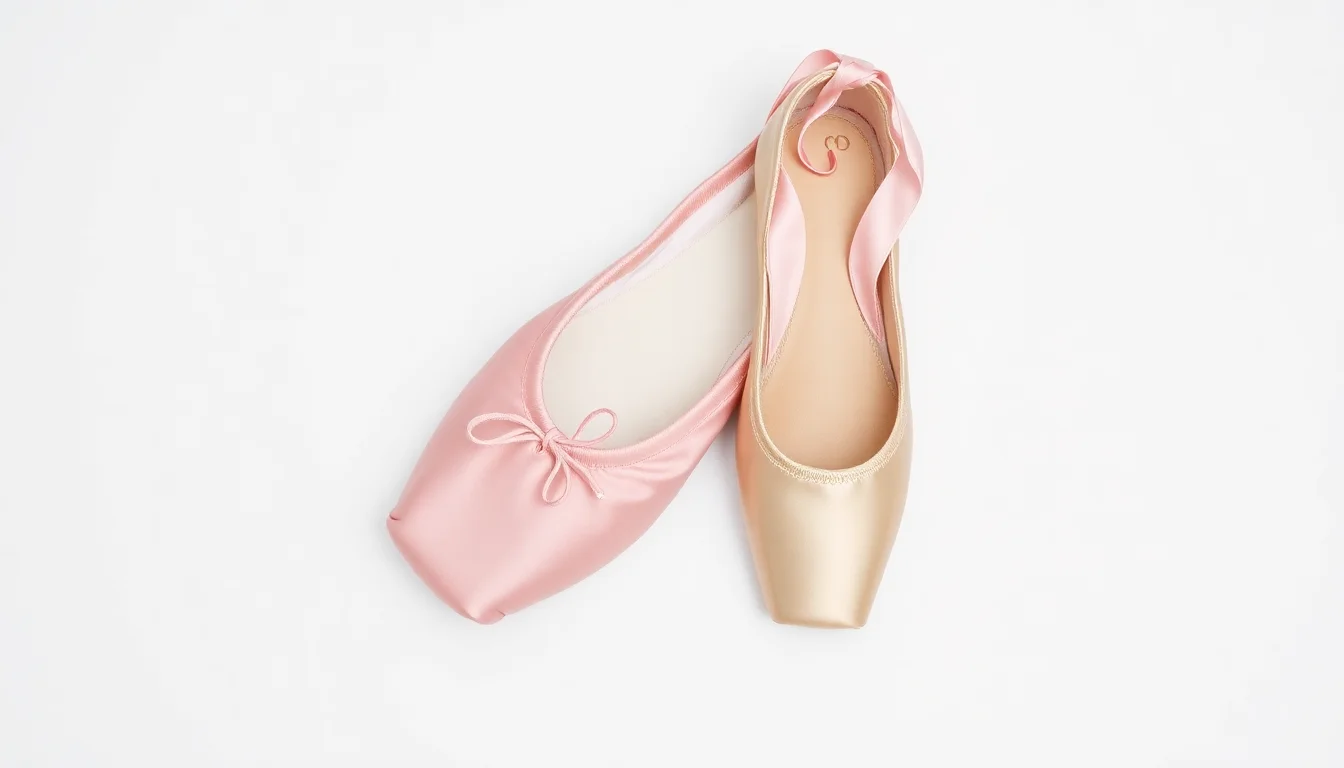
Ballet heels are a fashion footwear trend that takes the delicate, ribbon-like aesthetic of ballet and combines it with a heeled shoe. They have nothing to do with the flat satin slippers worn in class or the stiffened pointe shoes worn on stage — instead, they are fashion shoes designed for everyday wear that borrow heavily from the visual language of ballet.

What Are Ballet Heels?

The term “ballet heels” is used for several related but distinct shoe styles:

  • Ballet flats with a micro-heel — the most wearable version, a pointed-toe flat with a very low heel (usually 1 to 2 cm) that gives a subtle lift without changing the gait significantly
  • Ribbon-tie heeled shoes — heeled pumps or kitten heels with satin ankle ribbons that tie like pointe shoe ribbons, creating a ballet-inspired silhouette on the lower leg
  • Extreme ballet heels — a very different category of avant-garde shoe (sometimes called “hoof heels”) that places the foot in a near-vertical position approximating full pointe, designed for fashion editorials or theatrical wear rather than walking

When most people search for ballet heels, they mean the first two categories — fashionable shoes that reference ballet aesthetics rather than shoes that require any dance training to wear.

The Ballet Flat vs Ballet Heel

The classic ballet flat — a low, flexible shoe with a rounded or slightly pointed toe — has been a fashion staple since the 1950s, when Audrey Hepburn popularised the style. The ballet heel builds on this by adding a small-to-medium heel height, extending the shoe’s versatility to more formal or dressy occasions.

Key differences:

Ballet flatBallet heel
Heel heightFlat or barely-there (under 1 cm)1 to 7 cm depending on style
Best forCasual to smart-casualSmart-casual to evening wear
ComfortGenerally very comfortableVaries with heel height
Ballet referenceSole shape, toe box, flexible constructionRibbon ties, satin fabric, pointed toe

Why the Trend Has Grown

The ballet aesthetic has had a significant moment in fashion over the past several years. “Balletcore” — a broader trend incorporating ballet-inspired clothing and accessories — brought items like wrap skirts, leg warmers worn over jeans, lace tights and bun accessories into mainstream fashion. Ballet heels emerged as part of this movement, offering a wearable way to reference the ballet aesthetic in everyday outfits.

Several high-fashion houses showed ballet-inspired footwear on their runways, and the look quickly filtered into the high-street market. The appeal is the balance of femininity and practicality: a pointed toe with ribbons reads as elegant and refined without the discomfort or formality of a stiletto.

How to Style Ballet Heels

With Dresses and Skirts

Ballet heels pair most naturally with feminine silhouettes: midi skirts, A-line dresses, and wrap dresses in soft fabrics. The ribbon-tie styles create a particularly cohesive look with gauze or chiffon skirts. Keep the rest of the outfit simple to let the shoes anchor the aesthetic.

With Trousers

The key with trousers is hemline. Ballet flats and low ballet heels work well with cropped or ankle-length trousers that show the shoe. With full-length trousers, choose a heel height that keeps the hem at the right length — too flat and the trousers will drag; too high and the elegant line is lost.

With the Ribbon-Tie Style

If the shoes have satin ribbons that tie around the ankle, the tie itself becomes part of the styling. Keep ankles bare rather than wearing tights unless the tights are very sheer and skin-tone — heavy opaque tights under ribbon-tie ballet shoes tend to look disconnected. Ballet-inspired lace tights (semi-sheer with a lace pattern) can work if they are part of a deliberate ballet-aesthetic outfit.

Ballet Heels vs Real Ballet Footwear

It is worth being clear about what ballet heels are not. They share a visual language with ballet shoes and pointe shoes, but they are not designed for dance, do not function in the way dance footwear functions, and bear no resemblance to pointe shoes in their construction. Real pointe shoes require months of proper fitting, extensive strengthening before use, and ongoing conditioning — and they are worn for dance, not fashion.

Ballet flats (the fashion shoe) also look similar to canvas or leather ballet shoes (the dance shoe), but the resemblance is superficial. Dance shoes are made to flex, grip, and allow precise articulation of the foot during class. Fashion ballet flats are made for walking and are not suitable substitutes for dance shoes.

Buying Ballet Heels

When shopping for ballet-inspired heels:

  • Check the toe box — the pointed-toe silhouette is classic for the look, but make sure there is enough room for your toes at the widest point, particularly if you will be walking long distances
  • Consider the ribbon attachment — satin ribbons can be delicate; check whether they are reinforced at the stitching points, as these are where they typically wear out first
  • Heel stability matters — even a small kitten heel can wobble on certain surfaces; look for a flared or stacked heel rather than a thin stiletto if you need to walk on uneven ground
  • Satin vs faux satin — genuine satin looks beautiful but marks easily; many lower-price versions use more durable fabric with a similar sheen

Ballet heels occupy a lovely middle ground between the absolute practicality of flats and the formality of heels — elegant and feminine with a clear aesthetic identity that has endured well beyond a single season.

Posted on

What Is Barre? Ballet Barre vs Barre Fitness Classes Explained

The word “barre” (pronounced “bar”) gets used in two very different contexts, and they are often confused. In ballet, the barre is a horizontal rail fixed to the studio wall — a tool that every dancer uses from their very first class. In fitness, barre is a workout format inspired by ballet that has become popular worldwide. This guide explains both, and how they relate to each other.

The Ballet Barre: What It Is and What It Does

In a ballet class, barre work is the first section of every lesson. Dancers stand facing or sideways to the barre and perform a series of exercises — pliés, tendus, dégagés, ronds de jambe, fondus, frappés, développés and grand battements — in a set order. The barre provides light support, allowing dancers to focus on correct technique, alignment and muscle engagement without having to manage full balance at the same time.

Barre work is not just a warm-up. It is where the fundamental technique of ballet is built and reinforced, every single class, throughout a dancer’s entire career. Even principal dancers at major companies start every class at the barre. The exercises isolate and strengthen specific muscle groups, train turnout, and develop the precise control that makes the later centre work and allegro sequences possible.

How Long Is Barre Work in a Ballet Class?

In a standard 90-minute adult ballet class, barre work typically takes about 30 to 45 minutes. In a beginner class, it may be proportionally longer because students are still learning the exercises themselves. After barre, the class moves to centre work — the same exercises performed without the support of the rail.

What Is a Barre Fitness Class?

Barre fitness (also called barre workout, barre class, or simply “barre”) is an exercise format that uses a ballet-style horizontal barre as a prop for a workout that combines elements of ballet, Pilates, yoga and strength training. It emerged in the 1950s through the work of Lotte Berk, a German dancer who developed a method combining dance technique with rehabilitative exercise. Modern barre fitness studios include brands like Pure Barre, Barre3, Bar Method and many independent variations.

A typical barre fitness class lasts 45 to 60 minutes and includes:

  • A warm-up with light cardio and dynamic stretching
  • Upper body work using small hand weights or resistance bands
  • Thigh and seat work at the barre, using isometric holds and tiny pulsing movements
  • Core work on a mat
  • A cool-down and flexibility section

The small, controlled movements — particularly the “isometric holds” where you hold a position and pulse — are characteristic of barre fitness. They are designed to fatigue specific muscle groups quickly without impact on the joints.

Ballet Barre vs Barre Fitness: Key Differences

Ballet barreBarre fitness class
PurposeDevelop ballet technique and strengthGeneral fitness, toning, flexibility
Who takes itBallet students at all levelsFitness enthusiasts, not necessarily dancers
What you need to knowBallet terminology and exercisesNo dance background required
The barre’s roleSupport for technical exercisesProp for balance and resistance work
What you wearBallet attire: leotard, tights, ballet shoesWorkout clothes; grip socks recommended
Foot positionTurned out (the fundamental ballet position)May or may not use turnout

Does Barre Fitness Make You a Better Ballet Dancer?

This is a question real ballet dancers get asked often, and the honest answer is: it depends on what you mean by “better.” Barre fitness classes will improve your general fitness, core strength and flexibility — all things that support dancing. The small, controlled movements are genuinely effective for building the deep stabilising muscles that ballet technique demands.

What barre fitness does not teach is ballet technique. The vocabulary, the musicality, the coordination of arms and legs, the specific mechanics of turnout, the qualities of movement that make ballet what it is — none of these are taught in a barre fitness class. Someone who does barre fitness regularly will be better prepared to begin ballet classes, but they will not be doing ballet by going to barre.

What to Wear to a Barre Fitness Class

Most barre fitness studios recommend grip socks — socks with rubberised dots on the soles — which give traction on a smooth studio floor without restricting foot movement. Yoga pants or fitted leggings work well. Many barre studios discourage loose, baggy clothing because the instructors need to see your body alignment to correct it.

Ballet-style shoes are not normally worn in barre fitness classes, though some studios allow it. If you are coming from a ballet background, leave your ballet shoes for your actual ballet class — the floor in a barre fitness studio may not be suitable for them, and the workout format does not use them in the way they are designed to be used.

What to Wear to Ballet Barre Work

Ballet barre work is part of a full ballet class, so you wear standard ballet attire: a leotard, ballet tights, and ballet shoes. Some studios allow warm-up layers at the barre — ballet leg warmers, a ballet wrap cardigan or a warm-up skirt — that are removed before centre work. Check your studio’s dress code, as some teachers prefer students not to wear warm-ups at the barre because they obscure alignment.

Whether you are drawn to barre for the fitness benefits or for the foundation of ballet technique, both uses of the barre offer genuine value. They simply offer it in different ways.

Posted on

How to Do Middle Splits: A Safe Step-by-Step Guide for Dancers

Middle splits — also called centre splits or straddle splits — are one of the most useful flexibility goals for dancers across ballet, contemporary, jazz and gymnastics. Unlike front splits, which require a hip flexor stretch on one side, middle splits demand equal flexibility in the inner thighs and hip adductors of both legs. This makes them harder to achieve for most people, but entirely possible with the right consistent training.

How Long Does It Take to Get Middle Splits?

The honest answer is: it depends on your starting point. Someone with moderate hip flexibility who trains consistently four or five times per week may achieve full middle splits in three to six months. For others, it can take a year or more. Progress slows significantly without regular practice, and flexibility gains are lost quickly if you stop stretching.

Age is a factor but not a barrier. Adults take longer to gain flexibility than children, but adult dancers regularly achieve full splits with dedicated training. The key is patience and consistency over pushing too hard too fast.

Important Safety Rules

Stretching for splits carries a real injury risk if done incorrectly. Before you begin:

  • Always warm up first. Never stretch cold muscles. At minimum, do 10 minutes of light cardio and dynamic leg swings before deep stretching
  • No sharp, shooting or sudden pain. Mild discomfort and a pulling sensation in the muscles is normal. Sharp pain, especially at the front of the hip joint or in the groin, means stop immediately
  • Stretch into the muscles, not the joints. Forcing a hip joint past its comfortable range causes injury; stretching the adductor and hip flexor muscles causes them to lengthen over time
  • Breathe through every stretch. Holding your breath increases tension and reduces the stretch’s effectiveness
  • End each session gently. Come out of deep stretches slowly, roll your shoulders and do some light movement before stopping

Warm-Up Exercises Before Stretching for Middle Splits

Inner Thigh Warm-Up: Butterfly Stretch

Sit on the floor with the soles of your feet together and your knees dropping out to the sides. Hold your feet and gently press your elbows into your inner thighs to increase the stretch. Hold for 30 seconds to one minute. This warms up the adductors without loading the hip joint.

Hip Opener: Side Lunge (Cossack Squat)

Stand with your feet wider than hip width. Shift your weight to one side, bending that knee while keeping the other leg straight. Both feet stay flat on the floor. Alternate sides slowly, spending a few seconds in each lowered position. This movement targets the adductors and hip joint in the direction you need for middle splits.

Seated Straddle

Sit with your legs extended and spread as wide as comfortable. Keep your back as straight as possible (sitting on a folded blanket helps tilt your pelvis forward). Gently walk your hands forward without rounding your spine. Hold for one to two minutes. This is one of the most direct warm-ups for the middle split stretch.

Main Middle Splits Training Exercises

Exercise 1: Supported Straddle Stretch

Sit in a wide straddle position on the floor. Place your hands on the floor in front of you. Gently lean forward, keeping your back flat (not rounded), until you feel a moderate stretch in your inner thighs. Use yoga blocks or a folded blanket under your hands if the floor is too far away initially. Hold for two to three minutes, breathing steadily throughout.

Over weeks and months, you will find your hands and chest moving progressively closer to the floor.

Exercise 2: Wall Straddle

Lie on your back with your hips as close to a wall as possible, legs straight up the wall. Slowly let your legs fall open to either side under gravity, with the wall supporting their weight. This passive stretch allows your inner thighs to lengthen without the effort of holding the position. Stay in this position for three to five minutes. Use your hands to slow the descent if needed.

The wall straddle is one of the most effective middle splits exercises because it uses gravity rather than muscle effort to deepen the stretch, which allows the muscles to truly relax and lengthen.

Exercise 3: Frog Stretch

Come onto all fours and slowly widen your knees as far as comfortable, with your feet parallel to your knees (shins on the floor). Lower your hips toward the floor. Hold for two to three minutes. The frog stretch targets the hip adductors and hip joint from a slightly different angle than straddle exercises, and many people find it more comfortable to hold for longer.

Exercise 4: Standing Side Leg Hold

At the barre or holding a wall for balance, raise one leg to the side as high as comfortable. Hold the ankle or calf with the hand on the same side, and gently draw the leg slightly higher than its natural resting point. Hold for 20 to 30 seconds and repeat on the other side. This exercise also strengthens the hip abductors — the same muscles that hold your leg up in second position développé.

Exercise 5: PNF Stretching (Contract-Relax)

PNF (Proprioceptive Neuromuscular Facilitation) is one of the most effective techniques for rapidly improving flexibility. In a straddle position, press your legs firmly downward against the floor (as if trying to close your legs) for five to eight seconds without actually moving. Then relax completely and gently ease your legs slightly wider. The muscle contraction followed by relaxation allows the muscle to lengthen beyond its usual range. Repeat three to five times per session.

How Often Should You Train for Middle Splits?

Flexibility training requires consistency. Four to six sessions per week produces faster results than one or two, but daily intense stretching without recovery can cause micro-tears that slow progress. A practical approach:

  • Daily: Light warm-up and 10 to 15 minutes of moderate stretching — the wall straddle, butterfly and seated straddle
  • Three to four times per week: Full 30 to 45 minute stretching session including PNF and deeper exercises
  • After dance class: Always stretch immediately after class when your muscles are warmest — this is your best opportunity to make flexibility gains

How to Know You Are Making Progress

Flexibility progress can feel invisible from the inside. Take a photo of your straddle stretch (or your attempted middle split) every two to four weeks. The visual difference over months is usually striking even when you cannot feel the change day to day. Measure your progress by how close your hips are to the floor in a supported middle split position, or how far your chest can reach forward in a seated straddle.

Your middle splits will come. The dancers who get there are the ones who show up consistently, stretch smart rather than just hard, and give their bodies the time they need.

Posted on

Dancesport Competition Dress: Latin and Standard Ballroom Guide

Choosing a dancesport competition dress is one of the most important — and most expensive — decisions a competitive ballroom or Latin dancer makes. The right dress enhances every line, catches the light at the right moments, and meets the rules for your age group and division. This guide covers everything you need to know before you buy or commission one.

Latin vs Standard: Two Very Different Dresses

Dancesport splits into two main styles, and their dresses are not interchangeable.

Latin Dance Dresses

Latin dresses — worn for Cha Cha, Samba, Rumba, Paso Doble and Jive — are designed to show hip action and leg work. They are typically short (at or above the knee), with significant skin exposure, Latin-cut necklines, and skirts that flare on spins. Stretch velvet, stretch lace and two-way stretch fabrics are common because they grip the body during fast footwork but allow full hip and leg movement. Fringe, feathers and stones (usually Swarovski) are standard embellishments at competition level.

Standard / Smooth Ballroom Dresses

Standard dresses — for Waltz, Tango, Viennese Waltz, Foxtrot and Quickstep — are floor-length ballgowns. They typically have a fitted bodice, a full skirt that moves beautifully in footwork, and panels of chiffon or organza that float during spins and open movements. The skirt needs enough weight to settle quickly but enough lightness to lift and swirl. Nude illusion mesh is used for modesty panels while maintaining elegant lines from a distance.

Dancesport Dress Rules and Regulations

WDSF (World Dance Sport Federation) and WDC (World Dance Council) both publish dress regulations, and national organisations like USA Dance and ISTD have their own rules, particularly for junior divisions. Key points to check before buying:

  • Age group restrictions — junior and youth divisions have stricter rules about skirt length, neckline depth and the amount of skin that can be shown. A dress that is legal for adults may be prohibited for under-16s
  • No outfits that simulate nudity — full-body skin-tone mesh without enough coverage is prohibited at most levels
  • Standard division modesty panels — backstitch or V-backs must meet minimum coverage requirements
  • No dangerous embellishments — loose stones, long dangling elements or anything that could snag a partner’s clothing or become a safety hazard

When in doubt, check with your national association or the specific competition organiser. Dress rules are enforced by scrutineers at the floor, and a competitor can be pulled aside before they dance.

What Makes a Good Competition Dress

Colour

Your dress needs to be visible from a distance — competition floors can be large and crowded. Pure white looks brilliant under competition lighting but can be unforgiving if it is not perfectly clean. Black reads dramatically but can disappear against dark backdrops. Strong jewel tones — royal blue, emerald, deep ruby — tend to photograph and read well under most lighting conditions.

Avoid wearing the same dominant colour as most other competitors in your heat if you can. Standing out (for the right reasons) on a crowded floor matters for your marks.

Stones and Embellishment

Swarovski crystals (now sold under the Preciosa and other brand names after the original stones were discontinued) catch competition lighting in a way that simpler rhinestones do not. A well-stoned dress picks up light on every move and draws attention to the dancer’s lines. The placement matters as much as the quantity: stones that outline the neckline, shoulder seam and hip yoke emphasise the shapes the judges are looking for.

More stones is not always better. A poorly stoned dress with stones in the wrong places can muddy the visual effect. If you are commissioning a dress, work with a designer who understands where the light hits during your specific dances.

Fit and Freedom of Movement

A competition dress must fit perfectly while allowing full range of movement. The dress should stay in place during lifts (for smooth/standard open couples), spinning turns and fast footwork. Points to check in a fitting:

  • The bodice should not ride up during arm styling and Cuban motion (Latin)
  • Shoulder straps should not fall during open choreography
  • The skirt hemline should not catch under your partner’s feet or your own during turns
  • Try the dress with your competition shoes before finalising the hemline

Buying vs Commissioning a Dancesport Dress

Buying Off the Rail

Ready-to-wear dancesport dresses are available from specialist suppliers at a wide range of price points. This option is faster and less expensive than commissioning a custom dress. The main drawback is fit: dancesport dress sizing is not standardised, and the same dress in the same size can fit very differently on different body types.

Many dancers buy an existing dress and have it altered by a dressmaker familiar with dancewear. This is usually cheaper than a full custom commission and gives you more flexibility than accepting an imperfect off-the-rail fit.

Commissioning a Custom Dress

A custom commission gives you a dress built exactly to your measurements, designed for your specific choreography, in the colours and fabrics you choose. Expect to pay significantly more and to wait several weeks to several months for delivery. If you are competing at a high level where every visual detail is scrutinised, a custom dress is worth the investment.

Second-Hand Competition Dresses

The dancesport community has an active second-hand market. Many high-quality competition dresses are sold after a dancer moves up a division, retires, or simply wants a new look. Second-hand dresses can be excellent value, but always check the condition of the stones, the integrity of the seams and the stretch of the fabric before buying. Stones are expensive to replace; structural repairs to a heavily-worked competition dress can cost nearly as much as the original.

Dancesport Dress for Practice

Practice dresses serve a different purpose. You need to feel how a skirt moves and settles, and practising in clothes that approximate competition conditions helps — but you do not need to practise in your actual competition dress. A practice dress with a similar silhouette, weight and skirt structure to your competition piece allows you to rehearse for real while protecting your best dress from daily wear.

Many dancers own one good competition dress and several mid-range practice dresses that are worn to social dances and lower-stakes competitions.

Posted on

Contemporary Dance Costumes: What Dancers Wear for Class and Performance

Contemporary dance costumes range from simple practice clothes to elaborate performance pieces. What you wear depends entirely on whether you are in a studio class, rehearsal, or on stage — and the differences matter more than many dancers realise.

Class Clothes vs Performance Costumes

In a contemporary class, comfort and freedom of movement come first. Most contemporary teachers allow or even encourage a relaxed approach: fitted leggings or jazz pants, a form-fitting top or leotard, and bare feet or half-soles. The goal is to see the body clearly without restricting its range of motion.

Performance costumes are a different matter. They are designed to communicate something — an emotion, a story, or an aesthetic — while still allowing the full technical demands of the choreography.

Common Contemporary Dance Costume Styles

Skin-Tone Mesh

One of the most iconic contemporary looks, skin-tone mesh creates the illusion of a barely-there costume while keeping the dancer covered. It is often layered with chiffon or structured fabric panels. When choosing skin-tone mesh, look for a shade that genuinely matches the dancer’s skin rather than a generic beige.

Minimalist Unitards

A well-cut unitard lets the audience follow the body’s lines without distraction. Black and white are classics, but many contemporary productions use muted earthy tones — terracotta, dusty blue, warm grey — that feel grounded rather than theatrical.

Flowing Skirts and Layers

When the choreography calls for fabric that moves — dramatic entrances, floor work that creates sweeping shapes — chiffon or georgette panels are attached to a fitted base. The layers should not catch under the dancer’s feet during floor sequences, so weight and hemline placement need careful thought.

Deconstructed and Conceptual Pieces

Contemporary dance frequently uses costuming to challenge expectations. Asymmetric cuts, raw edges, mix-and-match textures, and even non-traditional materials like paper or rope can appear in professional productions. At the student or studio level, these ideas are usually interpreted in wearable fabrics.

Fabric Choices for Contemporary Costumes

The fabric choices in contemporary dance are very different from ballet. Here is a quick comparison:

FabricBest forAvoid when
Matte jerseyFitted bodices, sleeves, unitardsYou need a floating, airy effect
ChiffonSkirts, overlay panels, arm piecesDancers do lots of floor work
Spandex / lycraPractice wear, base layersPerformance — often looks too sporty
MeshIllusion panels, overlay accentsRough floors can snag delicate mesh
VelvetRich texture, dramatic solosHot stage lighting — velvet traps heat

How Contemporary Costumes Differ from Lyrical

Contemporary and lyrical dance often get confused, and so do their costumes. Lyrical costumes tend to be softer and more romantic — flowing fabrics in warmer, more saturated colours, often inspired by the emotion of the song lyrics. Contemporary costumes lean toward the abstract and architectural. Colour palettes are more neutral, construction is more structural, and the costume may deliberately obscure or reframe the body rather than enhance it.

If you are unsure which style a costume belongs to, look at the silhouette: a lyrical costume usually moves with the dancer and emphasises femininity; a contemporary costume may challenge or complicate that idea.

Footwear for Contemporary Dance

Contemporary dance is most commonly performed in bare feet or with half-soles (also called foot gloves or half-shoes). Bare feet give the best connection to the floor and allow full articulation of the foot, which is central to contemporary technique. Half-soles protect the ball of the foot during turns while still exposing the heel and toes.

Some choreographers use jazz shoes, modern shoes, or even character shoes for specific productions, but these are costume choices rather than technical necessities.

What to Wear to a Contemporary Dance Class

For a regular contemporary class, keep it simple:

  • Fitted or slightly relaxed leggings or jazz pants — loose trousers can get tangled in footwork
  • A fitted top or leotard — your teacher needs to see your spine, shoulder placement and hip alignment
  • Bare feet or half-soles — check your studio floor surface; rough or splintered wood calls for half-soles
  • Avoid anything with large zips, buttons or hardware — floor work will make them uncomfortable quickly

Contemporary dance has fewer strict dress codes than ballet, but that does not mean anything goes. Clothes that are too loose make it hard for your teacher to correct your alignment, and clothes that are too bulky restrict movement. Fitted and functional is the right balance.

Buying a Contemporary Dance Costume

When buying a performance costume for contemporary dance:

  • Try the full choreography in it before the show — a costume that looks perfect standing still may ride up, slip or restrict movement during the actual piece
  • Check the colour under stage lighting — white becomes translucent under bright lights; skin-tone fabrics may appear very different under warm or coloured gels
  • Consider the floor surface — mesh or textured fabrics can catch on rough marley
  • Secure everything — loose straps, fabric panels or accessories that move unpredictably can distract from the performance or become a hazard

Contemporary dance gives performers more costume freedom than almost any other dance style. That freedom is part of its expressive power — the costume is as much a creative choice as the movement itself.

Posted on

Inside a Pointe Shoe: Box, Shank, Vamp and Rosin

How Long Do Pointe Shoes Last?

Short answer: a pointe shoe has a hardened toe box that the dancer stands on, a vamp that covers the top of the toes, wings at the sides, a stiff shank under the arch, and an outsole and heel. Dancers add ribbons and elastics to hold it on, and some use rosin, a sticky powder, to stop the shoe slipping on the floor.

What are the parts of a pointe shoe?

Part What it is
Box (toe box) The hardened front of the shoe. Its flat end is the platform the dancer stands on.
Vamp The top front of the shoe, covering the top of the toes. A longer vamp gives more support. A shorter one shows more of the foot.
Wings The sides of the box, which hold the foot in place and add support.
Shank The stiff piece in the sole that supports the arch, so the foot can hold a pointed line.
Outsole and heel The bottom of the shoe, where the sole meets the floor, and the back of the shoe.
Drawstring and casing The cord around the top edge that lets you tighten the shoe to the foot.
Ribbons and elastics Sewn on by the dancer to hold the shoe to the ankle and foot.

What is the inside of a pointe shoe made of?

The box is made of layers of fabric and glue or paste that harden as they dry. The shank is a stiff strip of leather or other firm material under the arch. The satin outside is mainly for appearance and for a smooth look on stage. Materials and construction differ from maker to maker, which is why a shoe that works for one dancer may not suit another. A proper fitting is the best way to find the right pair. Read our pointe shoe fitting guide.

What does rosin do for pointe shoes?

Rosin is a sticky powder made from tree resin. Dancers rub the tips of their shoes in a rosin box, or press them into the powder, so the shoe grips a smooth or slippery floor. It is used mostly on stage and in studios with slick floors. It can leave marks and dust, so check whether your studio or theater allows it, and ask your teacher before you try it. Dancers and teachers disagree on how much rosin helps, so there is no single rule.

What are painted pointe shoes?

Pointe shoes are normally pink satin, but dancers often cover them with paint or makeup to match their skin tone, so the leg looks longer on stage. Some stage companies dye or color shoes for a costume. Check the school’s or company’s rules before you change the color of your shoes. For a class pair, plain satin is fine.

How do I look after my pointe shoes?

Pointe shoes soften with use, and wear depends on how often a dancer practices and the dancer’s weight and strength. Let them dry fully after class, keep them in a bag that lets air in, and keep a spare pair if you dance often. For prices and how long a pair lasts, read how much pointe shoes cost.

Posted on

Lyrical vs Contemporary Dance: What’s the Difference?

Contemporary Dance vs Modern Dance: What’s the Difference?

Short answer: lyrical dance is built on ballet technique and follows the feeling of the music or the words of a song, with flowing lines, leaps and turns. Contemporary dance is broader and more grounded. It mixes ballet, modern and jazz, and uses floor work, weight changes and off-balance movement. Many dancers take both, and a ballet background helps in each.

What is lyrical dance?

Lyrical dance blends ballet with jazz and modern movement. The steps are often ballet steps, such as pirouettes, leaps and extensions, but the mood is softer and more emotional. Dancers usually choose music with a clear story or a strong lyric and let the movement show what it says. Long lines, smooth transitions and expressive arms are the main look.

What is contemporary dance?

Contemporary dance draws on ballet, modern and jazz, and adds its own ideas about weight, breath and the floor. Dancers fall and recover, roll along the ground, work with parallel legs as well as turned-out ones, and move off balance on purpose. The music can be anything, and the dance does not have to tell a story. Choreography is often more abstract. If you want to compare it with an older style, read contemporary dance vs modern dance.

How are lyrical and contemporary dance different?

Lyrical Contemporary
Main roots Ballet, with jazz and modern Modern, ballet and jazz
Feeling Emotional, flowing, tied to the music or lyrics Grounded, varied, often abstract
Movement Leaps, turns, long extended lines Floor work, falls, weight shifts, release
Legs Mostly turned out, as in ballet Turned out and parallel
Music Songs with a clear mood or lyric Any music, or silence

The two styles overlap, which is why you will often see them listed together as “lyrical and contemporary” in recital and competition programs. If you are not sure which class to join, ask the teacher what the class focuses on.

What do dancers wear for each style?

Both styles are danced in close-fitting clothing so the teacher can see the body line. A leotard with tights, or a fitted top with dance shorts or leggings, is common. Contemporary classes often ask for bare feet or foot protection, since the work is on the floor. For lyrical, some dancers wear half-sole shoes that cover the ball of the foot and leave the heel bare, and others dance barefoot or in ballet slippers. Ask your school before you buy shoes. For ideas on clothes, see what to wear for contemporary and lyrical dance and our guide to lyrical shoes and pirouette shoes.

Is ballet training useful for lyrical and contemporary?

Yes. Ballet teaches posture, turnout, balance and control, and these carry into both styles. A dancer who knows ballet usually finds lyrical a natural next step because it shares so many steps. Contemporary asks for the same strength, with more freedom to let go of the ballet lines. You do not need to give up ballet to try either class.

Which style should I try first?

If you love ballet and like dancing to songs, start with lyrical. If you like moving on the floor, working with weight and trying less traditional shapes, start with contemporary. Many studios let you try a class before you commit, and most dancers find the answer after a few lessons.

Posted on

How Do Ballerinas Stand on Their Toes?

Young dancer ballet kit with canvas shoes and tights suggesting readiness milestone on cream linen

Short answer: ballerinas stand on their toes in pointe shoes, which have a hardened toe box that works as a small platform, and a stiff sole called a shank that supports the arch. The dancer does not balance on the tips of the toes alone. Strong feet, ankles, calves and core, built up over years of training, carry most of the weight and keep the body lifted.

What is standing on the toes called?

Dancing on the tips of the toes is called dancing en pointe, a French term meaning “on the point.” It is done in special shoes called pointe shoes. For a full explanation, read what is en pointe.

What do pointe shoes do?

A pointe shoe is made with layers of fabric and glue or paste that harden into a firm toe box. The flat end of the box is the platform the dancer stands on. Inside the shoe, the shank runs along the sole and supports the arch so the foot can hold a long, pointed line. The satin outside and the ribbons and elastics hold the shoe to the foot. The shoe supports the dancer, but it does not do the work for them. Read the complete guide to pointe shoes for more.

What gives a dancer the strength to stand on pointe?

Pointe work needs a lot of strength in several places at once:

  • The feet and ankles, which must be strong and stable so they do not roll or collapse
  • The calves and lower legs, which push the dancer up and hold the position
  • The core and back, which keep the body lifted and centered over the feet
  • The thighs and hips, which control turnout and balance

The weight is not placed on the toes alone. The dancer pulls up through the whole body, so the toes touch the box without being crushed into it.

How long does it take to learn to stand on pointe?

Dancers build up to pointe over several years of regular ballet classes. Most schools wait until a dancer is strong enough and old enough, often around age 11 or 12 at the earliest, and only when the teacher says they are ready. Starting too early can hurt the feet and ankles. The first pointe lessons are short and held at the barre. Standing in the center and turning come later.

Can ballerinas stand on their toes without pointe shoes?

Some dancers can briefly rise onto the tips of their toes with bare feet, but it is hard on the toes and not safe to practice. Professional pointe work is done in pointe shoes for support. If you want to try pointe, do it with a teacher and a properly fitted pair. Our pointe shoe fitting guide explains what a fitting looks like.

Does standing on pointe hurt?

New pointe shoes can feel firm and uncomfortable, and dancers often get sore toes while the feet adjust. Pain that is sharp or that does not go away is a sign to stop and ask the teacher. Dancers use toe pads, spacers and tape to reduce rubbing. See how to protect your toes in pointe shoes. If you have a foot problem, ask a doctor or a dance medicine specialist.

Posted on

How to Tie Ballet Slippers: Elastics, Ribbons and Drawstrings

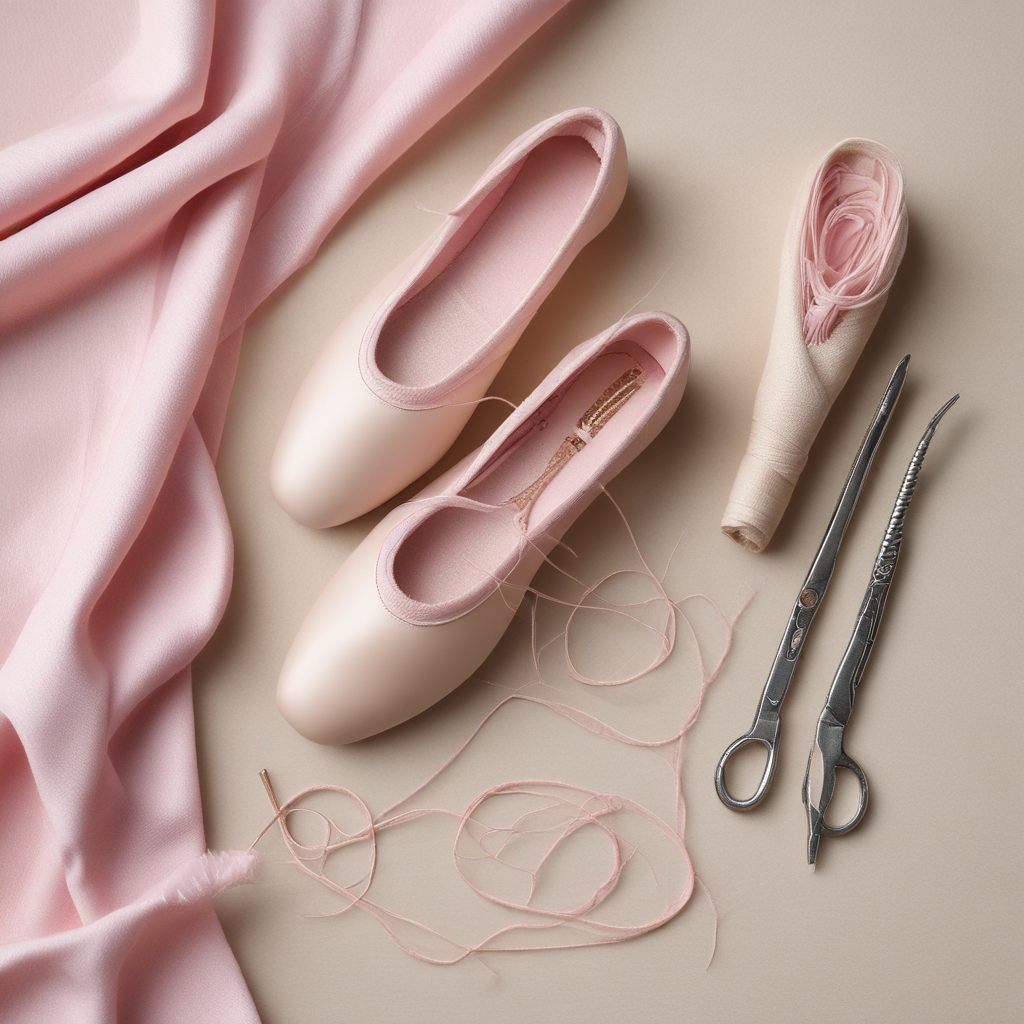
Ballet shoe sewing kit with elastic needle and thread on cream linen

Short answer: soft ballet slippers stay on with a drawstring, cross elastics or, on satin shoes, ribbons. Pull a drawstring until the shoe sits close to the foot, tie a small knot and tuck the ends inside. Cross elastics sit over the instep. Ribbons cross at the ankle and are tied at the side, not at the back.

How do I tie ballet slippers with a drawstring?

  1. Put the shoe on and make sure the heel sits snug.
  2. Find the drawstring around the top edge of the shoe.
  3. Pull both ends gently until the edge is close to the foot without pinching.
  4. Tie a small double knot, then trim the ends if they are long.
  5. Tuck the knot and ends inside the shoe so they do not show or catch.

Do not pull so hard that the shoe puckers, as that can hurt the foot and wear the fabric.

How do cross elastics work?

Many ballet shoes come with elastics already attached. Two bands cross over the instep and hold the heel in place. If a pair has no elastics, they are sewn on near the heel so they cross over the foot. Our stretch-canvas ballet shoes have a pre-attached cross elastic. For the sewing method, see how to sew elastics onto shoes.

How do I tie ribbons on ballet shoes?

Satin ballet shoes and pointe shoes use ribbons. Cross the ribbons over the front of the ankle, wrap them round to the inside of the ankle, tie a flat knot and tuck the ends under the ribbons. The knot sits on the inner side, not at the back. The full method is in how to tie pointe shoes.

How tight should ballet shoes be tied?

The shoe should stay on during a jump, but you should be able to point and flex freely. If the foot goes numb or the skin marks deeply, loosen it. If the shoe slips, check the size first, as too big a shoe cannot be fixed by tying it tighter. Read how ballet shoes should fit.

Tips for children

Young dancers do best when a teacher or parent checks the knot before class. Use short ends that tuck in easily. See the children’s ballet shoes guide for sizing.