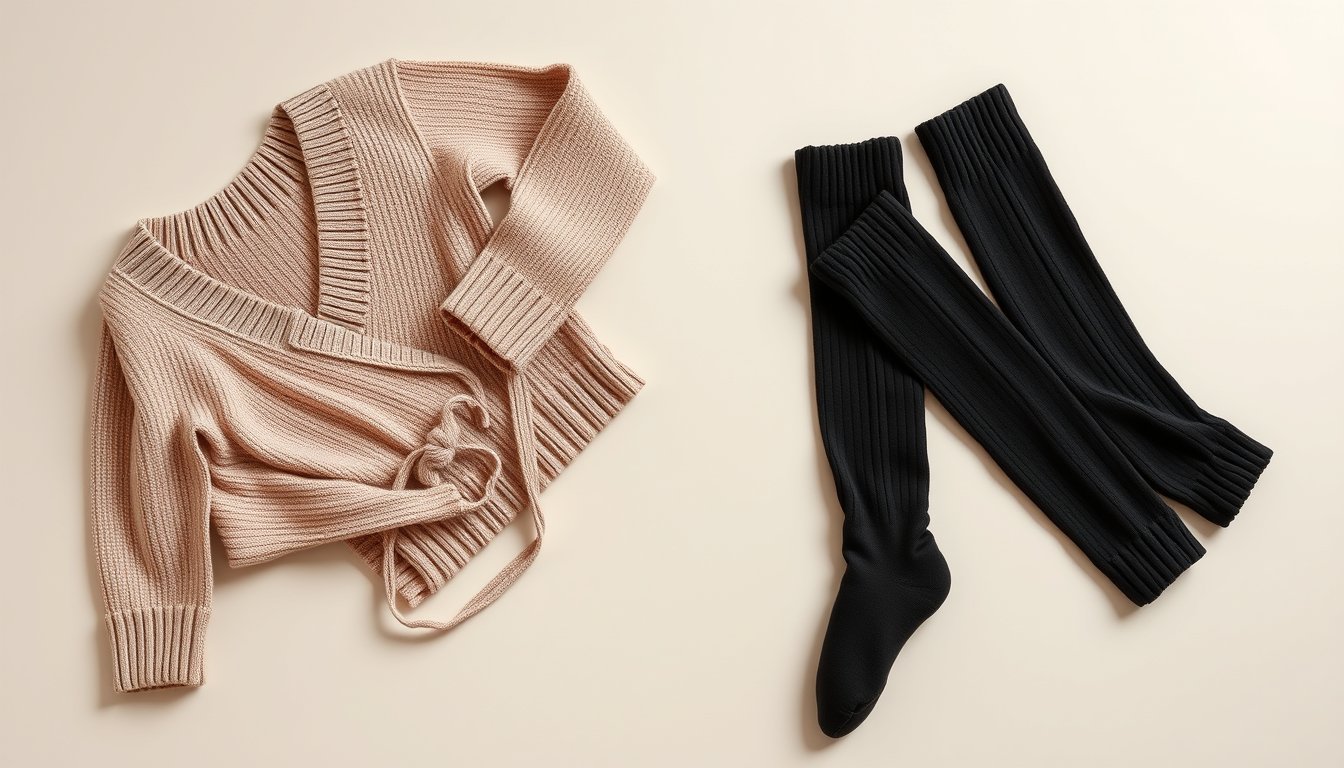
Short answer: dancers wear warm-up clothes over the leotard and tights before class, between exercises and while waiting. The usual pieces are a wrap top or cardigan, leg warmers, warm-up pants and a light cover-up. They keep the body warm and come off once class starts or the teacher asks.
See also: For a full breakdown of styles and what to look for, see our ballet tops and cardigans guide.
What are dance warm-up clothes?
Warm-up clothes are the extra layers a dancer puts on over the uniform. They are not the uniform itself. Their job is simple: keep the muscles and joints warm when the body is cold, then come off so the teacher can see posture and alignment.
What pieces do dancers wear?
| Piece | What it covers | Good for |
|---|---|---|
| Wrap top or cardigan | Arms, shoulders and back | Before class and between exercises |
| Leg warmers | Ankles and lower legs | Warming up the legs |
| Warm-up pants | Whole leg | Cold studios, travel and waiting |
| Light jacket or shrug | Shoulders and arms | Rehearsals and warm rooms |
| Cover-up skirt | Hips and thighs | Modesty and warmth in class |
When should I wear them?
- Arriving at the studio. Put warm-ups on after changing, before class begins.
- During the barre. Many teachers allow one or two layers for the first exercises.
- When waiting. Between exercises, at rehearsal breaks and while waiting to enter an exam room.
- After class. Put them on again to cool down slowly.
When should I take them off?
When the body is warm, or when the teacher asks. Most teachers want to see the shoulders, back, hips and knees clearly in the center. In an exam, dancers usually remove warm-ups before the examiner enters.
How do I choose warm-up clothes?
- Keep the line. Choose fitted or soft, close-fitting styles, not bulky ones that hide the body.
- Easy on and off. Wrap styles and pull-on pants with no buttons are quicker to change.
- Soft fabric. Knits and fleece feel gentle on the skin and move with the body.
- Color. Black, pink or the school’s color keeps the look tidy.
- Size. Use the size guide, and choose the larger size if between two.
What should children wear?
Children warm up quickly, so a light wrap top or cardigan is usually enough, plus leg warmers in a cold studio. Choose soft knits without scratchy labels, and put the child’s name inside every piece, because warm-ups are easy to mix up in a changing room.
How do I look after them?
Check the label first. Most knit warm-ups do best on a cool, gentle wash and dried flat. Store them folded, not hung, so the shoulders keep their shape.
A simple warm-up kit to start with
- One wrap top or cardigan in black or pink.
- One pair of leg warmers in a calf or knee length.
- One pair of light warm-up pants for cold days.
- A dance bag with a spare layer, so a wet or sweaty warm-up can be swapped.
Buy the wrap top first. It does the most work for the least bulk. Add leg warmers and pants as the weather and the studio require. Our guides on wrap tops, cardigans and shrugs and how to wear leg warmers go into more detail.
Shop from Zoe Dancewear
What are good ballet warm-up outfits?
A simple warm-up outfit is a wrap top or cardigan, warm-up pants or leg warmers, and a layer you can take off quickly. See our ribbed knit ballet cardigan, leg warmers and the guide to dance shorts.
Frequently Asked Questions
When should a dancer put on their warm-up clothes?
Warm-up clothes go on immediately after changing into the dance uniform, before class begins. They are especially important in cold weather or when the studio is cool at the start of a session.
Which warm-up layer is the most essential for a ballet student?
Leg warmers are usually considered the most important because the calf and ankle muscles are the most vulnerable to strains in ballet. A cardigan or wrap top is the second priority to keep the core and shoulders warm.
Should warm-up clothes stay on during the whole class?
No — most teachers ask students to remove warm-up layers once they are thoroughly warmed up, usually after the first set of barre exercises. The teacher needs to see the body clearly for corrections.