Posted on

All Five Ballet Positions: Step-by-Step Guide for Beginners

The five positions of the feet are the foundation of classical ballet. Every step, jump, turn, and pose either begins or ends in one of these five positions. Introduced in the 17th century by dancing master Pierre Beauchamp, they have remained unchanged across all major syllabi — RAD, ISTD, Vaganova, and Cecchetti — for over 300 years.

The Key Principle: Turnout Comes from the Hip

Before learning any position, every student must understand turnout. In ballet, the legs rotate outward from the hip sockets — not from the knees or ankles. Forcing your feet into a wider “V” than your hips allow causes knee strain and ankle rolling. True turnout must be developed gradually through consistent training. The International Association for Dance Medicine & Science recommends never forcing a student’s turnout beyond their natural hip rotation.

First Position Ballet

First position is the most fundamental — and in many ways the most difficult to do correctly. Both heels are together, toes turned out to the sides to form a straight line or a “V” shape. The legs are straight, inner thighs gently engaged to support the turnout, and weight is evenly distributed over all five toes of each foot.

Common mistakes in first position:

  • Rolling inward on the arch (pronation)
  • Pushing the knees back beyond straight (hyperextension without control)
  • Gripping the floor with the toes instead of spreading them
  • Tilting the pelvis forward or tucking it under

First position is used for relevés, pirouette preparations in some methods, and as the basis for all rond de jambe exercises.

Second Position Ballet

In second position, the feet are placed apart — roughly one-and-a-half times the length of your own foot — with both feet turned out at the same angle as first position. The weight remains centered between both feet, not shifted onto one side. Second position is used for grand pliés (which require particular care for the knees), wide tendu exercises, and preparations for turns.

Second position plié note: In grand plié in second position, unlike other positions, the heels do not lift from the floor. This is the one exception to the rule that heels lift in grand plié.

Third Position Ballet

Third position is considered a transitional or preparatory position. The heel of the front foot rests against the middle of the back foot, with both turned out. Third position is used in the RAD Primary and Grades 1–3 syllabi before students are ready for the full closure of fifth position. It teaches the concept of crossing the feet without the extreme hip rotation required for fifth.

Fourth Position Ballet

Fourth position places the feet apart front-to-back (roughly one foot-length of space between them), both turned out. There are two forms: open fourth (feet in line with first) and crossed fourth (feet in line with fifth position). Fourth position is the preparation for many pirouettes and grand allegro combinations. The crossed fourth is particularly important for en dehors pirouettes.

Fifth Position Ballet

Fifth position is the most advanced and most closed position. The front heel is placed against the back big toe joint, and the back heel against the front toe joint, so the feet are completely crossed. Full fifth position requires significant hip rotation and is typically introduced in Grades 4–5 in the RAD syllabus. It is the end position for most jumps and the basis for virtually all classical enchainements.

Why fifth position matters: All the major jumps in ballet — assemblé, sissonne, entrechat, cabriole — land in or launch from fifth position. A well-placed, correctly aligned fifth is the mark of a trained classical dancer.

Arm Positions (Port de Bras)

Alongside the five foot positions, ballet has a corresponding set of arm positions. These vary slightly between methods:

  • RAD uses Bras Bas (arms down), First (arms forward and rounded), Second (arms open to the sides), and Third/Fourth/Fifth as the arms rise.
  • Vaganova uses Preparatory, First, Second, and Third positions, which correspond to slightly different arm heights.
  • Cecchetti has its own numbering system also differing from RAD.

For a full breakdown of arm positions and how they differ by syllabus, explore our complete ballet glossary.

Positions in the RAD Syllabus

The RAD introduces positions progressively:

  • Primary – First and second position feet; Bras Bas and First arm position.
  • Grade 1 – Third position introduced.
  • Grade 2–3 – Fourth position introduced.
  • Grade 4–5 – Fifth position introduced; all five positions expected in correct alignment.
  • Intermediate–Advanced – All positions in pointe shoes with full alignment demands.

What to Wear When Practicing Positions

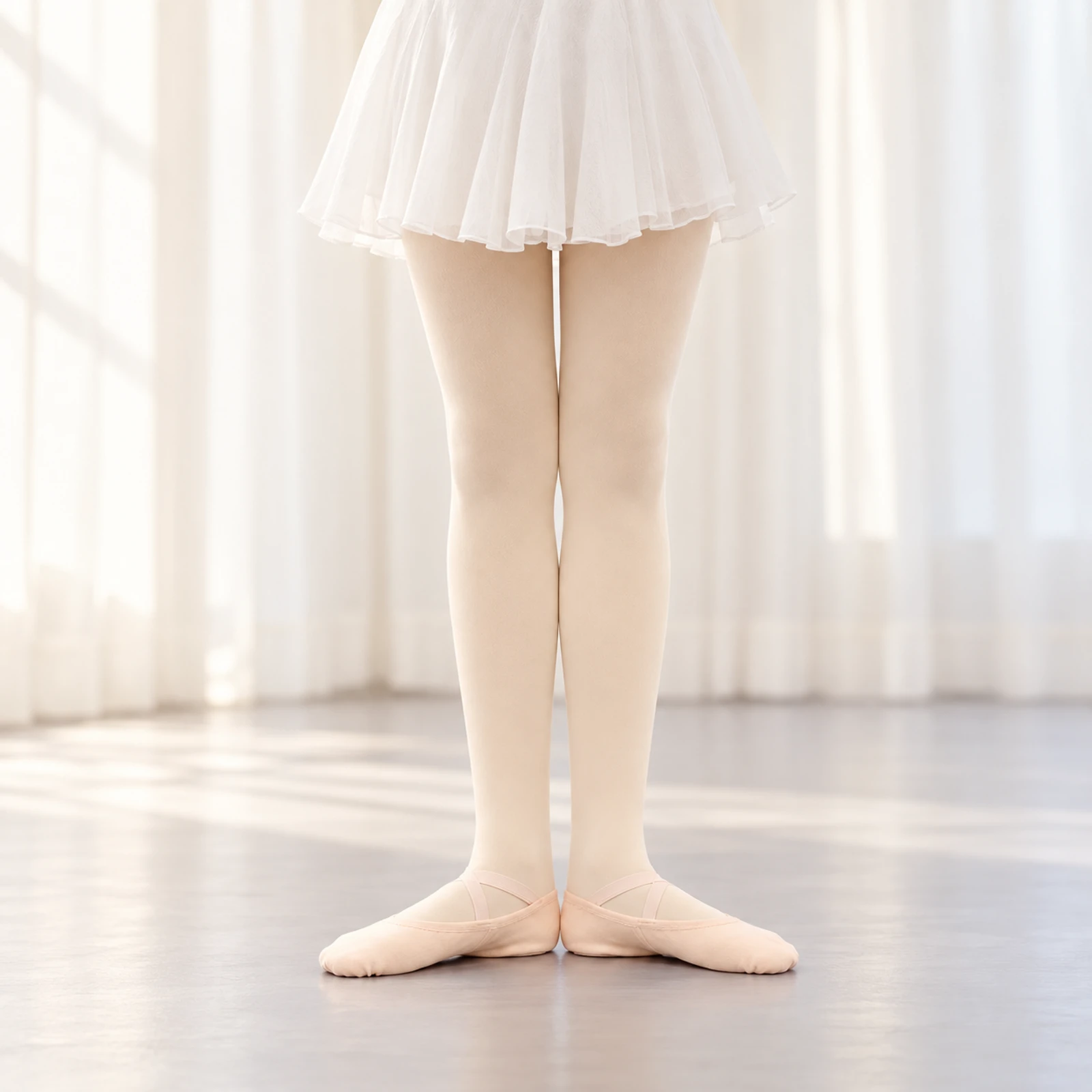
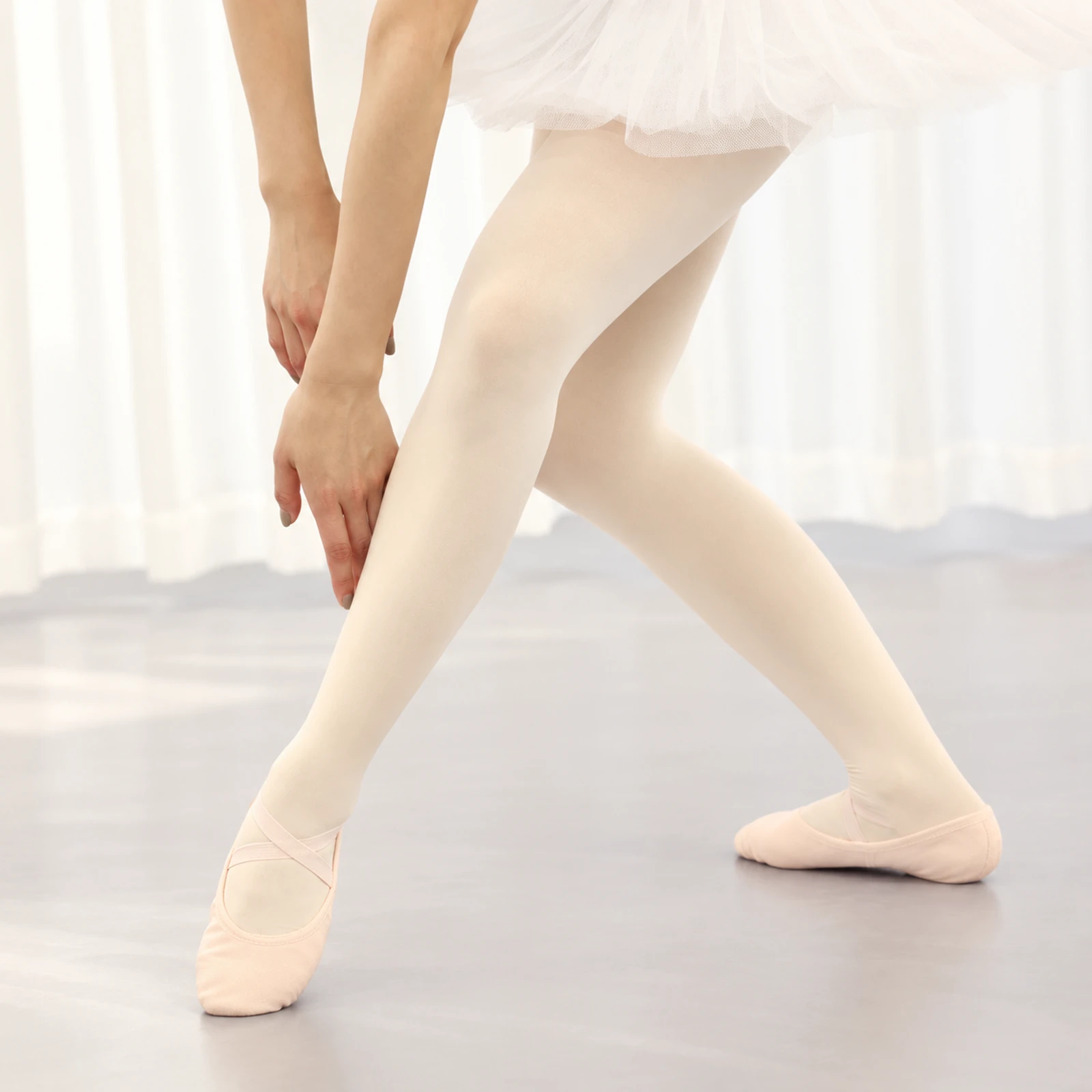
Practicing positions at home is most effective in proper ballet shoes so the foot can work freely. Canvas or leather split-sole shoes allow the teacher to see foot alignment clearly. Our ballet shoes guide covers the best options by age and level. For class, a well-fitted leotard with tights is the standard uniform across all RAD-registered schools.

Frequently Asked Questions

What are the 5 positions in ballet?

The five positions of the feet in ballet are: First (heels together, toes out), Second (feet apart, toes out), Third (one foot’s heel to the middle of the other), Fourth (feet apart front-to-back, toes out), and Fifth (feet fully crossed, front heel to back toe). All five require outward rotation of the legs from the hip joints.

What is first position in ballet?

First position is the starting point of classical ballet training. The dancer stands with heels together and toes turned outward, forming a straight line or shallow V with the feet. The legs are straight but not locked, the inner thighs engage to maintain turnout, and the weight spreads evenly across all five toes of each foot. Most barre exercises begin in first position.

What is third position in ballet?

Third position is a preparatory position where the heel of the front foot rests against the middle of the back foot, with both feet turned out. It is most commonly used with younger students in the RAD Grades 1–3 who are not yet ready for the hip rotation required by fifth position. Third position teaches the concept of closing and crossing the feet without overstressing the joints.

Why does ballet use five positions?

The five positions were codified in the 17th century by Pierre Beauchamp, the first director of the Académie Royale de Danse in Paris. They represent every possible relationship between the feet in a turned-out stance — open, closed, front-back, and crossed. Every step, jump, and turn in classical ballet connects these positions, so mastering them provides the structural vocabulary for all classical technique.

At what age do ballet students learn fifth position?

In most RAD-affiliated schools, fifth position is formally introduced in Grades 4–5, typically around ages 9–11. Before this, third and fourth positions are used. The delay is intentional: fifth position requires significant hip rotation and ligament flexibility that younger or less experienced students should not be rushed into. Forcing fifth position too early is a common cause of knee and hip problems.
Posted on

Sleeping Beauty Ballet: Story, Characters & Production Guide

The Sleeping Beauty is one of the three great classical ballets, alongside Swan Lake and The Nutcracker — all composed by Pyotr Ilyich Tchaikovsky. It premiered at the Imperial Mariinsky Theatre in St. Petersburg on 16 January 1890, with original choreography by Marius Petipa. Over 130 years later it remains one of the most technically and musically demanding works in the classical repertoire.

The Story: Sleeping Beauty Ballet Synopsis

Prologue — The Christening

Princess Aurora is born. Six good fairies attend her christening, each bestowing a gift: beauty, grace, generosity, musical talent, courage, and the promise of happiness. The wicked fairy Carabosse arrives uninvited, furious at being overlooked. She curses the infant: on her 16th birthday Aurora will prick her finger on a spindle and die. The Lilac Fairy steps forward and softens the curse — instead of dying, Aurora will fall into a deep sleep for 100 years and be awakened only by a prince’s kiss.

Act I — Aurora’s 16th Birthday

The kingdom celebrates Aurora’s 16th birthday. Four princes from distant lands court the princess in the Rose Adagio — the most celebrated passage in the entire ballet. Aurora accepts and releases each prince’s hand in turn, holding extraordinary balances on pointe during every handoff. An old woman (Carabosse in disguise) presents a bouquet hiding a spindle; Aurora pricks her finger and falls into a deep sleep. The entire court slumbers with her, and the palace disappears into an enchanted forest.

Act II — The Vision Scene and Awakening

One hundred years later, Prince Désiré is hunting. The Lilac Fairy appears and conjures a vision of Aurora. The prince falls instantly in love. He demands to find the sleeping princess; the Lilac Fairy leads him through the enchanted forest to the palace. He discovers Aurora and kisses her; the spell breaks, the court awakens, and the forest retreats.

Act III — The Wedding

Aurora and Prince Désiré are married in a magnificent celebration. Storybook figures attend as guests — Puss in Boots, the White Cat, Little Red Riding Hood, Cinderella, Bluebeard — each performed in a witty character divertissement. The ballet ends with the Grand Pas de Deux between Aurora and Désiré, one of the most beloved in all of classical ballet.

The Music: Tchaikovsky’s Masterpiece

Tchaikovsky composed the Sleeping Beauty score in 1888–1889, considering it his finest work. The music is built on two contrasting themes: the Lilac Fairy’s warm, flowing motif representing good; and Carabosse’s harsh, hammering march representing evil. Key musical highlights include:

  • The Prologue – Each fairy is introduced with her own leitmotif, a technique borrowed from Wagner.
  • The Rose Adagio – Slow, expansive music requiring the ballerina to sustain long, breathless balances.
  • The Vision Scene – Ethereal, dreamy scoring as the prince imagines Aurora dancing.
  • The Grand Pas de Deux – Triumphant, majestic music for the wedding duet and final celebrations.

Main Characters in Sleeping Beauty

  • Princess Aurora – The heroine; the lead female role and one of the most demanding ballerina roles in the repertoire.
  • Prince Désiré (or Prince Florimund) – Aurora’s love; the principal male role.
  • The Lilac Fairy – The most senior good fairy; the embodiment of goodness and the ballet’s moral anchor.
  • Carabosse – The wicked fairy; often played as a dramatic character role, sometimes performed by a male dancer.
  • The Six Good Fairies – In the RAD syllabus: the Fairy of the Crystal Fountain, the Fairy of the Enchanted Garden, the Fairy of the Woodland Glades, the Fairy of the Song of Birds, the Fairy of the Golden Vine, and the Lilac Fairy.
  • King Florestan and Queen – Aurora’s parents; character roles providing regal presence and comic reaction.

Famous Productions Around the World

Every major company maintains Sleeping Beauty in its repertoire:

  • The Royal Ballet (London) – The 1946 production reopened the Royal Opera House after World War II and is still performed today, revised by Ninette de Valois and later by Anthony Dowell.
  • American Ballet Theatre – Multiple productions including a 2015 staging with designs by Richard Hudson.
  • Bolshoi Ballet (Moscow) – Known for opulent staging, large casts, and dramatically coached acting.
  • Matthew Bourne’s Sleeping Beauty (2012) – A radical reimagining set across three time periods, replacing fairies with vampires and the traditional prince with an immortal gamekeeper.

Sleeping Beauty in Ballet Training

The Royal Academy of Dance uses Sleeping Beauty excerpts throughout its syllabus. The Lilac Fairy variation appears in the Intermediate examination, while Aurora’s Act I and Act III variations feature in Advanced 1 and Advanced 2. The Rose Adagio is the benchmark balance sequence studied in senior vocational levels. Students following the RAD pathway will encounter this ballet throughout their entire training journey.

What to Wear to See Sleeping Beauty

Most major productions are formal evening performances lasting approximately 2.5–3 hours with two intervals. Smart casual to formal dress is appropriate. Young students often enjoy dressing as Aurora or the Lilac Fairy. Explore our range of ballet leotards, tutus and skirts, and tiaras and accessories for performance-inspired looks.

Frequently Asked Questions

What is the Sleeping Beauty ballet about?

The Sleeping Beauty ballet tells the story of Princess Aurora, cursed by the wicked fairy Carabosse to prick her finger on a spindle on her 16th birthday and sleep for 100 years. The Lilac Fairy softens the curse so Aurora sleeps rather than dies, and is eventually awakened by a prince’s kiss. It is a story of good defeating evil, with love as the agent of transformation.

How long is the Sleeping Beauty ballet?

Sleeping Beauty typically runs 2.5 to 3 hours with two intervals. It is one of the longest works in the classical repertoire. Some companies perform a shorter two-act version for younger audiences, cutting the Act III divertissement. Check the specific company’s program for exact running times before attending.

What is the Rose Adagio in Sleeping Beauty?

The Rose Adagio is the centrepiece of Act I, where the 16-year-old Aurora meets four suitors on her birthday. She accepts and releases each prince’s hand in turn while holding long, steady balances on one pointe shoe. The music is slow and the silences between handoffs are terrifying for the ballerina. It is widely considered the greatest test of a classical ballerina’s technique and poise.

Who wrote the music for Sleeping Beauty?

Pyotr Ilyich Tchaikovsky composed the score between 1888 and 1889. He also wrote the music for Swan Lake and The Nutcracker, making him the dominant composer in the classical ballet repertoire. Tchaikovsky considered Sleeping Beauty his finest ballet score. The original choreography was by Marius Petipa, staged at the Mariinsky Theatre in St. Petersburg.

Is Sleeping Beauty based on a fairy tale?

Yes. The ballet is based on Charles Perrault’s 1697 fairy tale “La Belle au Bois Dormant” and the Brothers Grimm version “Little Briar Rose.” The librettist Ivan Vsevolozhsky expanded the fairy characters and added the Act III wedding divertissement featuring other fairy-tale characters as wedding guests.

Posted on

Ballet Terms Glossary: Complete A–Z Dictionary for Students & Parents

Ballet terminology is the vocabulary used by dancers, teachers, and choreographers to describe movements, positions, and techniques. Rooted in 17th-century French court dance, these terms were standardised when King Louis XIV founded the Académie Royale de Danse in 1661. Today the same French terms are used in studios from London to Tokyo. Whether you are a new student or a parent helping with homework, this complete ballet glossary covers every key term you will encounter from Primary to Vocational level.

Why Ballet Uses French Terminology

France was the birthplace of codified ballet, and the Royal Academy of Dance (RAD) and ISTD both use French as the universal language of instruction. This means a student in Sydney can train with a teacher from Moscow and understand every correction immediately. Learning the language is part of learning the art.

Ballet Terms A–F

  • Arabesque – Standing on one leg with the other extended behind; can be at 45°, 90°, or higher. See our full arabesque guide.
  • Assemblé – A jump where the working foot brushes the floor and both feet meet in the air before landing in fifth position.
  • Attitude – Like arabesque but the raised leg is bent at roughly 90° at the knee.
  • Ballon – The quality of lightness and elasticity in jumping; appearing to float briefly in the air.
  • Battement – A beating or swinging action of the working leg; includes grand battement (high kick) and petit battement (small beat at the ankle).
  • Battement tendu – The working foot slides along the floor to a fully pointed position while maintaining floor contact throughout.
  • Chassé – A gliding step where one foot “chases” the other across the floor.
  • Corps de ballet – The ensemble dancers in a company who perform as a unified group behind the soloists.
  • Croisé – A crossed position; the dancer stands at a diagonal angle to the audience so the legs appear crossed.
  • Dégagé – The foot disengages from the floor to a pointed position just above it; short for battement dégagé.
  • Développé – A slow unfolding of the leg to an extended position, passing through retiré on the way up.
  • Effacé – An open position at a diagonal where the legs appear uncrossed.
  • En dehors / en dedans – Outward / inward; describes the direction of a turn or circular action.
  • En pointe – Dancing on the tips of the toes in pointe shoes. Read our guide on when students start pointe.
  • Fondu – A bending and straightening of the supporting leg; literally “melted.”
  • Fouetté – A whipping action of the working leg; the 32 consecutive fouetté turns in Swan Lake are one of ballet’s most famous technical feats.
  • Frappé – A sharp strike of the working foot against the ankle before extending.

Ballet Terms G–P

  • Glissade – A smooth gliding step used as preparation for jumps.
  • Grand battement – A high swing of the working leg requiring strength, turnout, and control.
  • Grand jeté – A large split leap traveling through the air.
  • Grand plié – A full bend of both knees in any position; the deepest plié.
  • Jeté – A jump in which weight is thrown from one foot to the other.
  • Pas de deux – A dance for two; the central duet in most classical ballets.
  • Pas de chat – A catlike jump where each foot draws up separately under the body.
  • Penché – Leaning; in arabesque penchée the body tilts forward as the back leg rises above horizontal.
  • Petit allegro – A series of small, quick jumps performed to fast music; tests coordination and musicality.
  • Pirouette – A complete turn of the body on one foot, either en dehors (outward) or en dedans (inward).
  • Plié – A bending of the knees while maintaining turnout; demi plié (half bend) is the foundation of every jump and landing.
  • Port de bras – The carriage and movement of the arms; exercises that develop coordination and line.

Ballet Terms R–Z

  • Relevé – A rise onto the ball of the foot (demi-pointe) or onto full pointe.
  • Retiré / Passé – The working foot is drawn up to the knee of the supporting leg. When it moves through this position it is called passé. Correct alignment here is crucial for avoiding a sickled foot — see our sickled foot guide.
  • Révérence – A curtsy or bow performed at the end of class as a show of respect to the teacher and accompanist.
  • Rond de jambe – A circular movement of the working leg; à terre (on the floor) traces a half circle; en l’air traces one in the air.
  • Sauté – A jump from two feet landing on two feet, in any position.
  • Sissonne – A jump that takes off from two feet and lands on one; named after the Comte de Sissonne who supposedly invented it.
  • Soutenu – A sustained turn, typically in fifth position with a relevé.
  • Tendu – Short for battement tendu; the foundational barre exercise found in every syllabus from Primary onwards.
  • Tour en l’air – A full turn (or double, or triple) performed in the air; most common in male variations.
  • Turnout – The outward rotation of both legs from the hip sockets; the fundamental physical principle of classical ballet and the basis of every position and movement.

The Five Positions of the Feet

Classical ballet has five fundamental positions. All require turnout originating from the hip, not forced from the knee or ankle. For a step-by-step breakdown of each position with alignment guidance, see our dedicated ballet positions guide.

  1. First position – Heels together, toes turned out to form a straight line.
  2. Second position – Feet apart (roughly one-and-a-half foot-lengths), turned out.
  3. Third position – The heel of the front foot rests against the middle of the back foot.
  4. Fourth position – Feet apart front-to-back, turned out; opposite to fifth.
  5. Fifth position – Feet fully crossed, front heel touching back toe; the most closed and advanced position.

Syllabus Differences: RAD, ISTD, Vaganova

Most UK and Commonwealth students follow the RAD or ISTD syllabus. Russian students use the Vaganova method. While core vocabulary is universal, minor naming differences exist:

  • RAD uses “retiré”; some schools say “passé” for the same held position.
  • Vaganova numbers arabesques (First Arabesque, Second Arabesque, etc.); RAD describes them by configuration.
  • “Dégagé” and “battement dégagé” are interchangeable in modern usage.

Frequently Asked Questions About Ballet Terms

What language is ballet terminology?

Ballet terminology is French. When Louis XIV of France formalised ballet as a court art in the 1660s, French became the official language of the discipline. These terms are now used universally in studios worldwide regardless of the nationality of teachers or students.

How many ballet terms are there?

There are hundreds of recognized ballet terms, but a beginner needs approximately 30–50 to participate fully in class. Advanced students work with over 200 terms covering specific steps, positions, qualities of movement, and stage directions. Most reputable glossaries list 150–300 entries.

What is the difference between passé and retiré?

Technically, retiré is the held position where the working foot is placed at the knee of the supporting leg. Passé is the transitional movement of the foot passing through retiré on its way from one position to another. In everyday class usage many teachers use the two terms interchangeably.

What does “en pointe” mean?

“En pointe” means dancing on the very tips of the toes, supported by specially reinforced pointe shoes. Students are not ready for pointe work until their bones, muscles, and technique are sufficiently developed — typically not before age 11–12 and usually not until they have three or more years of consistent training. Read our full guide on when ballet students start pointe work.

What does turnout mean in ballet?

Turnout is the outward rotation of both legs from the hip sockets so that the feet point away from each other. True turnout originates in the hip joint, not the feet or knees. Adult beginners typically achieve 90–120° of turnout; professional dancers may reach up to 180°. Forcing turnout from the knees or ankles is a common and potentially harmful mistake.

What is a révérence in ballet?

A révérence is a formal curtsy or bow performed at the end of every ballet class. Students curtsy or bow to their teacher and, if present, the pianist. It is a longstanding tradition that marks the end of class and acknowledges the teacher’s work. Male dancers bow; female dancers perform a curtsy, usually in fifth position with a lowering of the head.

Posted on

Tutu Colors: Black, Red, Blue, Green and More

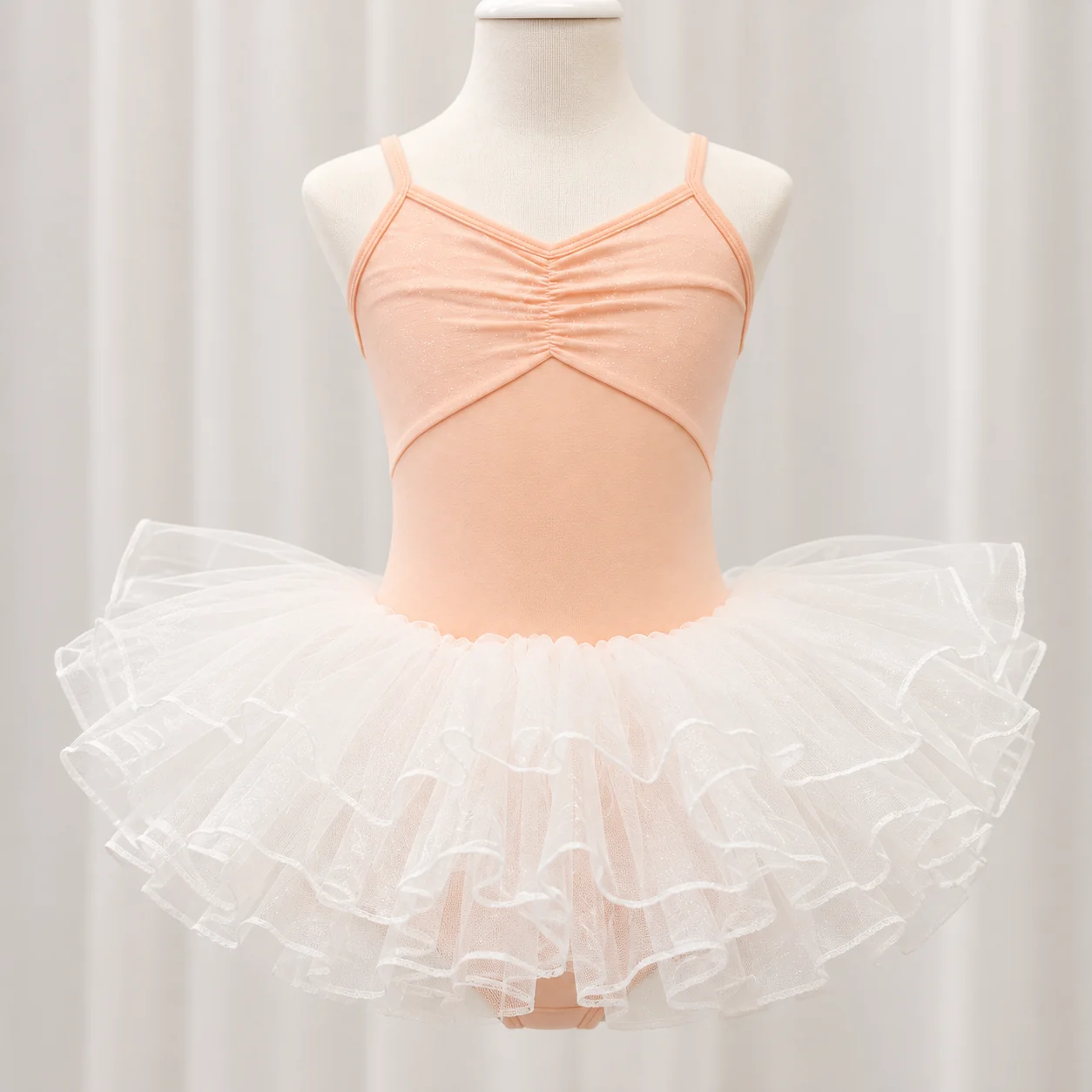
Orange camisole ballet leotard with ruched front and a white layered tutu skirt on a mannequin

Short answer: choose a tutu color by what it is for. White, pale pink and light blue are the classic choices for ballet class and soft, traditional pieces. Black, red, green, yellow and purple are mostly for performances, themes and costumes. For class, ask your teacher first, because many schools prefer a simple uniform.

What does each tutu color suit?

Color Often used for Good to know
White Classical pieces, snow and swan themes, early years The most traditional choice; shows marks easily
Pink Class, first tutus, sugar-plum style roles Soft, matches pink tights
Light blue Winter, water and fairy themes Pairs well with white or silver details
Black Dramatic or contemporary pieces, dark roles Hides marks; sharp against pale skin tones
Red Spanish and character themes, holiday shows A strong color for solo moments
Green Forest, spring and woodland themes Check how it looks under stage lights
Yellow Sun, flower and bright children’s pieces Pale tones look softer than bright ones
Purple Fairy and royal themes Matches lilac and lavender leotards

How do I match a tutu to a leotard?

  • Same family. A pink tutu over a pink leotard looks smooth and calm.
  • One strong color. If the tutu is bright, keep the leotard plain, such as black or white.
  • Match the tights. For stage, the tights usually match the costume plan, so ask the teacher or the costume list.

Which color is best for a beginner?

For a child’s first tutu, soft pink or white is easy to wear with almost any leotard. The tutu in our orange leotard and white tutu set is made for dancers about 100 to 130 cm tall.

Should the tutu match the school uniform?

In class, many schools use a simple uniform and sometimes no tutu at all. A colored tutu is mostly for shows, parties and photos. Check your school’s rules and do not buy a tutu for class until you know what is allowed.

How do I keep a colored tutu looking good?

  1. Hang it, or store it flat with the layers fluffed, not folded tightly.
  2. Spot clean marks with a damp cloth. Check the label before you wash a whole tutu.
  3. Keep dark colors away from pale ones in the bag, so dye does not rub off.
  4. Fluff the layers with your hands before a performance.

Is a tutu the same as a ballet skirt?

No. A tutu is a stiff or layered tulle skirt made to stand out. A ballet skirt for class is usually a light chiffon or georgette wrap or pull-on, made to move softly. Our guide to types of ballet skirts shows the difference.

What size tutu should a child or adult buy?

For children, choose by height first, then check the waist and the length. For teens and adults, check the waist and the length you want, from a short classical shape to a long romantic one. If the dancer is between sizes, choose the larger one, because a tutu with an elastic waist can be adjusted, but a tight one cannot.

Common mistakes when buying a colored tutu

  • Buying a bright color for class. Ask the teacher first, because many schools keep class simple.
  • Ignoring the stage lights. Some bright greens and yellows look different under lights, so ask what the show costume plan is.
  • Choosing by photo only. Colors can look different on screen, so check the description and the size chart.
Posted on

Adult Tutu and Tutu Dress for Women: What to Choose

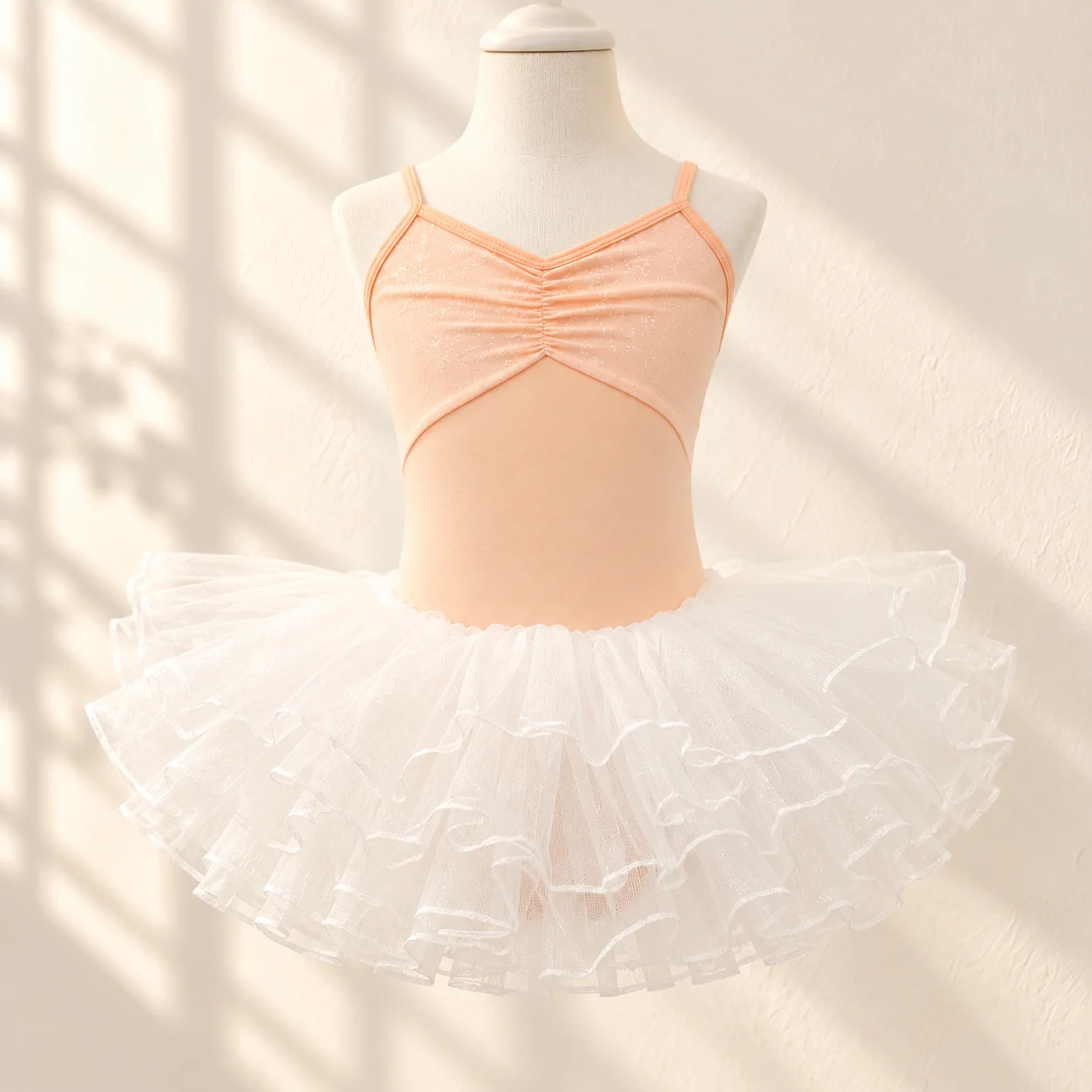
Orange camisole leotard and white tulle tutu skirt shown at an angle on a mannequin

Short answer: an adult tutu is a layered tulle skirt that you wear over leotard and tights. A tutu dress is a leotard top with the tutu skirt attached. Choose a skirt if you want to mix and match, and a dress if you want one simple piece for a show, photos or a party. For class, a soft wrap skirt is usually the more practical choice.

What is the difference between a tutu skirt and a tutu dress?

Tutu skirt Tutu dress
What it is A skirt only A leotard top with a skirt attached
Worn with Your own leotard and tights Tights, and ballet shoes
Good for Shows, photos, themed classes, mixing colors Parties, recital pieces, one-piece looks
Fit Waist and length Height, bust and torso length

What types of tutu are there for adults?

  • Romantic tutu: a longer, soft skirt that falls below the knee.
  • Classical or platter tutu: a short, flat, stiff tutu that sticks out from the hip.
  • Fluffy or layered tutu: a lighter, party-style skirt with many tulle layers.

Our guide to types of ballet tutus goes through the shapes in more detail.

How do I choose the right size?

  1. Measure the waist. Use the narrowest part of the torso, and check the size chart.
  2. Decide the length. Short tutus end at the upper thigh, romantic tutus fall to the knee or below.
  3. For a dress, measure height and bust. A torso that is too short pulls at the shoulders.
  4. Between sizes, choose the larger one. Tulle and elastic waists stretch, but a tight bodice does not.

What should I wear under and with a tutu?

Wear a leotard and tights under a tutu skirt. For a dress, wear tights and a comfortable base layer if the lining is thin. Choose ballet shoes if you are dancing, or plain flats for photos and parties. If you need help with leotards, see our adult women’s leotard guide.

Can I wear a tutu to an adult ballet class?

Most adult classes use a simple outfit: leotard, tights and sometimes a wrap skirt. A tutu is fine for a themed class, a performance or a photo. Ask your teacher before you wear one to a regular class, because a stiff tutu can hide your hips and legs.

How do I keep it looking good?

  • Store it hanging or flat, so the layers keep their shape.
  • Spot clean, and avoid a hot wash.
  • Fluff the layers by hand before use.

Common mistakes when buying an adult tutu

  • Choosing only by dress size. Tutus are sized by waist and length, and a dress by height and bust, so use the chart.
  • Buying a stiff tutu for class. A stiff tutu hides the line of the legs and hips, so it suits shows more than daily practice.
  • Forgetting the layers underneath. A light, thin tutu often needs a leotard and tights under it.

Simple outfit ideas for a themed class or party

  • A plain black leotard, pale tights and a pastel tutu skirt.
  • A pink leotard, white tights and a white tutu for a classical look.
  • Flats or ballet shoes, and a hair bun, to finish the look.
Posted on

Footless Tights for Ballet and Dance: How to Choose

Dancer in ballet pink tights and ballet shoes standing in first position

Short answer: footless tights end at the ankle, so the foot is bare. Dancers wear them for modern, jazz, floor work, barefoot classes, and when they want to see the foot. For ballet class in ballet shoes, most teachers prefer footed or convertible tights, so the line of the leg continues smoothly into the shoe.

What are footless tights?

Footless tights cover the legs and end at the ankle or the ball of the foot, with no foot part. They are close to leggings, but made in a smooth, stretchy dance fabric. Some have a small stirrup that loops under the arch to keep them in place.

Footless, footed and convertible tights compared

Footless Footed Convertible
Foot Bare Covered Covered, with a hole to roll the foot up
Best for Modern, jazz, floor work, barefoot Ballet class and exams in ballet shoes Both, or when you want a choice
Line of the leg Stops at the ankle Continues into the shoe Either

Our guide to footed, convertible and stirrup tights shows the differences in more detail.

When should I wear footless tights?

  • Modern and contemporary classes, where bare feet are normal.
  • Jazz and floor work, where grip on the floor matters.
  • Warm studios, when you prefer less covering.
  • With ballet shoes at home, if you do not mind the look.

Can I wear footless tights to ballet class?

Some adult and informal classes allow them. Many ballet teachers and schools prefer footed or convertible tights, because they want to see the full line of the leg and foot. Check with your teacher before you buy.

How do I choose the right pair?

  1. Size by height and weight. Use the size chart, and if you are between sizes choose the larger one. See our tights size guide.
  2. Fabric. Look for a smooth nylon and spandex blend that does not bag at the knee.
  3. Waist. A soft, flat waistband that does not roll or dig in.
  4. Color. Black is the most practical, and a skin-tone shade gives a continuous leg line. See our guide to pink or skin-tone tights.

Are footless tights the same as leggings?

They look similar, but dance footless tights are usually thinner, smoother and designed to be worn under a leotard and skirt. Leggings are thicker and made for everyday wear. Our guide to tights vs leggings has the details.

How do I look after them?

Wash on a gentle cycle in cool water, and let them air dry. Avoid fabric softener and high heat, which wear out the elastic. Take off rings and trim nails to avoid snags.

Footless tights for children

For young dancers, footed or convertible tights are usually easier at ballet class, because they stay in place inside ballet shoes. Footless tights suit creative movement, modern and jazz classes, and barefoot play. Check the length: a pair that is too short rides up and pulls at the knee.

Common mistakes when buying footless tights

  • Buying them for ballet shoes. The tights ride up and bunch at the ankle, so use footed or convertible tights instead.
  • Choosing the wrong length. Check the leg length, not only the waist.
  • Using thick leggings. Dance footless tights are thinner and smoother than everyday leggings.
Posted on

Jazz Tights vs Ballet Tights: Black, Tan and Mesh Options

Dancer bending forward in ballet tights showing how they stretch

Short answer: ballet tights are smooth and fine, in pink or the school color, and are made to show the leg line. Jazz tights are usually tan or black, and are often convertible or footless so dancers can work barefoot or in jazz shoes. Choose by the class and the dress code, not by the name on the packet.

How are jazz tights different from ballet tights?

Ballet tights Jazz tights
Typical colors Pink, or the school color Tan, nude or black
Typical style Footed or convertible Convertible or footless
Purpose Show a clean leg line in ballet shoes Allow bare feet and floor grip, blend with costumes
Fabric feel Fine and smooth Smooth or slightly more matte

When should I wear each color?

  • Pink: the usual choice for ballet class and exams. See pink or skin-tone tights.
  • Tan or nude: a skin-tone leg line for jazz, contemporary and stage, matched to the dancer’s skin.
  • Black: a practical choice for adult classes and some schools, and for darker costumes.
  • Sheer black: a lighter, see-through black for performances and dress-up looks.
  • Mesh: a stretchy, open-weave tight, often used for fashion or costume looks, rather than class.

Which style should a child wear?

For a child’s first ballet class, soft pink footed tights are the simplest choice. For jazz, creative movement or hip hop classes, ask whether the studio prefers tan, black or leggings. Kids’ tights need to stretch with growth, so check the height range on the size chart.

How do I choose the right size?

  1. Measure height and weight.
  2. Compare to the size chart, and if you are between sizes choose the larger one.
  3. Check the waist, so it does not roll or squeeze.

Our tights size guide explains each step. Our footed ballet tights come in sizes S to 2XL.

What is the difference between tights and leggings?

Dance tights are thinner and smoother, made to be worn under a leotard and skirt. Leggings are thicker and made for everyday wear. See our guide to tights vs leggings.

How do I make tights last longer?

  • Wash on a gentle cycle in cool water, and air dry.
  • Pull them on slowly, with clean, dry hands and short nails.
  • Keep a spare pair in the dance bag, in case of a run.

Which tights for which class?

Class Common choice
Ballet Pink footed or convertible tights
Jazz Tan or black convertible tights
Contemporary and modern Tan, black or footless tights
Hip hop Leggings or joggers, not tights
Creative movement Soft tights or leggings

Common mistakes with dance tights

  • Choosing the wrong shade. A tan that does not match the skin tone breaks the leg line.
  • Buying too small. Tights that are too small thin out and run quickly.
  • Wearing mesh for class. Mesh snags easily and is better for costumes.

What are dance tights?

Dance tights are stretchy tights made for dancers, in ballet pink, tan, black, nude and mesh. They may be footed, convertible or footless. Choose by the class: pink or skin-tone for ballet, tan or black for jazz and contemporary. Our footed ballet tights come in sizes S to 2XL for girls and adults.

Posted on

What Color Leotard to Wear: Red, Green, Blue and White

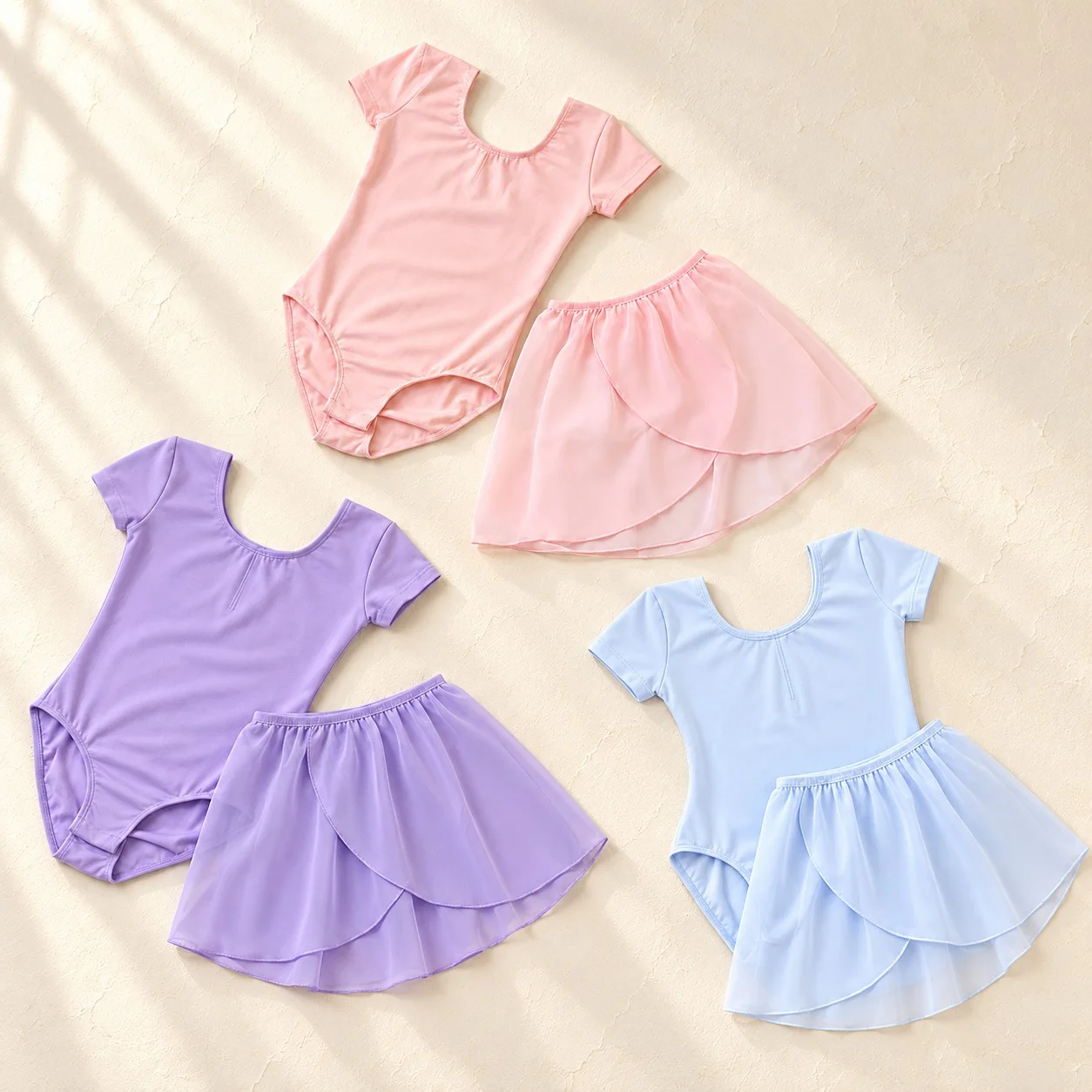
Three children's short-sleeve ballet leotards with matching chiffon skirts in pale pink, lavender and light blue

Short answer: if your school has a uniform color, wear that color. If it does not, black, navy, pink and soft pastels are the safest for ballet class. Red, green, blue and white leotards are good for creative movement, jazz, rehearsals, shows and for dancers whose school lets them choose.

Which color suits which situation?

Color Good for Things to check
Black Adult classes, many schools, shows Shows lint and dust
Pink Ballet class, first leotards Check the shade your school wants
White Classical looks, some school uniforms Can show through in light fabrics; choose a lined style
Red Jazz, rehearsals, shows Strong color; may not be allowed in ballet class
Green Creative movement, themed classes Match with plain tights
Blue Many schools and a popular casual choice Navy is more formal than bright blue

How do I choose the right color?

  1. Ask the school first. Many schools name a color for each level or class.
  2. Think about the skin tone. Colors close to the skin can look washed out, while a deeper color often looks richer.
  3. Think about washing. Dark colors hide marks, pale colors need more frequent washing.
  4. Keep the rest simple. A bright leotard works best with plain tights and shoes.

Our guide to leotard colors by grade shows how schools often use color for levels. We are not affiliated with any examination board, so always check with your teacher.

Which of our leotards come in several colors?

Our girls’ sleeveless ballet leotard comes in cotton and nylon, in colors including Light Pink, Dusty Rose, Lake Blue, Aqua, Navy, Lavender, Sea Blue, Dark Purple, Periwinkle, Sage Green and Wine Red. The short-sleeve leotard and skirt set comes in Pale Pink, Lavender and Light Blue. The black camisole set suits teens and adults.

Can a colored leotard be used for exams?

Exam uniform rules vary. Many examination centers ask for a specific color and style, so check the current rules with your teacher before you buy.

How do I keep colors bright?

  • Wash on a cool gentle cycle and air dry.
  • Wash bright colors separately for the first few washes.
  • Avoid bleach and fabric softener.

Which tights go with which leotard color?

Leotard Tights that work
Black Pink, tan or black
White Pink or white
Red Black or tan
Green or blue Pink, tan or black

Common mistakes when choosing a leotard color

  • Not checking the school list. Many schools name the exact color for each class.
  • Choosing a color that clashes with the tights. Keep the rest of the outfit plain.
  • Ignoring the lining. Pale colors often need a lined front for coverage.

What about brown, yellow and other colors?

Brown and tan leotards give a skin-tone look under costumes. Yellow and other bright colors are mostly used for creative movement, themed classes and shows. Before you buy, ask whether your school allows a bright color in class, and choose plain tights so the leotard stays the focus.

Posted on

Mesh, Tube and Half Skirts for Dance: Which to Choose

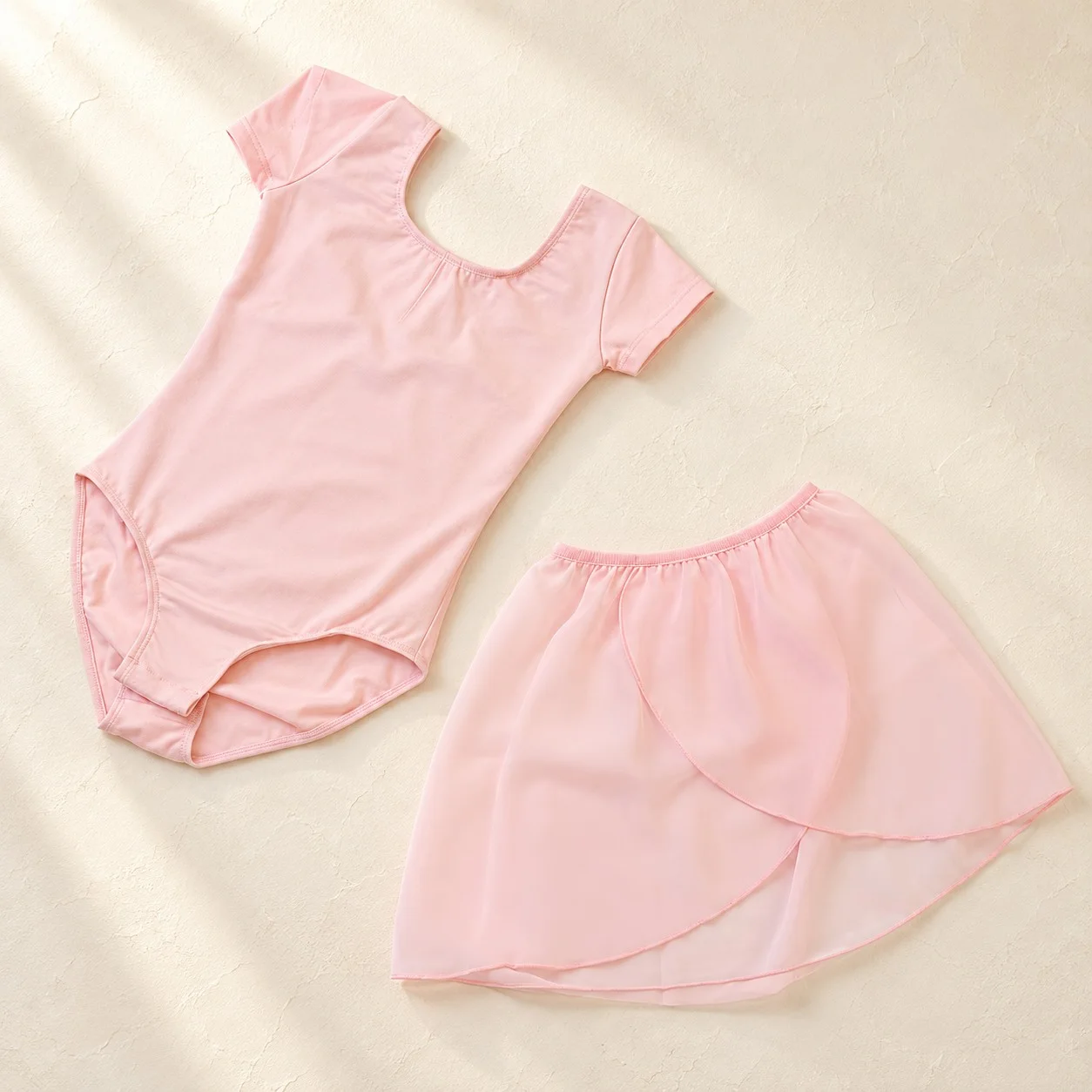
Pale pink short-sleeve ballet leotard with a matching pale pink chiffon skirt

Short answer: a mesh skirt is a light, see-through skirt, a tube skirt is a stretchy, tight pull-on that sits at the hip, and a half skirt covers only part of the hips. For ballet class, a soft wrap or pull-on chiffon skirt is usually the safe choice. Mesh, tube and half skirts are more common in jazz, contemporary and practice classes.

What are the main types of dance skirt?

Skirt What it is Good for
Mesh skirt Light, open-weave, usually pull-on Practice, jazz, layering over shorts
Tube skirt Stretchy, fitted pull-on that sits at the hips Modern, jazz, adult classes
Half skirt A partial skirt or short wrap over the hips Contemporary and practice
Wrap skirt (chiffon) A crossover skirt with a tie or elastic Ballet class, exams, shows
Tutu A layered tulle skirt Performances and photos

For more detail on classic ballet skirts, see our guide to types of ballet skirts.

Which skirt should I wear to ballet class?

Most ballet schools prefer a light chiffon or georgette skirt, often a wrap or pull-on style, so the teacher can still see the hips and legs. Some classes do not allow a skirt at all. Check the dress code first.

How should a dance skirt fit?

  • Waist. A soft elastic waist that stays put without squeezing.
  • Length. Short enough that it does not catch on the feet, long enough to feel comfortable.
  • Fabric. A light fabric that moves when you turn, and does not cling or ride up.
  • Layer. Fine tulle or mesh sits better over a leotard, not over bulky shorts.

How do I choose the size?

  1. Choose by height for children, and by waist and hip for teens and adults.
  2. Compare to the size chart on the product page.
  3. If you are between sizes, choose the larger one.

Our short-sleeve leotard and skirt set includes a soft chiffon skirt with an elastic waist, and you can also buy the skirt on its own. Sizes follow height, so check the size chart. For character dance, our black character skirt has a full-circle cut.

How do I look after a dance skirt?

Wash gently, in cool water, preferably by hand, and let it air dry. Avoid hot irons on mesh, tulle and chiffon. Hang the skirt up after class so it does not crease.

Simple layering ideas

  • A leotard, tights and a pull-on skirt for a light practice outfit.
  • A leotard and a wrap skirt for ballet class, tied at the waist.
  • A fitted top and a tube skirt for a modern or jazz class.

Common mistakes when buying a dance skirt

  • Choosing a skirt that is too long. It can catch on the feet during jumps and turns.
  • Buying a heavy fabric. A heavy skirt hides the legs and weighs down turns.
  • Forgetting the dress code. Some classes do not allow skirts, so ask first.

What are mesh maxi and midi skirts?

A mesh maxi skirt falls to the ankle and a mesh midi skirt to the mid-calf, in a light, see-through mesh. They suit lyrical and contemporary work, warm-ups and photos. Choose a waistband that stays in place and a length that does not catch on your shoes.

Posted on

Ballerina Sneakers: The Fashion Trend Explained

Ballerina Sneakers: The Fashion Trend Explained

What Are Ballerina Sneakers?

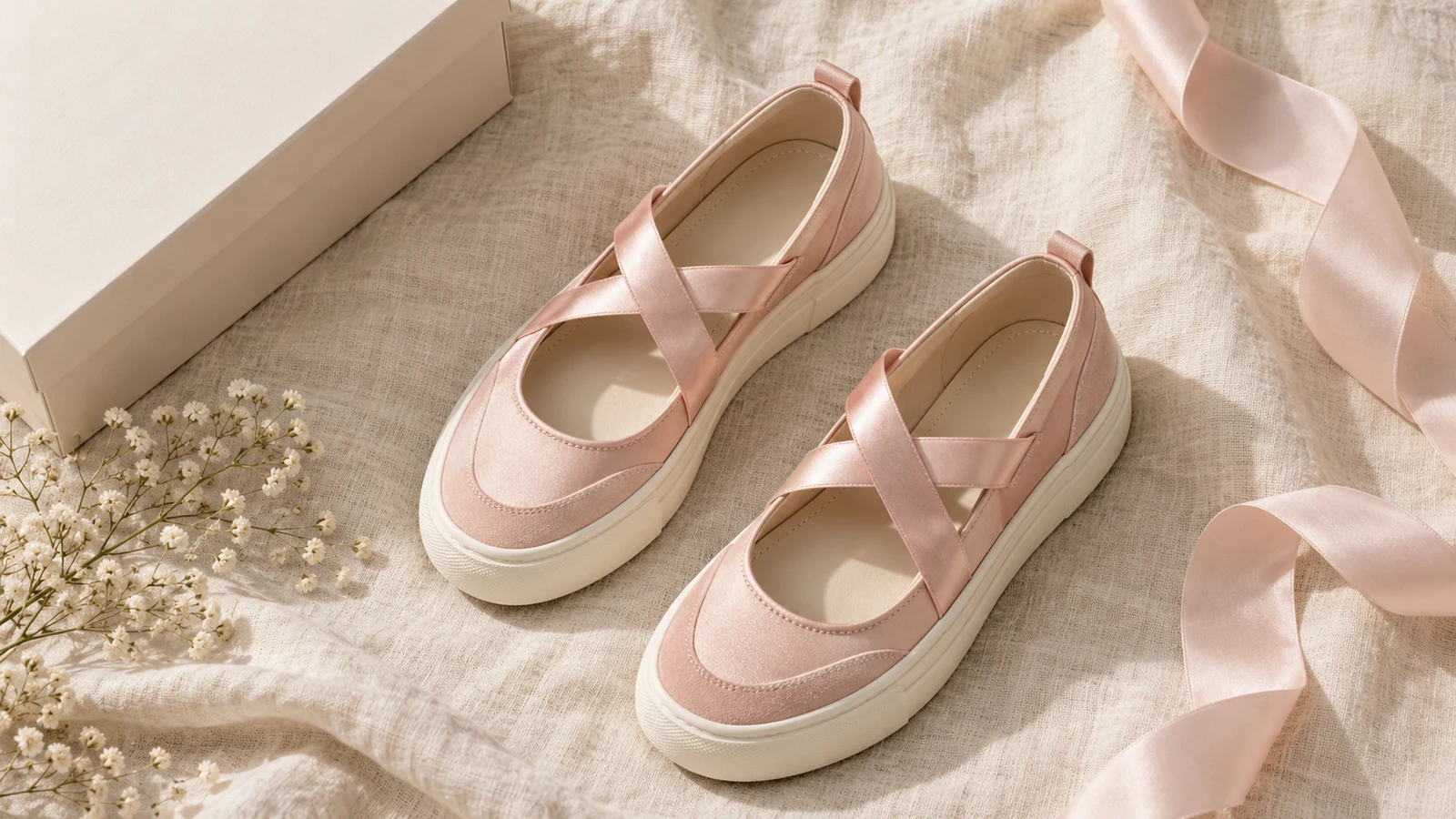
Ballerina sneakers — also called ballet sneakers or ballet-flat sneakers — are a fashion footwear hybrid that combines the silhouette and softness of a traditional ballet flat with the comfort and structure of a casual sneaker sole. They are not dance shoes used in class or on stage; they are a fashion item inspired by ballet aesthetics that has gained significant popularity in mainstream fashion.

If you searched “ballerina sneakers” looking for actual ballet shoes for dance class, see our guide: Canvas vs Leather Ballet Shoes. This guide covers the fashion trend specifically.

The Balletcore Trend and Its Origins

Ballerina sneakers emerged from the broader “balletcore” fashion movement that peaked in 2022–2024. Balletcore takes aesthetic inspiration from classical ballet training — pale pink, ribbons, tulle, wrap cardigans, and soft silhouettes — and translates it into everyday fashion. It was driven by social media (particularly TikTok and Instagram), street style photography, and endorsement from major fashion houses.

Brands including New Balance, Nike, and Onitsuka Tiger produced ballet-flat hybrid sneakers, while independent designers and luxury labels created their own versions. The style appealed to women and girls who love the elegance of ballet aesthetics but want the practicality of a wearable everyday shoe.

How Ballerina Sneakers Look

The typical ballerina sneaker features:

  • A low, streamlined profile — no chunky soles
  • Soft, rounded toe box
  • Often in pale or neutral colors: blush pink, cream, white, pale grey
  • Sometimes featuring ribbon-like laces or decorative bows
  • A sole with more grip and cushioning than a true ballet flat
  • Materials that mimic the satin or leather of ballet shoes — often satin-finish, patent, or soft leather

Are Ballerina Sneakers Suitable for Dance Class?

No. Ballerina sneakers are not suitable for dance class, barre, or any ballet training. They do not provide the sole flexibility, fit precision, or structural support that ballet training requires. The RAD and other examining bodies specify approved footwear for examinations, and fashion sneakers — however ballet-inspired — do not qualify.

For actual ballet class shoes, see our guides:

The Ballet Flat: The Original Ballerina Shoe

The classic ballet flat — a thin-soled, low-cut shoe with a rounded or slightly squared toe — has been a mainstream fashion item since the 1950s, when Audrey Hepburn popularised it. Ballet flats draw their name and silhouette from the ballet slipper but have never been dance shoes; they have always been street footwear inspired by the elegance of classical ballet.

The current ballerina sneaker trend is essentially a modern, sportswear-influenced evolution of the classic ballet flat: the same aesthetic inspiration but with more cushioning for the demands of urban life.

Frequently Asked Questions

Why are ballet-inspired shoes so popular in fashion?

The aesthetic of classical ballet — femininity, grace, lightness, pale colors, ribbons — translates naturally into fashion. Ballet has always had a close relationship with fashion design: Christian Dior, Hubert de Givenchy, and many other couturiers drew directly on ballet for their work. The current balletcore trend is the latest expression of a very long-standing connection between the two worlds.

What should my daughter wear to ballet class, not a ballerina sneaker?

For RAD or ISTD ballet classes, your child needs properly fitted canvas or leather ballet shoes, a leotard in the appropriate color for their grade, and pink tights. See the full uniform guide for your child’s level: RAD Ballet Uniform Guide by Grade.

Are ballerina sneakers good for everyday wear?

As fashion items, ballerina sneakers are comfortable and versatile for light everyday use — shopping, school, casual outings. They are not designed for running, sport, or intensive walking, as their thin soles provide less support than purpose-built sports shoes. For everyday comfort, look for versions with adequate cushioning and a sole that suits the terrain you walk on.