Posted on

Ballet Positions of the Body: Arms, Feet and Épaulement Explained

Ballet Positions of the Body: Arms, Feet and Épaulement Explained

Ballet positions of the body describe the arrangement of the arms, head, torso and feet relative to each other and to the audience. Understanding these positions helps students follow corrections and remember combinations more precisely. The terminology is French, as it comes from the 17th-century French codification of ballet technique.

Short answer: Ballet positions of the body describe the arrangement of the arms, head, torso and feet relative to each other and to the audience.

Positions of the Feet

There are five standard positions of the feet in classical ballet, numbered 1 through 5. All of these positions involve turned-out feet — the heels and toes rotate outward, with the rotation coming from the hip joint.

  • First position: heels together, toes pointing outward to form a straight line
  • Second position: feet apart (approximately hip-width), toes pointing outward
  • Third position: one foot in front of the other, heel of the front foot touching the middle of the back foot (less commonly used in contemporary syllabuses)
  • Fourth position: one foot in front of the other, feet separated by about 30 cm / 12 inches
  • Fifth position: one foot directly in front of the other, toe of the front foot touching the heel of the back foot

Positions of the Arms (Port de Bras)

Port de bras refers to the carriage of the arms. Different schools (RAD, Cecchetti, Vaganova) use slightly different arm position numbering, but the underlying shapes are similar. In the RAD system:

  • Bras bas (preparatory position): arms low, curved gently in front of the body, palms facing inward
  • First position: arms curved in front of the body at waist/navel height
  • Second position: arms extended to the sides at shoulder height, elbows slightly bent
  • Third position: one arm overhead, one in second
  • Fourth position: one arm overhead, one in first
  • Fifth position (en haut / high fifth): both arms overhead, curved

Épaulement

Épaulement (from the French for “shouldering”) refers to the slight rotation and inclination of the shoulders and head in relation to the front direction. A dancer standing en face is facing directly front, both shoulders square. A dancer showing épaulement has turned slightly so one shoulder is forward and the head inclines toward or away from it.

Épaulement gives classical ballet its characteristic three-dimensional quality and prevents the art form from looking flat or mechanical. It is introduced gradually in graded classes — students in the lower grades focus primarily on placement and basic technique, while épaulement becomes more refined through Grades 5-8 and Vocational level.

Positions of the Body (En Face, Croisé, Effacé, etc.)

When the body is angled to a corner of the room rather than facing directly front, specific French terms describe the resulting position:

  • En face: facing directly front, shoulders square
  • Croisé (crossed): the body is angled to a corner, and the working leg crosses the line of the body relative to the audience — creating a visually dynamic, dynamic angle
  • Effacé (shaded): the body is angled to a corner, but the working leg opens away from the audience — a more open, expansive look
  • Écarté (separated): the body is angled to a corner, with the working leg extended directly to the side toward the upstage corner
  • À la quatrième (to the fourth): the leg extends to the front or back, directly facing the audience

Why Does This Terminology Matter?

Ballet teachers use this terminology constantly during class. When a teacher says “croisé devant” they mean the leg extends to the front in the croisé angle — a student who does not know what croisé means will take longer to respond to corrections. Learning the terminology alongside the technique helps students progress faster and prepares them for examinations where instructions are given using these terms.

For more background on what students learn at each grade level, see our ballet grades guide.

Frequently Asked Questions

How many positions of the feet are there in ballet?

There are five classical positions of the feet, numbered first through fifth. Each position places the feet in a specific relationship to each other, with varying degrees of turn-out, and forms the starting or ending point for most ballet movements.

What does épaulement mean in ballet?

Épaulement is a French term meaning 'shouldering.' It refers to the slight tilt and rotation of the upper body — shoulders, head and arms — that gives ballet movements their graceful, three-dimensional quality. Without épaulement, movements look flat.

Do arm positions have names in ballet?

Yes. The arms have named positions that vary slightly between different ballet methods. Common positions include en bas (low, rounded), en avant (forward), à la seconde (to the side) and en couronne (crown, arms overhead). The specific names depend on the syllabus.
Posted on

Ballet Bags for Girls: Tote vs Backpack vs Duffel

Ballet Bags for Girls: Tote vs Backpack vs Duffel

The right ballet bag keeps a dancer’s uniform, shoes and accessories organized and easy to carry. The three main styles — tote, backpack and duffel — each suit different needs and ages. The best choice depends on how much gear the dancer carries, how they travel to class, and whether they go to school in their dance clothes or change on arrival.

Short answer: The right ballet bag keeps a dancer's uniform, shoes and accessories organized and easy to carry. The three main styles — tote, backpack and duffel — each suit different needs and ages.

Ballet Tote Bags

A tote bag is a single-compartment bag with open or zippered top and two shoulder straps. It is the most traditional style for young ballet students and is easy to pack and unpack quickly.

Best for

  • Ages 4-10, where the gear requirement is light: leotard, tights, shoes, water bottle
  • Students who are dropped off at class and change there
  • Schools where a specific style of bag is part of the uniform look

What to look for

  • A separate mesh or zipped pocket for shoes — keeping shoes loose with the uniform means tights and leotards pick up dirt and smell from the sole
  • Wide enough to hold a rolled or folded uniform without cramming
  • Wipeable interior, since shoes will always end up touching the main compartment

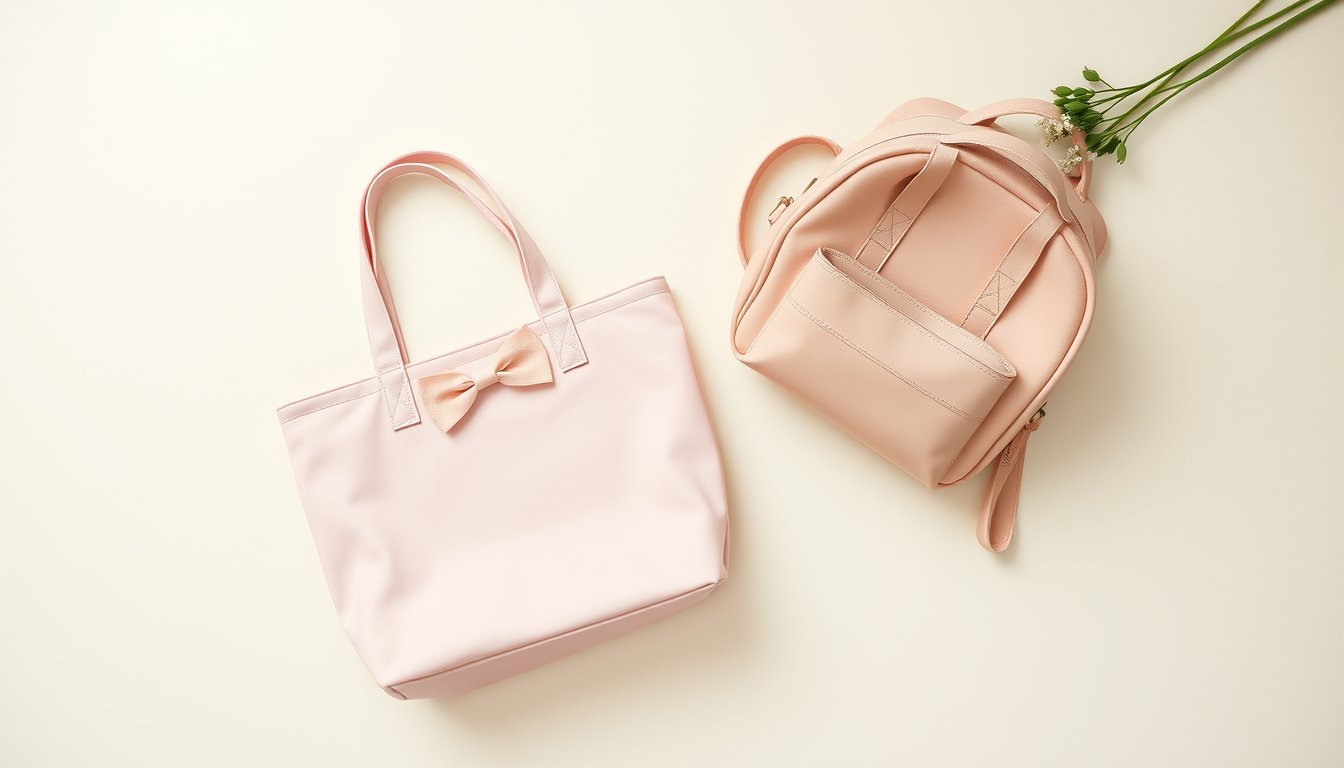
Our Bow-Detail Ballet Tote has a main compartment sized for a full uniform set and an external shoe pocket.

Ballet Backpacks

A backpack distributes weight across both shoulders, making it the most comfortable option for students who walk to class or cycle. It also leaves the hands free, which matters for students carrying instruments, school bags or a younger sibling.

Best for

  • Ages 9 and up, where gear starts to accumulate: multiple pairs of shoes, warm-up clothes, snacks, water
  • Students who go straight from school to class
  • Any distance that requires more than a two-minute walk

What to look for

  • A base or side pocket specifically for shoes — isolating shoes is important for a backpack, where everything sits close together
  • Padded straps and a back panel
  • Multiple internal pockets for organizing small accessories (hair pins, bands, belt)

Duffel Bags

A duffel bag is a cylindrical or rectangular soft bag with a single large compartment, top handles and often a shoulder strap. It offers maximum volume for the least structure — good for dancers who carry a lot of gear, including pointe shoes, warm-up clothes and multiple pairs of shoes.

Best for

  • Vocational and senior students with larger kit requirements
  • Students traveling to summer schools or intensives
  • When a large amount of gear needs to be packed quickly

What Should Go in a Ballet Bag?

For a complete list of what a dancer needs for class and exams, see our ballet bag essentials guide. For general tips on the full exam day, see our exam uniform checklist.

Frequently Asked Questions

What size bag does a ballet student need?

For a young beginner, a medium-sized tote bag (roughly 35 x 40 cm) is enough to fit a leotard, tights, ballet shoes and hair supplies. Older students with pointe shoes, warm-up clothes and extra accessories need a larger bag or a duffel.

Are personalized ballet bags worth buying?

A name or initial on the bag is practical in a busy changing room where many identical bags are stored together. It is not necessary for a beginner. Wait until you know the child will continue before investing in a personalized item.

Should a dance bag have a separate shoe compartment?

A separate ventilated shoe pocket keeps dirty or damp shoes away from the uniform and accessories. This is especially useful for pointe shoes, which need air circulation to dry properly between classes.

nn

Shop at ZoeDancewear

Blush Bow-Detail Ballet Tote Bag u2014 canvas dance bag with bow accent, roomy enough for shoes, tights and extras. Free shipping over $99 to the US.

Posted on

Ballet Props for RAD Exams: Pom-Poms, Tambourines, Ribbons and Garlands

Ballet Props for RAD Exams: Pom-Poms, Tambourines, Ribbons and Garlands

RAD graded class examinations for Early Years and Foundation level include group and solo exercises that use hand-held props. The most common props are pom-poms, ribbons on a stick, garlands and small tambourines. Each serves a specific purpose in the syllabus and must meet basic quality standards to be safe for use in class.

Short answer: RAD graded class examinations for Early Years and Foundation level include group and solo exercises that use hand-held props.

Pom-Poms

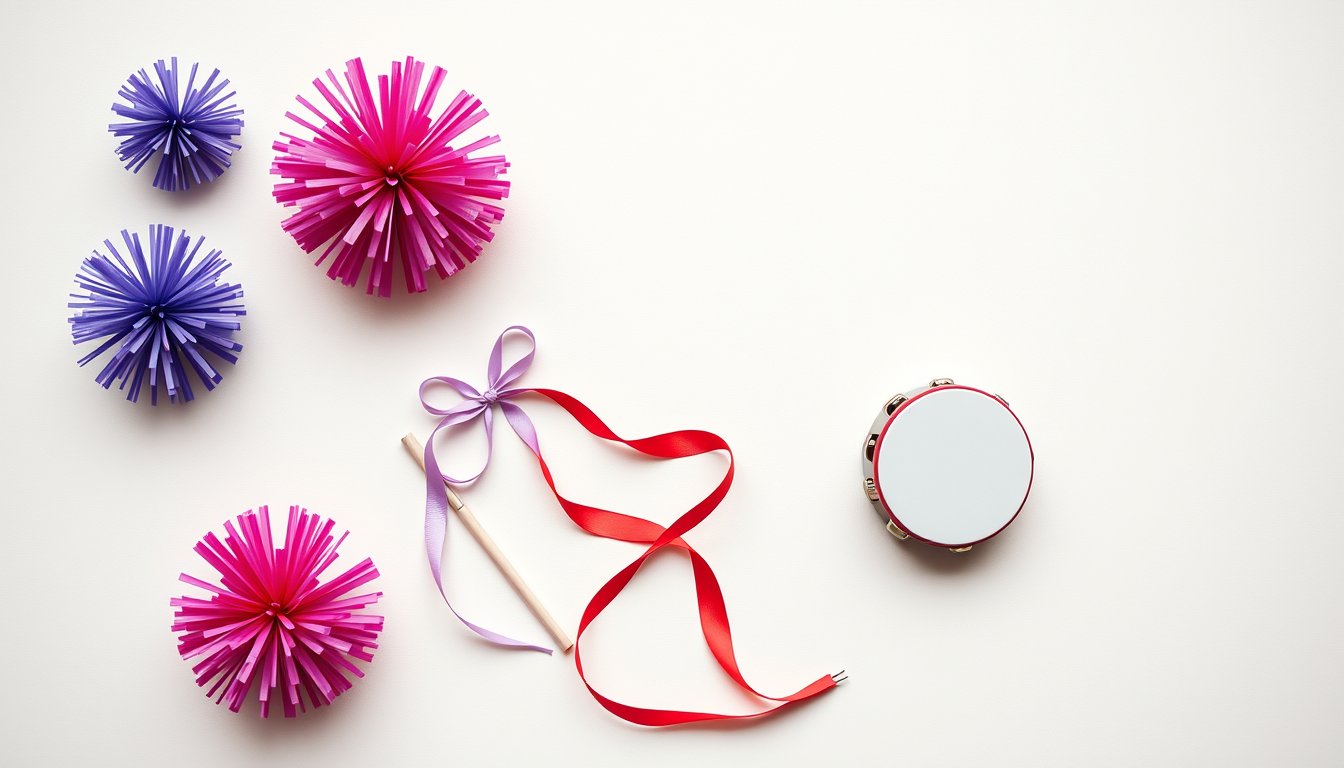
Pom-poms are used in Early Years and Foundation classes for shaking, waving and rhythmic exercises that develop arm coordination and musicality. They are sold as a pair (one per hand) and are typically metallic or shiny fabric in a single color — red, blue or purple are the most commonly specified colors in UK schools following the RAD Early Years program.

What to look for

  • Secure handle that a small child can grip reliably
  • Strands that do not shed or break apart during use
  • Bright, consistent color that shows well in a studio setting

Our Pom-Poms are sold as a pair at $9.99 and are available in red, blue and purple. They meet the standard requirements for Early Years RAD classes.

Ribbons on a Stick (Ribbon Wands)

Ribbon wands are used in Foundation and some Grade 1 exercises. They consist of a short wooden or plastic stick with a length of satin ribbon attached. Students wave them in arcs, circles and figure-eights to develop flowing arm movement and coordination. The ribbon should be long enough (typically 90-120 cm) to create a visible arc without tangling during the movement.

Garlands

Garlands are semicircular flower arrangements, typically made from fabric or silk flowers on a wire or ribbon frame. They are held in both hands and used for exercises that develop port de bras (arm carriage). Garlands appear in Foundation and some lower-grade exercises and are usually provided by the school rather than purchased individually by parents.

Tambourines

Small tambourines appear in some Foundation and Grade 1 exercises. They are used for tapping rhythms and developing musicality. The tambourine should be small enough for a young child to hold comfortably in one hand — typically 15-18 cm in diameter.

Where to Buy RAD Props

Props for RAD classes are usually bought individually or can sometimes be purchased through the school. If the school does not provide a list, ask the teacher which specific props are needed for the current grade before purchasing. Using a different color or style from the one used in class can confuse young students who have learned the exercise with a specific prop.

For a full overview of the RAD graded uniform and accessories, see our RAD uniform guide by grade. For the complete exam uniform checklist, see our exam uniform checklist.

Frequently Asked Questions

Where can I buy RAD exam pom-poms?

RAD-style pom-poms are sold at most specialist dance shops and online dancewear retailers. The RAD syllabus specifies the colors required for each grade — buy the correct color combination rather than a random set.

Do parents need to supply props for RAD exams?

In most schools, the teacher or studio provides shared props for exam day. However, having your own set means your child can practice at home with the correct items. Check with your teacher whether individual props are required.

What size should RAD ribbon sticks be for exams?

Ribbon sticks for RAD exams are typically around 30 to 40 centimeters for the rod, with a ribbon of roughly one meter attached. The exact specifications may be in the RAD syllabus notes. Your teacher will advise on the required length.

nn

Shop at ZoeDancewear

Ballet Cane for RAD Props u2014 lightweight practice cane, correct size for RAD character work. Free shipping over $99 to the US.

Posted on

What Are Character Shoes and When Does Your Child Need Them?

What Are Character Shoes and When Does Your Child Need Them?

Character shoes are heeled dance shoes with a leather upper and a suede or leather sole, traditionally used for character dance — a style of ballet that incorporates national and folk dance elements. In the RAD syllabus, character shoes are introduced at the Vocational level (Intermediate Foundation and above). They are not used in Graded class examinations.

Short answer: Character shoes are heeled dance shoes with a leather upper and a suede or leather sole, traditionally used for character dance — a style of ballet that incorporates national and folk dance elements.

What Do Character Shoes Look Like?

Character shoes have a Cuban or Spanish heel (typically 3-5 cm / 1.25-2 inches high), a T-bar or ankle strap, and a smooth leather upper. The sole is usually suede or smooth leather, which allows the foot to slide slightly on a studio floor — important for the turning and stepping movements in character dance.

They look similar to a low-heeled court shoe or a Mary Jane, but are constructed for dance use — more flexible through the ball of the foot and with a sole that allows controlled movement rather than grip.

Who Needs Character Shoes?

In the RAD curriculum:

  • Graded students (Pre-Primary through Grade 8): do not use character shoes in graded class examinations
  • Vocational students (Intermediate Foundation and above): character shoes are introduced as part of the Character Dance component of the syllabus
  • Show and performance students: character shoes may be used for specific show routines or national dance pieces at any age, at the teacher’s direction

If you are unsure whether your child needs character shoes, ask their teacher directly. The answer depends on the specific class and whether Character Dance is being examined.

Color and Style

RAD character shoes for women and girls are traditionally black with a heel. Men’s character shoes are also black, typically with a lower heel than women’s styles. Some schools use tan or flesh-colored shoes for specific pieces — always confirm color with the teacher before buying.

Fitting Character Shoes

Character shoes should be fitted with the same care as regular ballet shoes. The fit should be snug but not tight, with no slipping at the heel when walking. Because character shoes have a heel, a student who is new to heel work should have their posture and walking gait checked by their teacher when they first start using them — standing and moving correctly in a heeled shoe is a skill in itself.

Care and Maintenance

  • Wipe the leather upper clean after each use with a slightly damp cloth
  • Condition the leather every few months to prevent cracking
  • The suede sole can be brushed to maintain its texture and slide properties
  • Store in a breathable shoe bag, not a sealed plastic bag

For more on the RAD syllabus and what each level requires, see our ballet grades guide and our RAD uniform guide by grade.

Frequently Asked Questions

When does a RAD student need character shoes?

Character shoes are introduced at the RAD Intermediate Foundation level (vocational grades). They are not required for graded class examinations (Pre-Primary through Grade 8). Ask your teacher at the start of each year whether the shoes are needed.

What heel height are RAD character shoes?

RAD uses two heel heights. A lower kitten heel (approximately 3.5 cm) is used for lower vocational levels. A higher character heel (approximately 5 cm) is introduced for more advanced work. Your teacher will specify which is required.

Can character shoes be bought second-hand?

Yes — character shoes wear well and second-hand pairs in good condition are an economical choice. Check that the sole is not worn through, the heel is secure and the leather upper is not cracked before buying used shoes.

Posted on

RAD Ballet Uniform: Complete Guide by Grade from Early Years to Vocational

RAD Ballet Uniform: Complete Guide by Grade from Early Years to Vocational

RAD (Royal Academy of Dance) class examinations require students to wear a specific uniform corresponding to their grade level. The color, style and accessories are defined by the grade, not just the school. This guide covers the standard RAD uniform requirements from Early Years through to Vocational level.

See also: For a quick overview of what RAD students need at every level, see our RAD dancewear guide.

Important: Always confirm your school’s current requirements with your teacher before ordering. Individual schools may have variations from the standard, and RAD syllabus updates can change requirements over time. We are not affiliated with or endorsed by the Royal Academy of Dance.

Short answer: RAD (Royal Academy of Dance) class examinations require students to wear a specific uniform corresponding to their grade level.

Early Years and Foundation

Early Years and Foundation students wear a soft, age-appropriate leotard, usually in a pastel color specified by the school. A white tutu skirt is often worn over the leotard. Hair should be in a bun. Soft full-sole ballet shoes in pink complete the uniform.

Props used in Early Years and Foundation classes include pom-poms, ribbons and simple hand props. Our Pom-Poms in red, blue and purple are suitable for these classes.

Grades 1-2

Grades 1 and 2 introduce the formal graded examination uniform. The leotard, belt and bow for these grades follow the color specified by the RAD for each grade level. A matching elastic belt is worn at the waist over the leotard. Soft full-sole pink ballet shoes and pink tights complete the uniform.

Grades 3-5

Grades 3-5 follow the same structure as Grades 1-2 with grade-specific colors for the leotard, belt and bow. The leotard may have a slightly more structured neckline at higher grades. Some schools move students to split-sole shoes from Grade 4 — check with your teacher. Pink tights remain standard.

Grades 6-8

Grades 6-8 introduce a long mesh skirt worn over the leotard, giving a more formal, theatrical appearance. The leotard, belt and bow continue in grade-specific colors. Tights remain pink or skin-tone depending on school preference. Our Senior Grades Set includes the leotard and mesh skirt in one purchase.

Vocational Grades

Vocational students (Intermediate Foundation, Intermediate, Advanced 1, Advanced 2) typically wear a leotard in the grade color with a belt and bow. The uniform at Vocational level has a more professional appearance — clean lines, minimal decoration and a focus on showing the body’s line clearly. Removable bra pads are included in Vocational sets.

General Uniform Requirements Across All Grades

  • Hair: neat bun, all flyaways secured, bun cover optional but often expected for exams
  • Shoes: soft ballet shoes in pink, appropriate sole type for grade (full or split)
  • Tights: pink or skin-tone footed tights, worn over the leotard
  • Jewelry: stud earrings only, no necklaces or bracelets
  • Nail polish: not permitted for examinations

Where to Buy RAD Uniform

Our shop organises uniform sets by grade level. Each set includes the leotard, belt and bow for the relevant grade. Tights, shoes and bun accessories are sold separately. See our size guide for measuring guidance, and our FAQ for answers to common questions about ordering for an exam.

Frequently Asked Questions

Does the RAD uniform change at every grade?

Yes — leotard color and certain uniform items change at specific grade levels. The transition points are at Pre-Primary, Primary, Grade 1, Grade 3, Grade 6 and the vocational levels. Your teacher's grade uniform list will detail each change.

Where can I buy RAD-approved ballet uniform?

Most specialist dance shops stock the standard RAD colors and styles. You do not need to buy from a specific brand — the uniform requirements describe colors and styles, not particular manufacturers, unless your school has a preferred supplier.

Is there a difference between the RAD and ISTD uniform requirements?

Yes — each examination board sets its own uniform guidelines. If your child changes school or switches examination board, the leotard color and accessories may change. Always confirm the requirements with the new teacher before buying.

Posted on

10 Ballet Facts Every Dance Parent Should Know

10 Ballet Facts Every Dance Parent Should Know

If you are new to the world of ballet class, the terminology, traditions and requirements can feel overwhelming. Here are ten practical and historical facts about ballet that will help you understand what your child is learning and why things are done the way they are.

Short answer: If you are new to the world of ballet class, the terminology, traditions and requirements can feel overwhelming.

1. Ballet Has a 500-Year History

Ballet began in the Italian Renaissance courts of the 15th century as a form of court entertainment. It developed into a structured theatrical performance art in France during the 17th century, when Louis XIV (himself a dancer) established the first formal ballet academy in 1661. The RAD (Royal Academy of Dance) was founded in London in 1920 and developed the graded syllabus that many schools around the world use today.

2. The Five Foot Positions Are the Foundation of Everything

All ballet technique is built on five positions of the feet, numbered 1 through 5. Every exercise at the barre and in the center begins or ends in one of these positions. Learning to place the feet correctly in these positions — with proper turnout from the hip, not just the ankle — is the first technical skill a student develops.

3. Turnout Comes from the Hips, Not the Feet

One of the most common early corrections in ballet class is “turnout from the hip.” When feet are rotated outward in ballet, the rotation should come from the hip joint, not from the knee or ankle. Forcing turnout from the wrong place puts strain on the knees and ankles over time.

4. RAD Grades Are Cumulative

Each RAD grade builds on the one before it. A student cannot reasonably sit Grade 3 without having covered Grades 1 and 2 — the vocabulary and technique introduced in earlier grades are assumed knowledge in later ones. This is why students progress through grades in order rather than skipping ahead.

5. The Uniform Color Is Specific to Each Grade

RAD class examinations require the correct uniform color for the grade being examined. This is not just a school preference — it is part of the RAD syllabus requirements. If your child is moving up a grade, check the new uniform color before the start of term. Our dress code guide by level has a full breakdown.

6. Pointe Work Requires Teacher Clearance

No student should begin pointe work without their teacher’s specific approval. Pointe work typically begins around Grade 4-5 and only when the teacher has assessed that the student has sufficient strength, alignment and bone maturity. Starting too early risks permanent damage to the developing foot bones.

7. The Ballet Bun Is Functional, Not Just Traditional

The requirement for a neat bun is not arbitrary tradition. A bun keeps the hair off the face during class (important when the head is moving quickly), allows the teacher to assess the student’s neck and head placement, and presents a tidy, professional appearance for examinations.

8. Ballet Develops Core Strength and Body Awareness

Ballet training builds strength in the core, legs and back through controlled, progressive exercises. Studies have shown that regular ballet classes improve balance, coordination, spatial awareness and posture — benefits that carry over into everyday movement and sports.

9. The Warm-Up Is Not Optional

Barre work at the start of a ballet class is a structured warm-up that prepares the muscles and joints for the more demanding work in the center. Arriving late and missing the barre is not just disruptive — it increases the risk of strain during center work. Many teachers ask students who arrive after barre has begun to warm up separately before joining the class.

10. Dancewear Sizing Is Different from Everyday Clothing

Ballet leotards and tights are sized by height and weight, not by the familiar S/M/L or age-based sizing used in children’s clothing. A child who wears age 8 in school uniform may need a different size in dancewear. Always use the size guide before ordering. Our leotard size chart explains how to measure correctly.

Frequently Asked Questions

What examination board do most UK and Australian ballet schools use?

The Royal Academy of Dance (RAD) is the most widely used examination board in the UK, Australia and many parts of the world. Other major boards include ISTD and CECCHETTI. Your school will be affiliated with a specific board.

Why does ballet use French terminology?

Ballet was codified as a formal art form in France in the 17th century under Louis XIV. The French vocabulary was established then and became the international standard, so the same terms are used in studios worldwide regardless of the local language.

How long do RAD ballet exams last?

A typical RAD graded examination for one student lasts between five and twenty minutes, depending on the grade. Schools usually enter students in groups for efficiency. Ask your teacher for the expected duration of your child's specific level.

Posted on

How to Sew Ribbons and Elastics on Pointe Shoes: Step-by-Step

How to Sew Ribbons and Elastics on Pointe Shoes: Step-by-Step

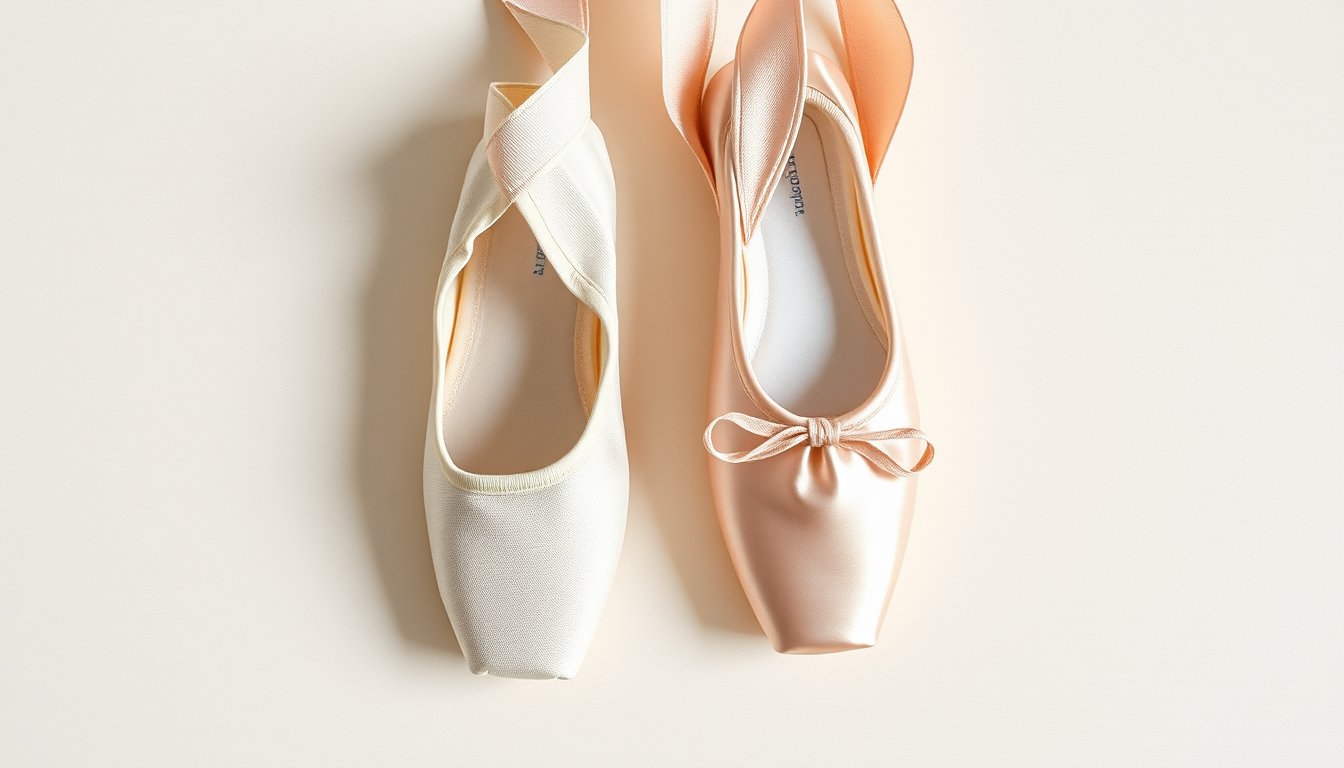
Sewing ribbons and elastics onto pointe shoes is one of the first practical skills a student learns when they start pointe work. It is not complicated, but the position of the ribbon and elastic matters — done correctly, they hold the shoe firmly on the foot and look neat. Done incorrectly, they can cause discomfort or come loose mid-class.

Short answer: Sewing ribbons and elastics onto pointe shoes is one of the first practical skills a student learns when they start pointe work.

What You Need

  • 2 lengths of ribbon (approximately 60-70 cm / 24-28 inches each, cut from a 2.5 m reel)
  • 2 pieces of elastic (approximately 15-20 cm / 6-8 inches each)
  • A needle and strong thread in a color matching the ribbon and shoe satin
  • Scissors
  • A lighter or candle (to seal the cut ends of ribbon so they do not fray)

Where to Position the Ribbons

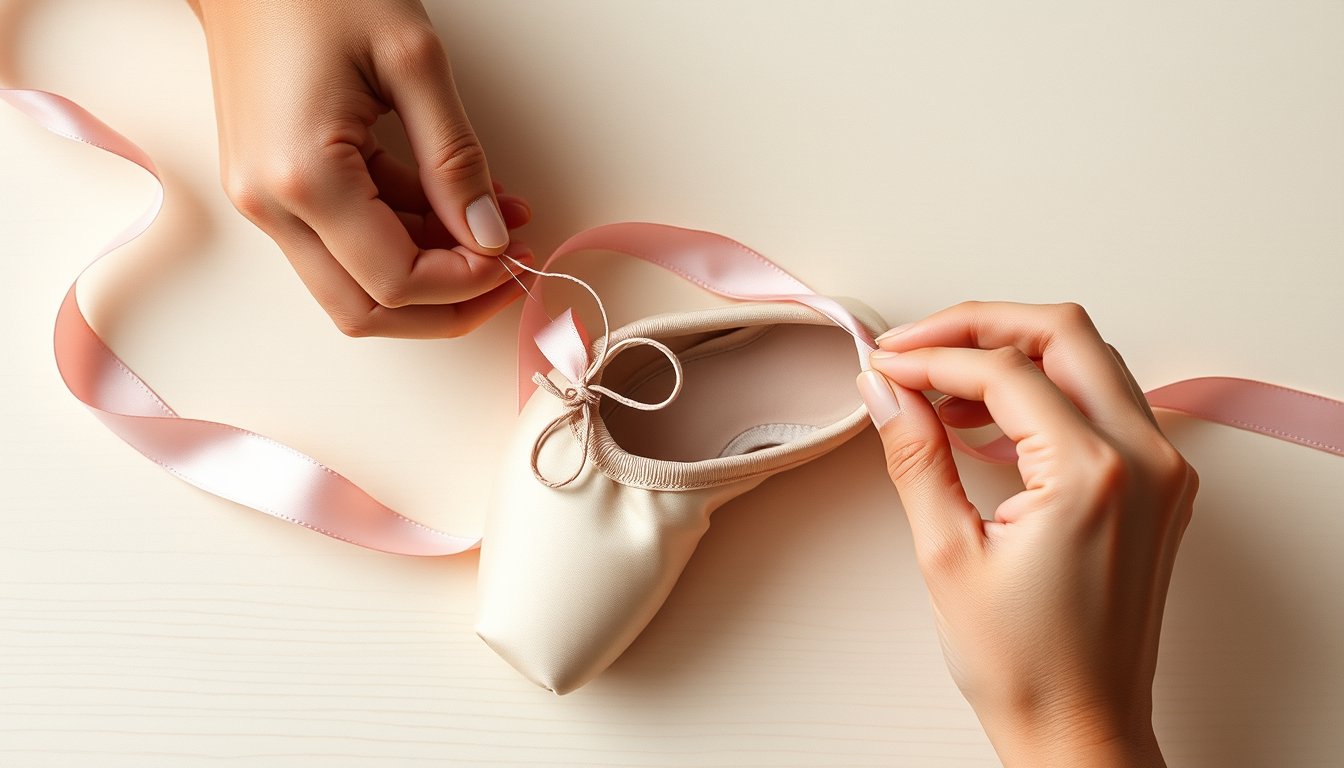
Fold the heel of the shoe forward toward the toe. The fold creates a natural crease just above the drawstring channel. The ribbon should be sewn on either side of the heel, at the point where the crease meets the side of the shoe — approximately 1-2 cm in front of the heel seam.

This position ensures the ribbon crosses the ankle in the right place when the shoe is on — not too far forward (which causes the ribbon to pull the front of the shoe down) and not too far back (which causes the ribbon to press into the Achilles tendon).

How to Sew the Ribbons

  1. Cut ribbon to length. Seal the cut ends by passing them quickly through a flame — the satin melts slightly and stops fraying. Do this before sewing.
  2. Fold one end of the ribbon under by about 1 cm to create a tidy starting edge.
  3. Place the folded end at the marked position on the inside of the shoe (the lining side, not the satin exterior).
  4. Sew a rectangle of stitches through the ribbon fold and into the lining fabric only — do not sew through to the outside satin. Use a backstitch for strength.
  5. Repeat for the remaining three ribbon ends (two ribbons, each with one end attached to either side of each shoe).

Where to Position the Elastic

The elastic sits across the back of the ankle, just above the heel counter of the shoe. It prevents the heel from slipping out when the dancer rises to demi-pointe or pointe. Sew one end of the elastic to the inside of the shoe, just behind where the ribbon is attached on one side, and the other end on the opposite side. The elastic should be firm but not tight enough to indent the skin.

How to Check the Tension

Before class, put the shoe on and tie the ribbons. The elastic should sit snugly across the back of the ankle with no gap, and the ribbons should cross the front of the ankle neatly when tied. If the elastic presses in uncomfortably or leaves a mark, it is too tight — take out the stitches on one end and resew with a little more slack.

Common Mistakes to Avoid

  • Sewing through the satin exterior: The needle should go through the lining only — visible stitches on the outside of the shoe look untidy
  • Placing the ribbon too far back: Ribbon too close to the heel seam will press into the Achilles tendon when tied
  • Not sealing the ribbon ends: Unsecured ribbon ends fray very quickly with use and washing
  • Using too little thread: Ribbons must withstand significant force during class — sew a large, dense rectangle of stitches, not just a few loops

For other pointe shoe questions, ask your teacher — they can check your sewing in person and advise on the exact position that works best for your foot shape. See also our ballet grades guide to understand where pointe work fits in the RAD syllabus.

Frequently Asked Questions

Where exactly should ribbons be sewn on pointe shoes?

Fold the heel of the shoe forward to find the natural fold line. The ribbon should be sewn at roughly the fold point on each side, which places it over the ankle when tied. Too far forward and it will not support the ankle properly.

What type of thread should I use to sew pointe shoe ribbons?

Use a strong, waxed thread or a heavy-duty polyester thread in a color that matches the ribbon. Double the thread and use a backstitch for maximum strength. A single thread or weak thread will snap quickly under the strain of dancing.

Can pointe shoe ribbons be glued instead of sewn?

Fabric glue can hold ribbons temporarily but will not withstand the repeated stress of dancing. Ribbons must be sewn securely — a glued ribbon that detaches mid-class is a safety risk. Take the time to sew them properly.

Posted on

Pre-Pointe Shoes: What They Are and When Your Child Is Ready

Pre-Pointe Shoes: What They Are and When Your Child Is Ready

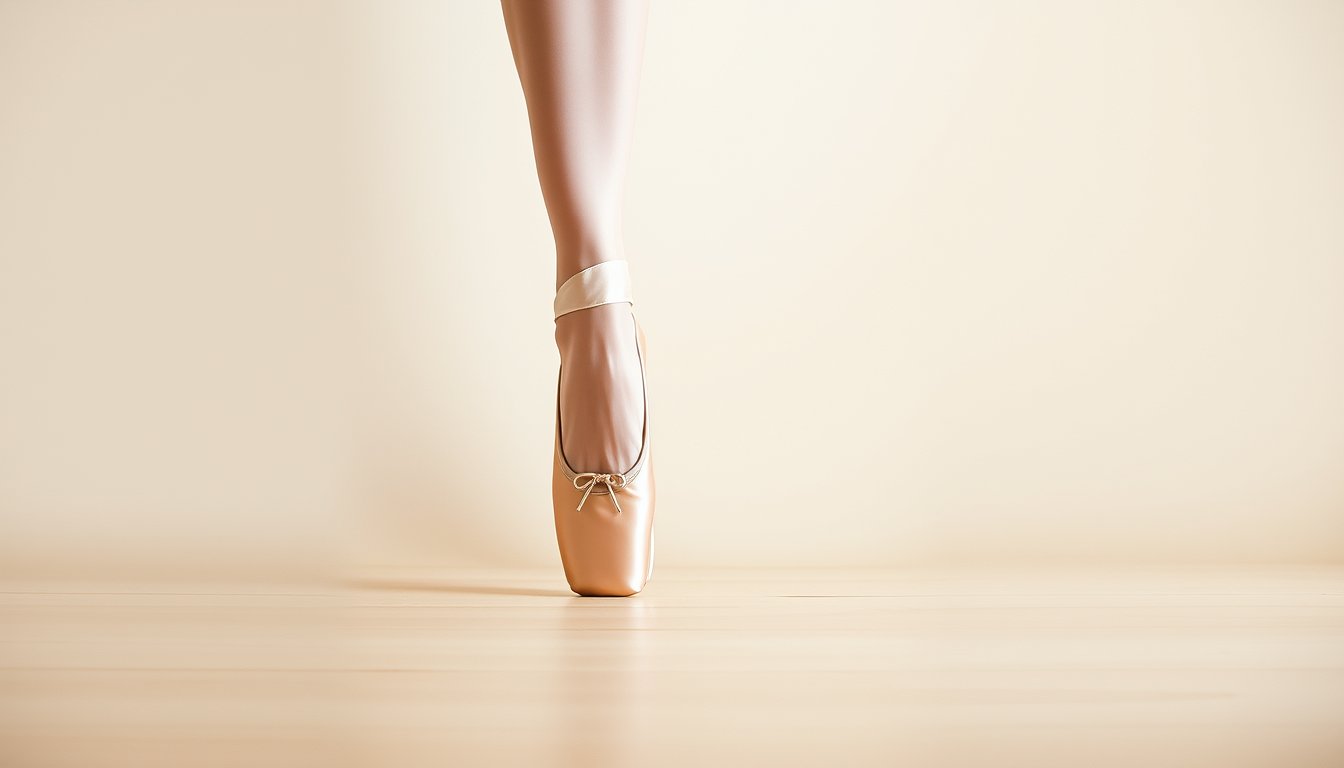
Pre-pointe shoes are soft, supportive shoes designed to prepare a dancer’s feet and ankles for the demands of full pointe work — without the rigid box of a traditional pointe shoe. They are used during the transition phase between flat ballet shoes and full pointe, typically from around Grade 4-5 upwards, and only when a teacher has determined that a student is physically and technically ready.

Short answer: Pre-pointe shoes are soft, supportive shoes designed to prepare a dancer's feet and ankles for the demands of full pointe work — without the rigid box of a traditional pointe shoe.

What Are Pre-Pointe Shoes?

Pre-pointe shoes look similar to soft ballet shoes but have a more structured sole and sometimes a small amount of stiffening in the toe area. They allow a student to work through the full range of foot motion — including rising to demi-pointe — while providing more support than a soft shoe. They do not, however, allow a dancer to go en pointe (fully on the tips of the toes).

How Are They Different from Pointe Shoes?

Pre-Pointe Shoes Pointe Shoes
Toe box Soft or lightly reinforced Hard, rigid box
Going en pointe Not possible / not intended Designed for this
Fitting Similar to soft ballet shoe Must be professionally fitted
When used Transition phase, Grades 4-5+ After teacher clearance
Risk of injury Low when used correctly Higher, requires supervision

When Is a Student Ready for Pre-Pointe Shoes?

The decision to introduce pre-pointe work — and the shoes that go with it — is always made by the dancer’s teacher, not the parent or the student. A teacher will assess:

  • Age and bone development: Most teachers will not begin pre-pointe work before age 11-12 due to the risk of growth plate damage in younger feet
  • Technical ability: The student must have strong, consistent turnout, stable ankles and proper alignment at demi-pointe
  • Strength: The feet and ankles must be strong enough to support the body’s weight on the demi-pointe position
  • Flexibility: Sufficient ankle flexibility to achieve a full demi-pointe without sickling

Should I Buy Pre-Pointe Shoes Without Asking the Teacher First?

No. Pre-pointe shoes should only be introduced when a teacher recommends them. Buying them speculatively or because a student wants to try them is not advisable — even pre-pointe shoes place additional demands on the feet, and using them without proper technique guidance can reinforce bad habits or risk injury.

What About Full Pointe Shoes?

Full pointe shoes must always be professionally fitted by a specialist fitter who can assess the shape of the foot and the student’s technical ability. They should never be bought online without fitting, and certainly never as a gift or a surprise. A teacher’s written clearance is standard practice before a student is fitted for their first pair of pointe shoes.

For more on the overall ballet uniform journey, see our ballet grades guide or our dress code by level.

Frequently Asked Questions

How do I know if my child is ready for pre-pointe shoes?

Your teacher is the only person who can make this assessment. Readiness is based on ankle strength, core stability, foot alignment and technical control — not age alone. Most students begin pre-pointe assessment around Grade 4 or 5 RAD.

Are pre-pointe shoes the same as demi-pointe shoes?

Yes — the terms are used interchangeably. Both refer to a soft-blocked shoe with no hard shank that is used to train the foot position and feel of a pointe shoe without the support structure needed for actual pointe work.

How long do students wear pre-pointe shoes before moving to full pointe?

The transition period varies widely — some students spend six months in pre-pointe, others a year or more. It depends on how quickly the required strength and technique develop. Your teacher will judge when the student is ready.

Posted on

Hair Nets for Ballet Buns: Types, Sizes and How to Use Them

Hair Nets for Ballet Buns: Types, Sizes and How to Use Them

A hair net for a ballet bun is a fine mesh cap placed over the finished bun to hold stray hairs flat and give the bun a smooth, professional appearance. Choosing the right size and color makes a significant difference to how the finished bun looks — the wrong net will either slide off or leave visible gaps.

Short answer: A hair net for a ballet bun is a fine mesh cap placed over the finished bun to hold stray hairs flat and give the bun a smooth, professional appearance.

What Type of Hair Net Do You Need for Ballet?

Ballet bun nets are different from the large catering-style hair nets that cover the whole head. For a ballet bun you need a small, circular or slightly oval mesh net that is sized to sit over the bun only, not over the whole head of hair. These are sometimes sold as “bun nets” or “ballet nets.”

Sizes

Bun nets are typically sold in two sizes:

  • Small (child): approximately 55-65 mm diameter when flat — for a bun about the size of a tennis ball or smaller
  • Large (adult): approximately 70-85 mm diameter when flat — for a fuller adult bun

Buy one size smaller than you expect — nets stretch to fit and a slightly smaller net grips more firmly. A net that is too large slides off the bun during class.

Colors

Hair nets are available in black, dark brown, medium brown, light brown/auburn and blonde. Choose a color as close to the dancer’s natural hair color as possible. An obviously mismatched net (a black net on blonde hair, or vice versa) looks untidy and draws attention in examinations.

If you cannot find an exact match, go one shade darker rather than lighter — a slightly darker net blends better than one that is too pale.

How to Put On a Ballet Bun Net

  1. Form the bun using a donut former or by pinning and coiling the hair into a bun shape.
  2. Secure the bun with U-shaped pins all around the base.
  3. Stretch the net over your hands to open it up.
  4. Place the net over the bun, letting it sit on top, then stretch the lower edge down and under the bun.
  5. Tuck the net under the bun and pin in place with kirby grips if needed.
  6. Smooth any loose hairs under the net with a grip or a small amount of gel.

How Many Nets Does a Dancer Need?

Nets are consumable — they tear, stretch out of shape and get lost. A dancer who has class once or twice a week will go through two to four nets per term. Buying in packs of six to ten is practical and more economical than buying individually. Keep a spare in the dance bag at all times.

Net vs Bun Cover: Which Do You Need?

A hair net holds the bun together and smooths stray hairs, but still shows the texture of the hair underneath. A bun cover is a solid fabric disc that goes over the net and gives the bun a completely smooth, uniform appearance. For everyday class, a net alone is usually sufficient. For examinations and performances, many RAD schools prefer or require a bun cover on top of the net.

See our complete bun kit guide for everything else you need for a perfect exam bun, or check our exam uniform checklist.

Frequently Asked Questions

What color hair net should I buy for ballet?

Choose a color that closely matches the dancer's hair — dark brown, light brown, or blonde. Nets that match the hair color become almost invisible once placed over the bun, which is the goal for a tidy exam appearance.

How big should the hair net be for a ballet bun?

A standard bun net (roughly 45 to 50 cm across when stretched) works for most bun sizes. For a very large, thick bun, choose an extra-large net. For a small bun on fine hair, a regular net should be sufficient.

How many hair nets should I keep in the dance bag?

Keep at least four to six in the bag at all times. Nets snag, develop holes and are easily lost. Buying a pack of ten at a time is more economical than buying singles and ensures you always have a good one for exam day.

Posted on

Ballet Bun Kit: Everything You Need for a Perfect Exam Bun

Ballet Bun Kit: Everything You Need for a Perfect Exam Bun

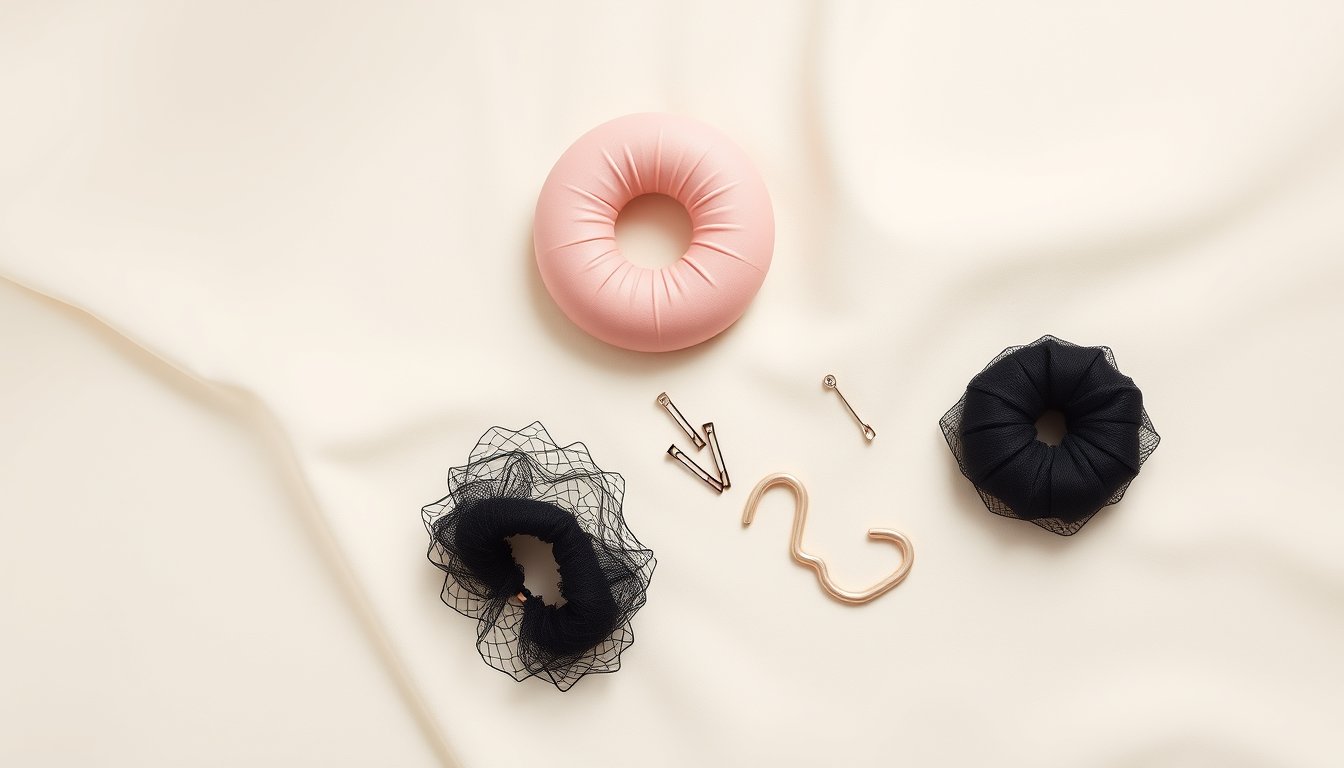
A ballet bun kit is a set of hair accessories used to create and secure the neat, flat bun required for RAD class and examinations. A complete kit typically includes a donut former, a hair net, U-shaped pins, a bun cover and a pack of kirby grips or bobby pins. Having all of these items together saves time on class mornings and avoids the common problem of missing one key item when you need it most.

Short answer: A ballet bun kit is a set of hair accessories used to create and secure the neat, flat bun required for RAD class and examinations.

What Goes in a Ballet Bun Kit?

1. Donut Former (Bun Former)

A foam or fabric ring that goes over the ponytail to create the round shape of the bun. The hair is spread over the donut and secured underneath. Choose a size that matches the volume of the dancer’s hair — a small former will not give a full look, and a large one will look oversized on a young child.

2. Hair Net

The hair net goes over the completed bun to hold stray hairs flat and give the bun a smooth, professional appearance. Buy nets in a color that matches the dancer’s hair — black, brown, blonde or auburn. Buy one size smaller than you expect — they stretch to fit and a snug net holds better.

3. U-Shaped Pins (Bun Pins)

U-shaped pins (sometimes called bun pins or hairpins) are longer than standard kirby grips and go through the bun into the ponytail base to anchor the whole bun to the head. Use at least four to six pins in a circular pattern around the bun for a secure hold that lasts through class.

4. Kirby Grips / Bobby Pins

Shorter than bun pins, kirby grips are used around the edge of the bun to flatten stray hairs and tuck in loose ends. A pack of 30-50 is a sensible quantity — they get lost constantly in changing rooms and at home.

5. Bun Cover

A bun cover is a small fabric disc that snaps over the top of the finished bun to give it a very smooth, polished appearance for exams. It is particularly popular for RAD examinations and performances where appearance is assessed. Bun covers come in colors matched to hair color.

Optional: Hair Spray and Smoothing Gel

A light hairspray or edge control gel helps smooth flyaways and keeps the bun neat through a full class. Use sparingly — a heavy application makes the hair sticky and harder to undo after class.

How to Store a Bun Kit

A small zip pouch or tin is the best way to keep a bun kit together. Loose pins at the bottom of a dance bag disappear quickly. Label the pouch with the dancer’s name if it goes to class.

When Does My Child Need a Ballet Bun?

Most RAD schools require a bun from the first graded class onwards. Some schools ask for a bun from the very first lesson, including Early Years and Foundation. Check with your teacher — some schools have specific rules about bun style, size and cover for examination days.

For more on what your dancer needs for class and exams, see our ballet bag essentials guide and exam uniform checklist.

Frequently Asked Questions

What is the most important item in a ballet bun kit?

Bobby pins and a hair net are the two items that make or break a ballet bun. Without enough pins, the bun falls apart; without a net, flyaway hairs create an untidy look for exams. A bun donut or former is a nice extra but not strictly essential.

How many bobby pins does a ballet bun need?

The number depends on the thickness and length of the hair, but most buns use between ten and twenty pins. Always buy more than you think you need — pins disappear regularly and you do not want to run out the morning of an exam.

Is a bun donut necessary for a ballet bun?

A donut or bun former makes the process easier and gives a rounder, fuller bun shape, but it is not required. Many dancers make a tidy bun using only a hair tie, pins and a net. The donut is most useful for finer or shorter hair.

nn

Shop at ZoeDancewear

Ballet Hair Bow with Long Ribbons u2014 finishes off any bun kit with a satin bow and trailing ribbons. Free shipping over $99 to the US.